Categories
Internet

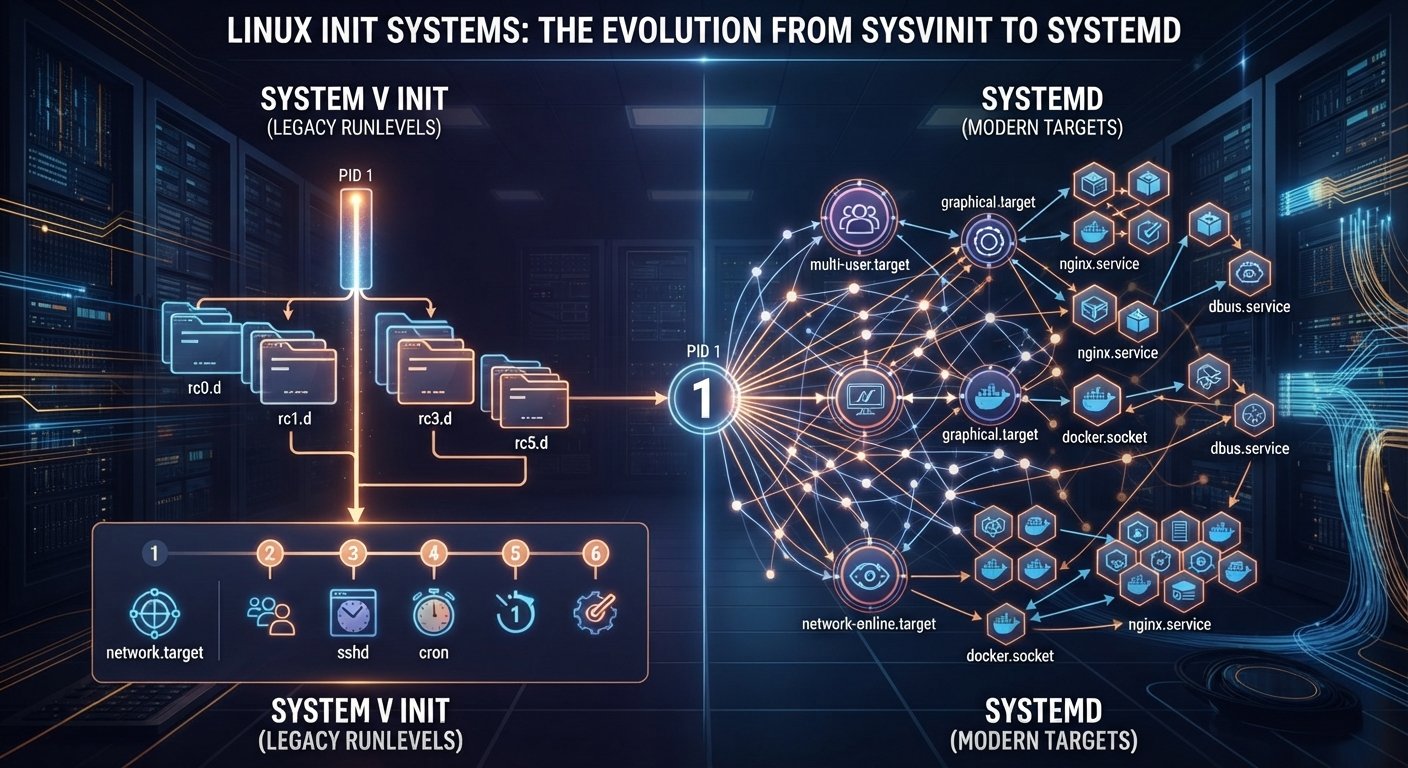
The Evolution of Linux Initialization: From System V Runlevels to systemd

The initialization system is the literal foundation of a running Linux operating system. As the very first process spawned by the kernel (Process ID 1, or PID 1), the init system is responsible for bringing up hardware daemons, mounting filesystems, and setting the operating environment into a usable state. For decades, the Linux ecosystem relied heavily on System V init (SysVinit) and its paradigm of runlevels. However, as hardware evolved and server architecture scaled into complex cloud environments, systemic limitations sparked a massive paradigm shift. This led to the widespread adoption of systemd, a modern suite that completely redefined how Linux initializes and manages services.
Categories
Internet

The Paradox of the Penguin: Why Linux Remains Superior Despite Peripheral Friction

When discussing the architectural brilliance of modern operating systems, the Linux kernel stands peerless. Built on a foundation of modularity, extraordinary security, multi-user capability, and fine-grained memory management, the core engine powering the open-source ecosystem is arguably the finest piece of systems engineering available to computing. It scales seamlessly from microscopic embedded devices to the world’s most powerful supercomputers and enterprise cloud infrastructure.

Yet, for the average desktop user, interacting with Linux is not merely a matter of appreciating kernel elegance. It involves navigating a distinct set of peripheral friction points. Printer driver anomalies, fragmented graphical user interface (GUI) behaviors, and hardware quirks can test the patience of even seasoned enthusiasts. However, even when accounting for these localized annoyances, a user is still fundamentally better off running Linux than Microsoft Windows.

Categories
Fedora Internet

Reclaiming Digital Sovereignty: Why Users Are Rejecting Windows 11 and Finding Refuge in Fedora Linux

The personal computer once represented a sanctuary of individual ownership. Your hardware was yours, your files stayed local, and the operating system served strictly as a quiet tool to execute your commands. Today, navigating modern operating systems—most notably Microsoft’s Windows 11—feels less like owning a tool and more like renting a digital billboard. Driven by aggressive telemetry, forced cloud integrations, intrusive artificial intelligence push, and a default state engineered for corporate surveillance, Windows 11 has alienated a massive wave of power users, privacy advocates, and everyday consumers.

For those looking to escape this ecosystem of control, the open-source community provides a robust, ethical alternative. Chief among them is Fedora Linux—an operating system that puts user agency back where it belongs.

Categories
Internet Websites

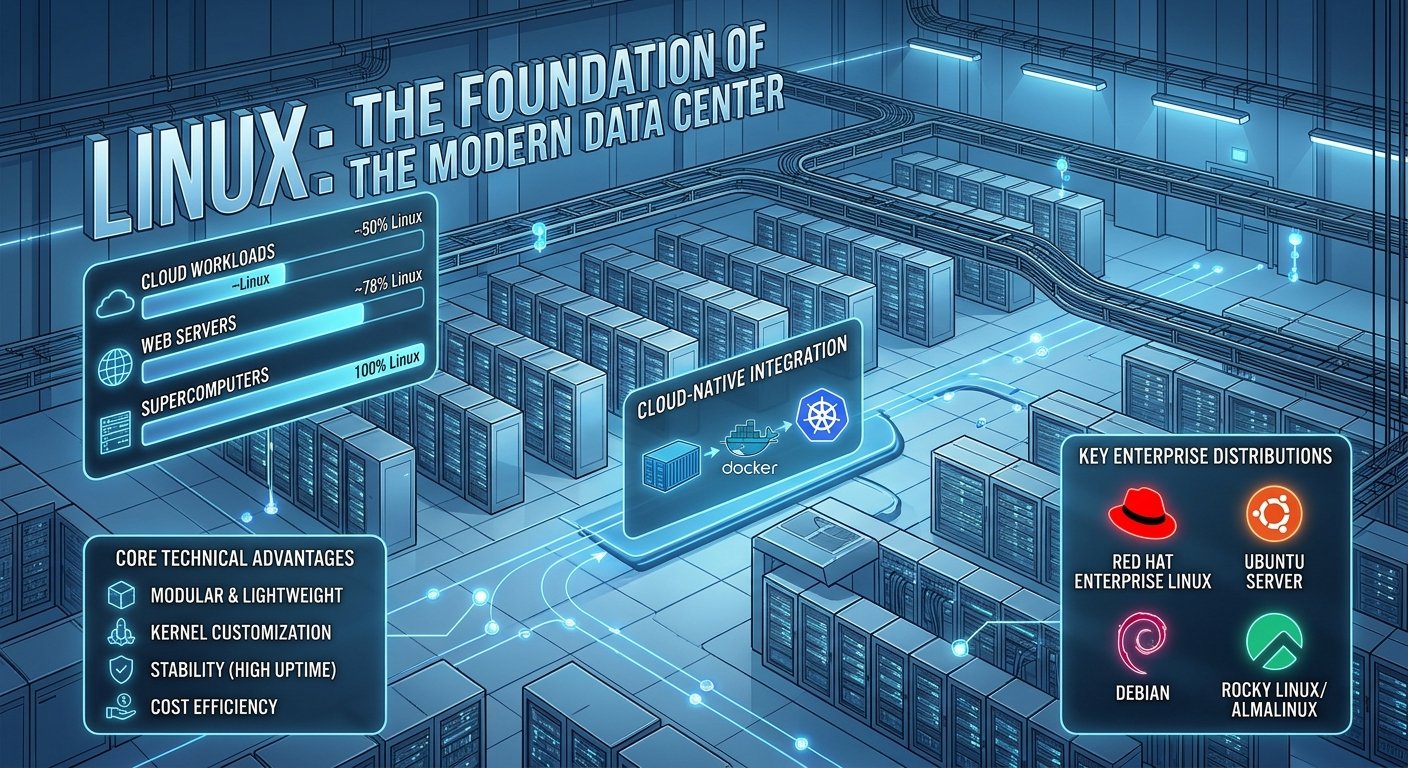
Linux and Data Centers: Linux is Used for Business

Modern data centers are the invisible backbone of the digital age, powering everything from global financial transactions and streaming services to enterprise cloud computing and massive artificial intelligence workloads. At the heart of this infrastructure lies an overwhelming technological preference: the Linux operating system. While consumer desktop computing remains heavily split, enterprise data centers rely almost universally on Linux to orchestrate trillions of daily operations.

Categories
Fedora Internet Websites

The Architecture and Role of Fedora Server in Web Hosting

Fedora Server is a community-driven, open-source Linux distribution developed by the Fedora Project and sponsored by Red Hat. Positioned as the upstream proving ground for Red Hat Enterprise Linux (RHEL), Fedora Server bridges the gap between bleeding-edge open-source innovation and enterprise-grade architectural standards. Unlike traditional long-term support distributions that freeze software versions for years, Fedora operates on a rapid six-month release cycle with an approximate 12-month maintenance window per release, giving system administrators immediate access to modern Linux kernels, updated system libraries, and current server daemons.