Categories
Command Line

The Everyday Toolkit: Most Important Linux Commands

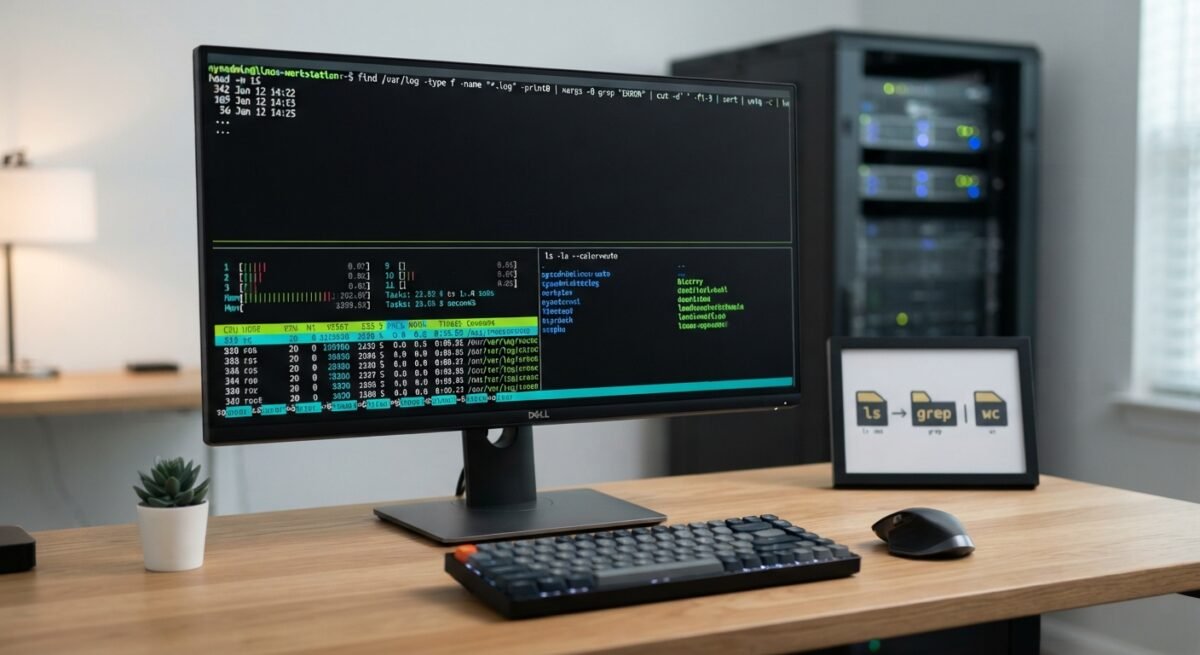
At the heart of Linux lies a philosophy of small, composable tools that do one job well and connect seamlessly through shell pipelines. Whether someone manages production servers, writes software, or explores a local workstation, a compact set of command-line utilities accounts for the vast majority of daily work. Understanding how these core commands fit together turns the terminal from a simple prompt into a fast, reproducible environment for navigating files, inspecting logs, controlling processes, and automating tasks.
Categories
Fedora Networking

Streamlining Virtualization: Running Fedora Server on Fedora Workstation via GNOME Boxes

The Linux operating system has long been celebrated for its robustness, flexibility, and power as a hosting environment. Among its many strengths, native support for kernel-based virtualization transforms a standard Linux desktop into a comprehensive hypervisor. Setting up and managing virtual machines (VMs) has historically been associated with complex configurations, tedious command-line switches, and dense networking parameters. However, modern Linux distributions have radically simplified this landscape. By leveraging tools built directly on Kernel-based Virtual Machine (KVM) technology, users can effortlessly spin up virtual environments.

A prime example of this seamless capability is running Fedora Server inside Fedora Workstation using GNOME Boxes. This combination demonstrates how accessible enterprise-grade virtualization has become for everyday users, developers, and system administrators alike.

Categories
Internet

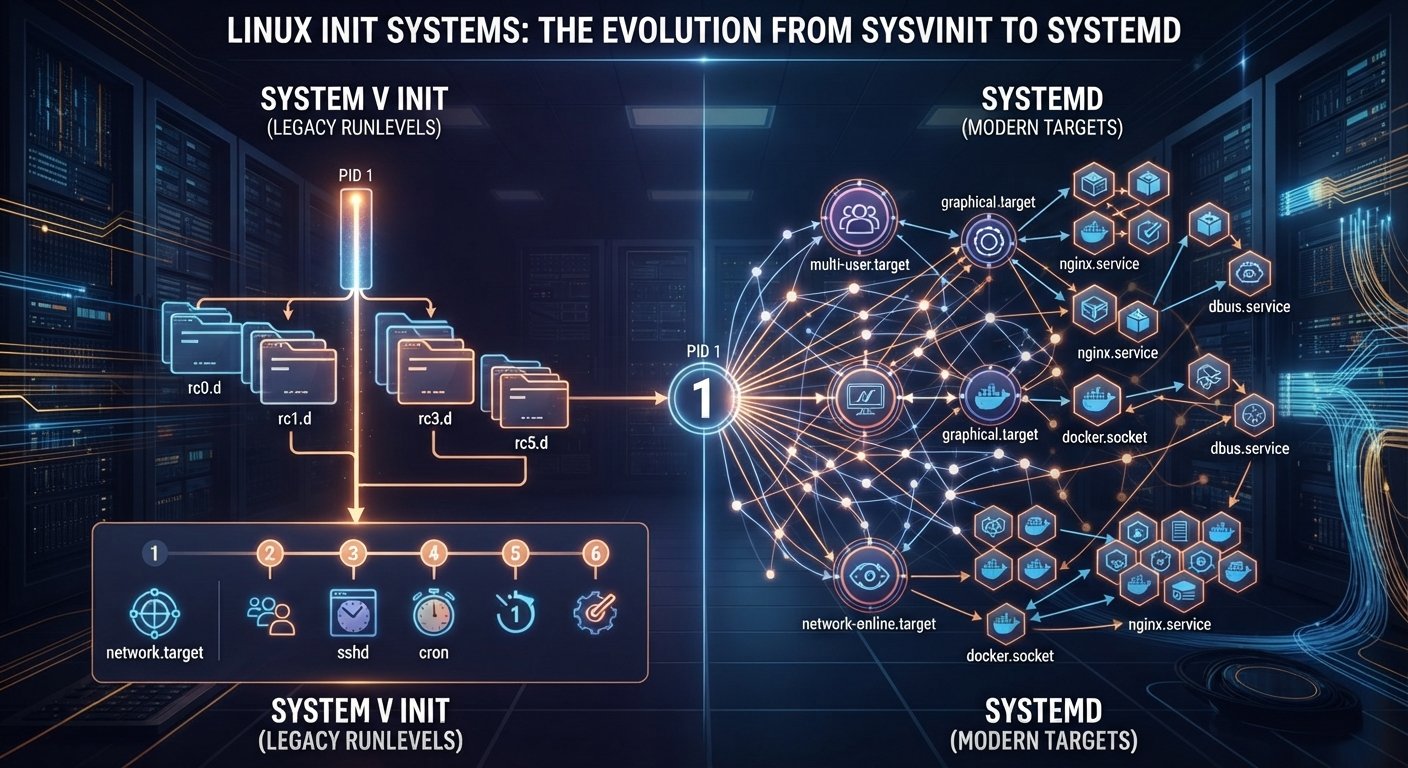
The Evolution of Linux Initialization: From System V Runlevels to systemd

The initialization system is the literal foundation of a running Linux operating system. As the very first process spawned by the kernel (Process ID 1, or PID 1), the init system is responsible for bringing up hardware daemons, mounting filesystems, and setting the operating environment into a usable state. For decades, the Linux ecosystem relied heavily on System V init (SysVinit) and its paradigm of runlevels. However, as hardware evolved and server architecture scaled into complex cloud environments, systemic limitations sparked a massive paradigm shift. This led to the widespread adoption of systemd, a modern suite that completely redefined how Linux initializes and manages services.

Categories
Internet

The Paradox of the Penguin: Why Linux Remains Superior Despite Peripheral Friction

When discussing the architectural brilliance of modern operating systems, the Linux kernel stands peerless. Built on a foundation of modularity, extraordinary security, multi-user capability, and fine-grained memory management, the core engine powering the open-source ecosystem is arguably the finest piece of systems engineering available to computing. It scales seamlessly from microscopic embedded devices to the world’s most powerful supercomputers and enterprise cloud infrastructure.

Yet, for the average desktop user, interacting with Linux is not merely a matter of appreciating kernel elegance. It involves navigating a distinct set of peripheral friction points. Printer driver anomalies, fragmented graphical user interface (GUI) behaviors, and hardware quirks can test the patience of even seasoned enthusiasts. However, even when accounting for these localized annoyances, a user is still fundamentally better off running Linux than Microsoft Windows.

Categories
Fedora Internet

Reclaiming Digital Sovereignty: Why Users Are Rejecting Windows 11 and Finding Refuge in Fedora Linux

The personal computer once represented a sanctuary of individual ownership. Your hardware was yours, your files stayed local, and the operating system served strictly as a quiet tool to execute your commands. Today, navigating modern operating systems—most notably Microsoft’s Windows 11—feels less like owning a tool and more like renting a digital billboard. Driven by aggressive telemetry, forced cloud integrations, intrusive artificial intelligence push, and a default state engineered for corporate surveillance, Windows 11 has alienated a massive wave of power users, privacy advocates, and everyday consumers.

For those looking to escape this ecosystem of control, the open-source community provides a robust, ethical alternative. Chief among them is Fedora Linux—an operating system that puts user agency back where it belongs.