
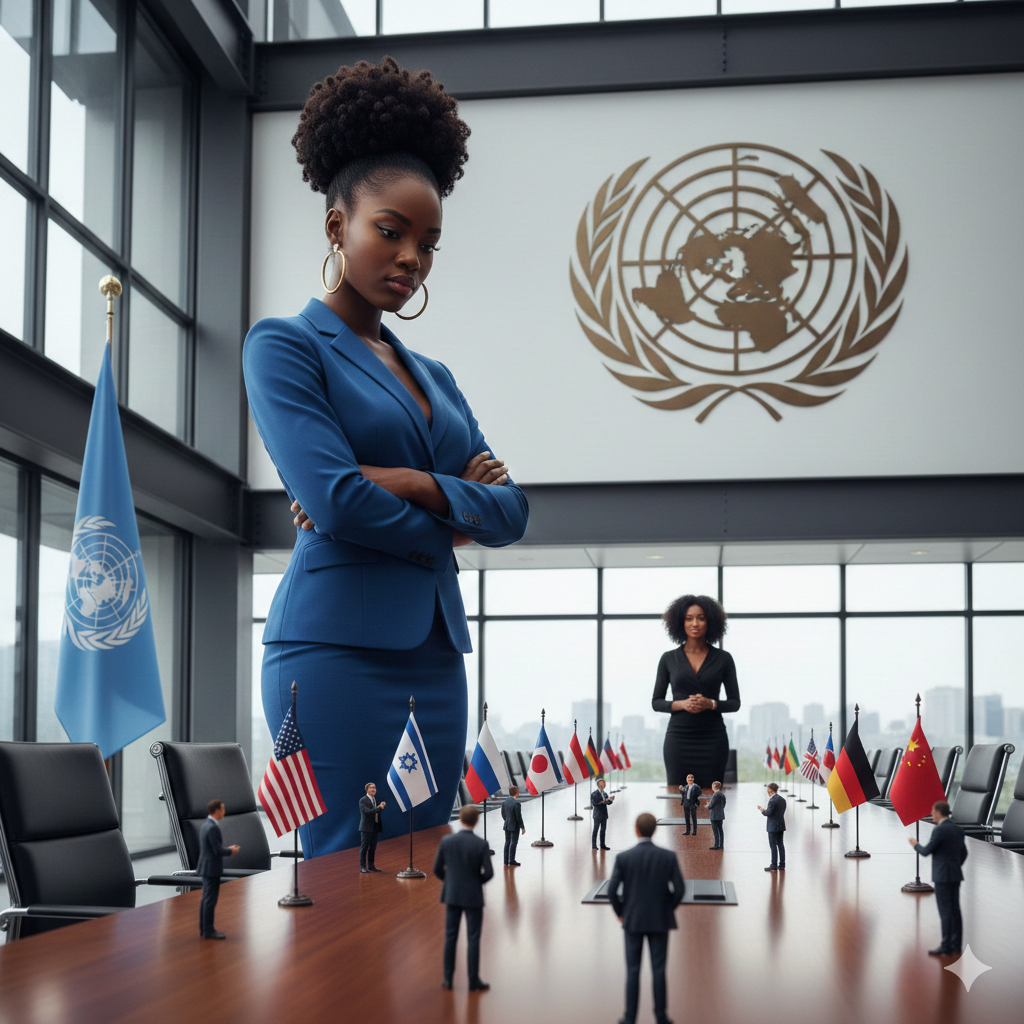
Achieving enduring global stability remains one of humanity’s most elusive pursuits, requiring a structural paradigm shift in how international governance operates. In an era defined by interconnected crises—ranging from transnational climate disruption to nuclear proliferation and economic volatility—the traditional Westphalian model of sovereign states acting in isolation is fundamentally obsolete. To secure true world peace, order, and prosperity, the United Nations must transition from a diplomatic forum into the undisputed preeminent authority in global affairs. For global governance to succeed, the UN must be the biggest player in the room, holding the institutional muscle, enforcement capabilities, and moral legitimacy required to override parochial national interests.
For decades, the UN has been hamstrung by its own foundational architecture. Designed in the wake of World War II, the organization relies heavily on consensus and voluntary compliance, leaving it vulnerable to geopolitical gridlock. When powerful member states can veto punitive measures or ignore international law with impunity, the UN is reduced to a reactive observer rather than a proactive architect of peace. True international order cannot exist where the rule of law is optional for the powerful. By positioning the UN as the primary locus of power—equipped with an independent standing peace-enforcement mechanism and binding judicial authority—the international community can replace the anarchic struggle of great power politics with a predictable, rules-based framework.
Beyond security, economic prosperity and sustainable development are inextricably linked to centralized global coordination. Modern economic shocks do not respect borders, yet multilateral institutions often lack the leverage to enforce equitable resource distribution, regulate runaway financial speculation, or mandate aggressive climate mitigation. If the UN functions as the dominant economic and regulatory arbiter, it can harmonize global standards, eradicate systemic poverty through reliable transnational taxation of global commons, and ensure that technological advancements like artificial intelligence are deployed for collective human benefit rather than geopolitical dominance. Prosperity is not merely the absence of conflict; it is the presence of collaborative infrastructure, which only a robust, empowered global body can sustain.
Critics often decry this vision as a dangerous encroachment on national sovereignty, arguing that a powerful UN threatens democratic self-determination. Yet, true sovereignty in the twenty-first century is an illusion; nations are already bound by global markets, ecological crises, and security dependencies. Ceding a measure of national sovereignty to a strengthened UN is not a surrender of freedom, but an investment in collective security. Just as domestic governance requires individuals to relinquish absolute freedom to a state monopoly on violence in exchange for civil order, the international community must empower a central authority to guarantee global survival.
World peace, order, and prosperity will remain out of reach so long as global governance remains subservient to the transient whims of individual nation-states. By elevating the United Nations into the undisputed powerhouse of international diplomacy and enforcement, humanity can finally transcend the cycle of destructive competition. The challenges of our century demand a unified global response, and that response requires a UN that is undeniably the biggest player in the room.
The essay I have just read is extremely insightful, historically sound, and thought-provoking in the deepest sense. The suggestions made by the author are lucid and totally logical in every respect. The leading nations of the global community should take this message to heart. We must act in unison before it is too late.
Thanks for the comment.