
The Cybernetic Commons: Steering Artificial Intelligence via Democratic Socialist Internationalism

As artificial intelligence rapidly accelerates past national boundaries, it presents humanity with a profound governance paradox. Left to the competitive impulses of corporate monopolies and hyper-nationalist rivalries, AI threatens to deepen inequality, destabilize labor markets, and trigger catastrophic technological arms races.

Addressing this trajectory requires a paradigm shift: the future of AI must be regulated for the common good, with authority increasingly vested in a reformed United Nations. By leveraging AI to centralize and democratize global coordination, the international community can foster a non-authoritarian, democratic socialist model of planetary governance.

Continue reading “The Cybernetic Commons: Steering Artificial Intelligence via Democratic Socialist Internationalism”

Beyond the Woods: Why Democratic Socialism and Heavy State Regulation Offer Our Best Path Forward

The romanticized longing for a return to a pre-industrial, “back-to-nature” existence is a powerful siren song. In an era marked by climate anxiety, algorithmic alienation, and corporate surveillance, the impulse to strip away modern machinery and retreat to the woods is entirely understandable. However, this primitivist philosophy fundamentally misdiagnoses our civilizational crisis. Technology itself is not the enemy of humanity or the earth; rather, it is a neutral tool whose current destructiveness stems from the profit-driven motives of unregulated capitalism. To abandon technology is to abandon billions to preventable suffering. Instead of retreating backward into the woods, our best path forward lies in embracing technological acceleration, guided, constrained, and directed by heavy government regulation through a democratic socialist framework.

Continue reading “Beyond the Woods: Why Democratic Socialism and Heavy State Regulation Offer Our Best Path Forward”

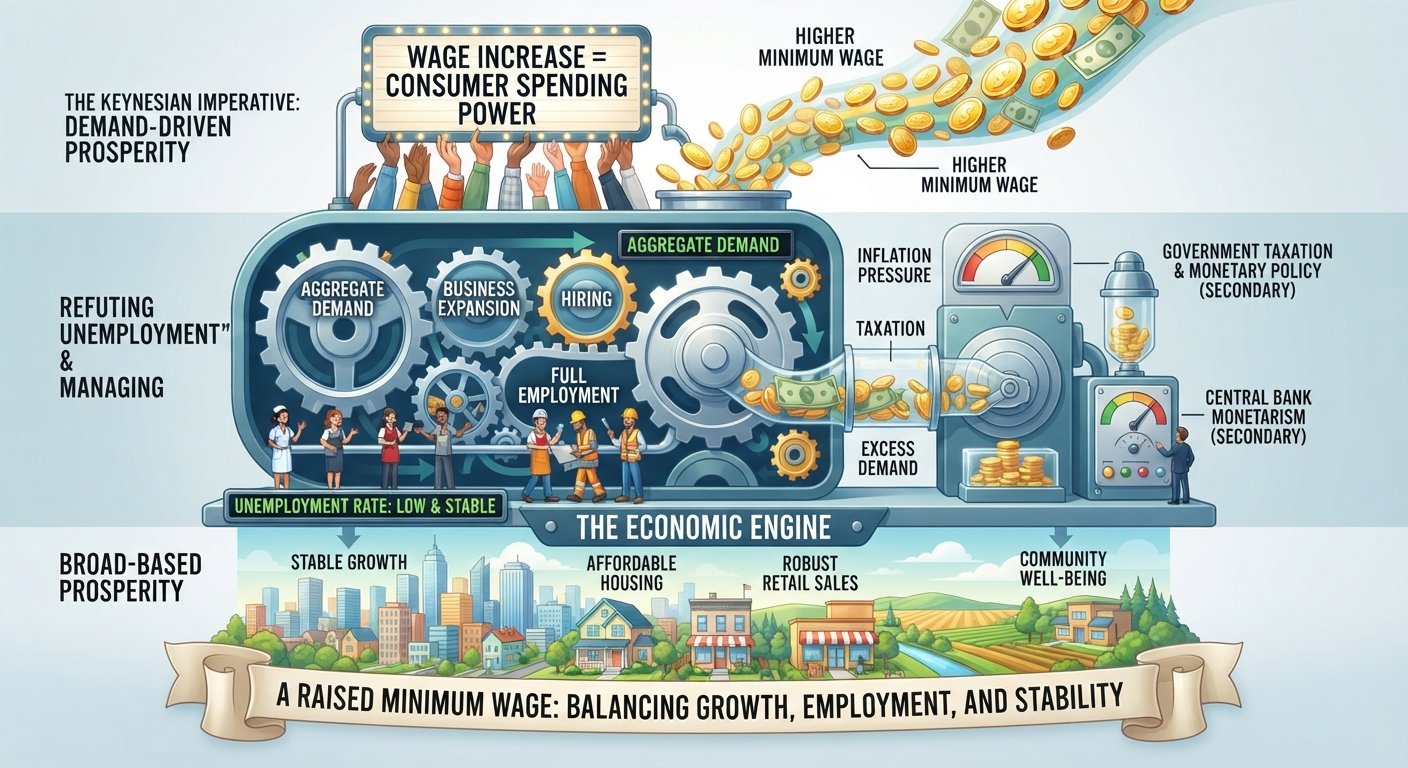
The Economic Imperative of Raising the Minimum Wage: A Keynesian Framework for Growth, Employment, and Stability

For decades, the debate surrounding the minimum wage has remained deadlocked between ethical appeals for a living wage and orthodox economic warnings of ruinous job losses and inflationary spirals. Critics of minimum wage increases often rely on static, neoclassical supply-and-demand models, arguing that artificially raising the price of labor inevitably reduces its quantity demanded. However, this view overlooks the dynamic realities of aggregate demand, consumer purchasing power, and modern macroeconomic policy. By examining the issue through a Keynesian framework—supported by targeted taxation and secondary monetarist controls—we can see that raising the minimum wage is not only a moral necessity but a sound economic strategy for achieving full employment and sustainable growth.

Continue reading “The Economic Imperative of Raising the Minimum Wage: A Keynesian Framework for Growth, Employment, and Stability”

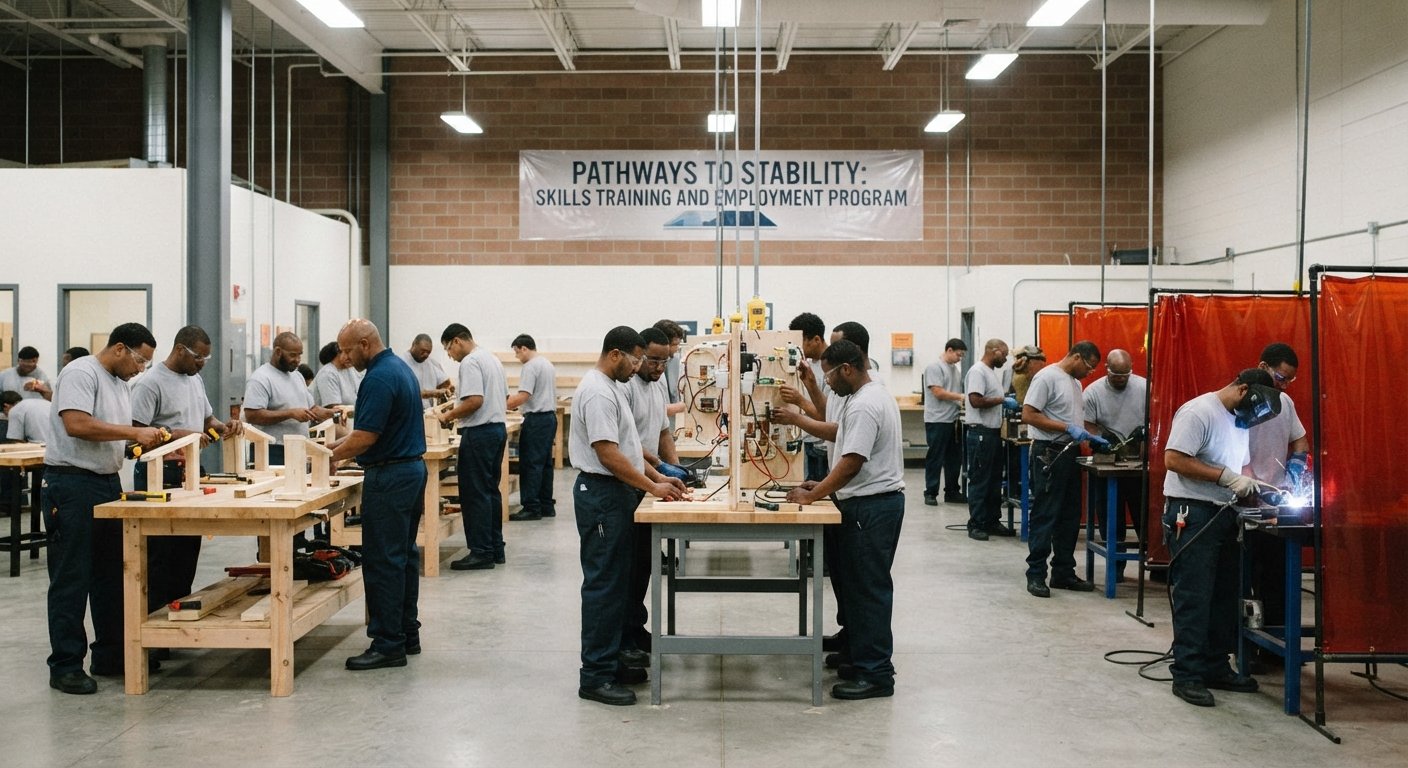
We Need a Functional Solution to the Homeless Issue

The debate surrounding homelessness is one of the most pressing social challenges of our time, touching on questions of human rights, economic policy, and the role of the state. While approaches to the crisis vary widely across the political spectrum, addressing chronic homelessness effectively requires balancing compassionate support with systemic economic reform.

Continue reading “We Need a Functional Solution to the Homeless Issue”

The Executive Palm: A Parable of Capitalism and the Need for a Mixed Economy

The Glass Tower and the Power of Capital

Paul, a dedicated stock clerk in the massive fulfillment center of OmniCorp, smoothed the front of his sweater. He was about to meet with Helen, the company’s CEO. For weeks, he and his colleagues had tried to form a union to negotiate for a living wage—a living wage that would lift them out of poverty and allow them to afford the very goods they handled every day. As Paul entered the executive boardroom, a space gleaming with glass and chrome, he felt small. He felt insignificant. At the far end of the vast room, bathed in the cool light of floor-to-ceiling windows, sat Helen. Her tailored suit spoke of unimaginable wealth, and a faint, knowing smile played on her lips.

To Paul, she didn’t just look wealthy; she looked monumental. She was a figure of unassailable power, like an executive giant. When she raised her hand, Paul almost instinctively took a step back. But then, a surreal scene unfolded. As Paul stepped onto the conference table, Helen extended her hand, palm upward. In a moment that blurred the line between the metaphorical and the physical, Paul found himself standing in the literal palm of her hand. He was, quite literally, one of the “little people” she controlled.

Continue reading “The Executive Palm: A Parable of Capitalism and the Need for a Mixed Economy”