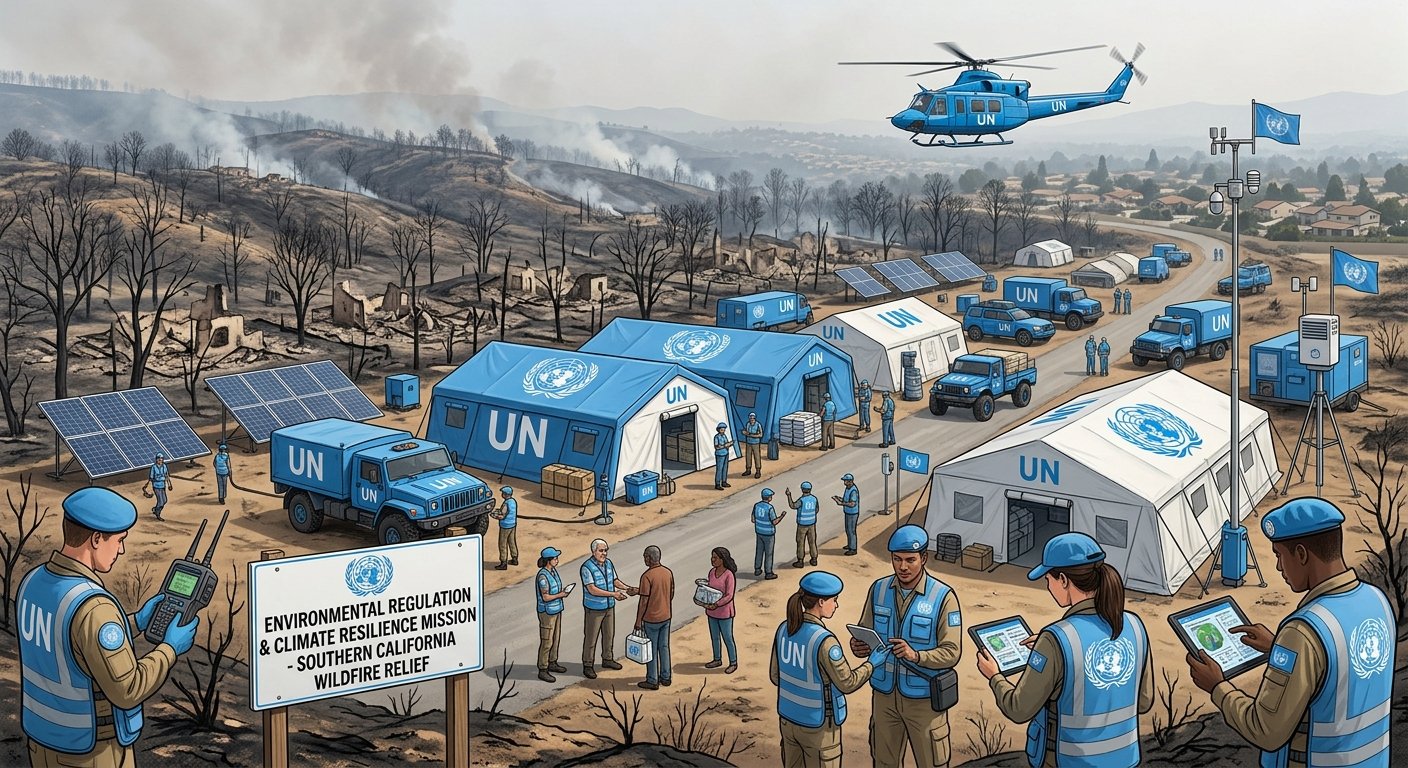
The rapid explosion of the recent wind-driven wildfire in Southern California—which swiftly tore through hundreds of acres and engulfed residential properties across San Clemente and San Juan Capistrano—serves as a stark reminder of the escalating climate crisis.Fueled by dry, fierce Santa Ana winds and prolonged regional aridification, disasters of this magnitude are no longer isolated anomalies; they are recurring systemic threats. Incidents like these underscore the urgent necessity for robust, legally binding environmental regulations and highlight why international bodies like the United Nations (UN) must take a leading role in global climate governance.
Continue reading “Environment and the United Nations”Shrinking Imperative: Why Reducing Our Ecological Footprint Is Essential for Survival
The Tale of Helen’s Uncompromising Reduction
In a high-tech laboratory filled with glowing chemical retorts and precision glass, Dr. Helen looked down at the palm of her hand. Standing in her open palm was Carl, her formerly six-foot-tall laboratory assistant, now reduced to a mere five inches.
Carl stared up in panic at the towering scientist, his tiny voice barely audible over the hum of the ventilation hoods. Helen, impeccably dressed in her blue suit, smiled down with serene, ruthless authority. She had perfected a device capable of shrinking human physical matter to a fraction of its original scale. Her goal was not wealth or world conquest in the traditional sense; it was ecological preservation.
Continue reading “Shrinking Imperative: Why Reducing Our Ecological Footprint Is Essential for Survival”Balancing the Horizon: Arctic Energy, Regulation, and the Case for a Global United Nations Approach
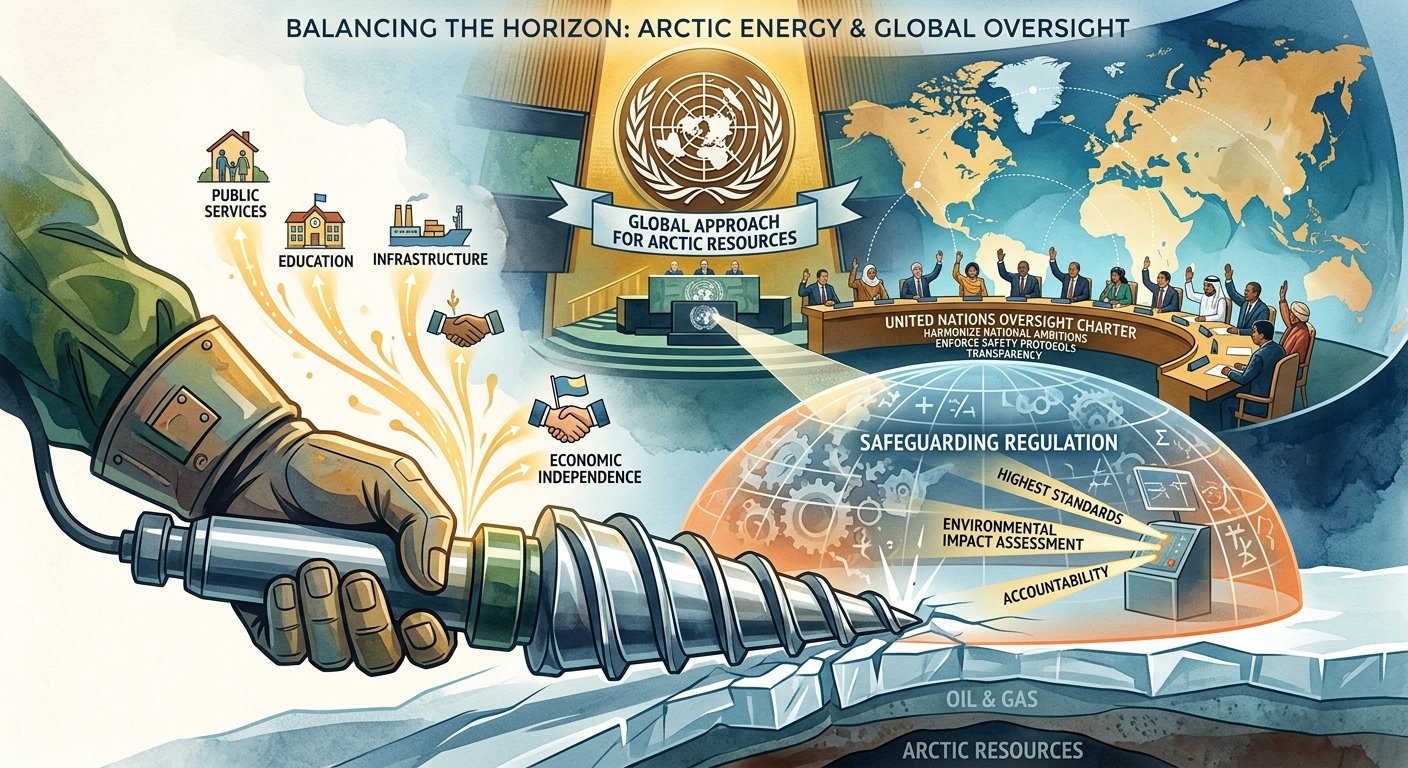
Recent headlines highlighting statements from Washington regarding “massive” oil, gas, and mineral exploration in Greenland have reignited a fierce global debate. The prospect of tapping into the untouched energy reserves of the Arctic carries profound implications for geopolitics, economic security, and environmental stewardship. While the immediate reaction from purist environmental corners is often outright condemnation, a more nuanced perspective reveals that Arctic resource extraction can be a positive and necessary endeavor—provided it is tightly constrained by rigorous regulation. However, given the borderless nature of our climate and oceans, managing this new frontier cannot be left to individual superpowers or corporate interests alone; it demands a comprehensive, global approach spearheaded by the United Nations.
Continue reading “Balancing the Horizon: Arctic Energy, Regulation, and the Case for a Global United Nations Approach”The Iron Arteries of Progress: The Imperative for Investing in Public Transportation, Trains, and Rails
Modern civilization is built on movement. From the earliest trade routes to the asphalt webs spanning contemporary continents, how we move defines our economies, our environments, and our daily quality of life. Yet, for decades, infrastructure planning across many parts of the developed world has been tethered to a single paradigm: the private automobile. This car-centric focus has yielded congested highways, sprawling suburbs disconnected from essential services, and a heavy carbon footprint. To build a resilient, sustainable, and equitable future, governments must fundamentally pivot their transportation priorities. Investing heavily in public transit—with a special emphasis on trains, heavy rail, and intercity corridors—is no longer merely an option; it is an absolute necessity.
Continue reading “The Iron Arteries of Progress: The Imperative for Investing in Public Transportation, Trains, and Rails”Beyond the Woods: Why Democratic Socialism and Heavy State Regulation Offer Our Best Path Forward
The romanticized longing for a return to a pre-industrial, “back-to-nature” existence is a powerful siren song. In an era marked by climate anxiety, algorithmic alienation, and corporate surveillance, the impulse to strip away modern machinery and retreat to the woods is entirely understandable. However, this primitivist philosophy fundamentally misdiagnoses our civilizational crisis. Technology itself is not the enemy of humanity or the earth; rather, it is a neutral tool whose current destructiveness stems from the profit-driven motives of unregulated capitalism. To abandon technology is to abandon billions to preventable suffering. Instead of retreating backward into the woods, our best path forward lies in embracing technological acceleration, guided, constrained, and directed by heavy government regulation through a democratic socialist framework.
Continue reading “Beyond the Woods: Why Democratic Socialism and Heavy State Regulation Offer Our Best Path Forward”