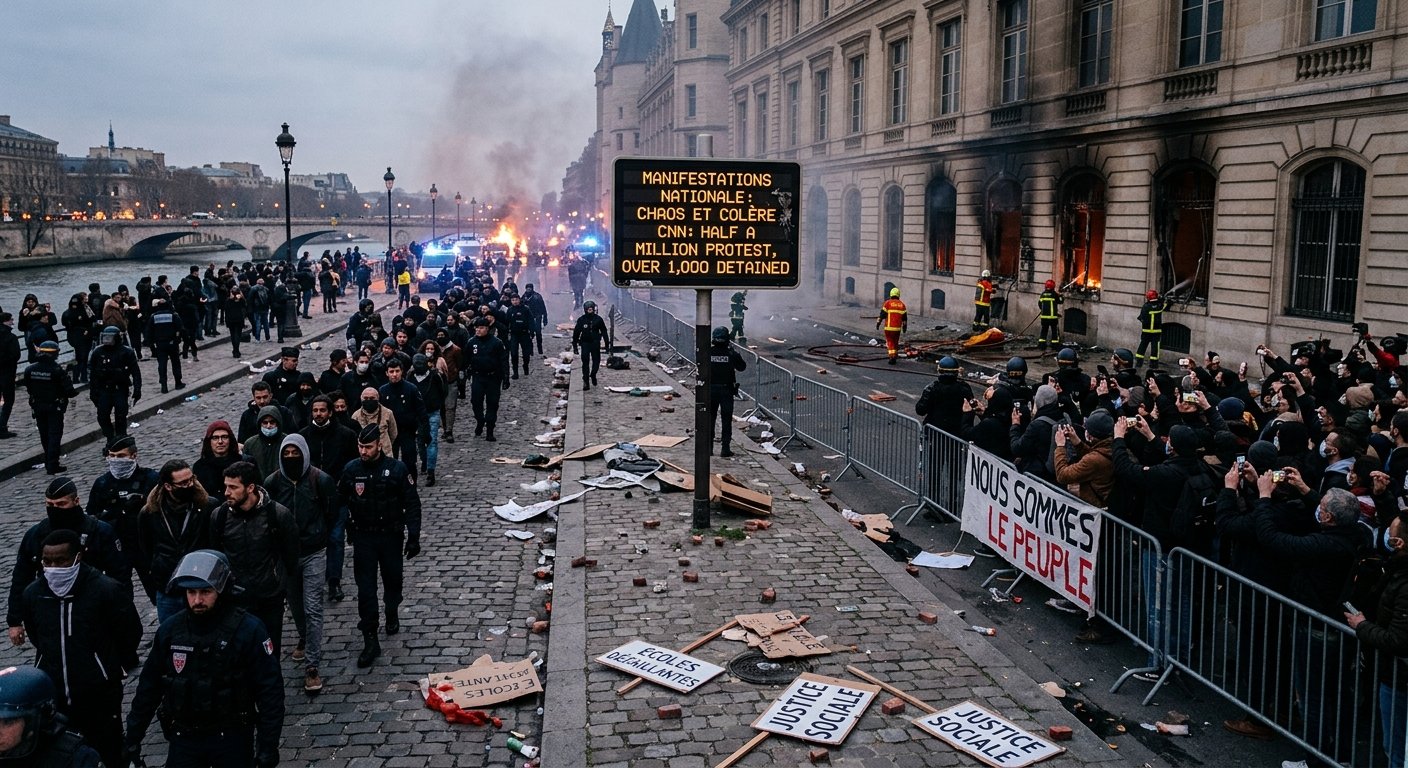
Recent events in Europe have once again laid bare the volatile intersection of civil dissent and state power. As reported in the CNN.com article, “Buildings torched and over 1,000 detained after half a million protesters sweep France,” major French cities became the epicenter of intense riots, featuring torched government buildings and mass detentions following widespread demonstrations.What began as localized student-led rallies over underfunded schools, crumbling infrastructure, and economic anxiety rapidly evolved into a broader national crisis.The subsequent escalation—marked by both destructive urban riots and controversial heavy-handed police tactics—highlights a profound societal fracture. To prevent these cycles of domestic violence and institutional breakdown, the global community must look toward robust international structures that balance the imperatives of law and order with the legitimate demands of social justice.
Continue reading “Navigating the Fracture: Law, Justice, and the Necessity of Global Frameworks in Modern Unrest”Environment and the United Nations
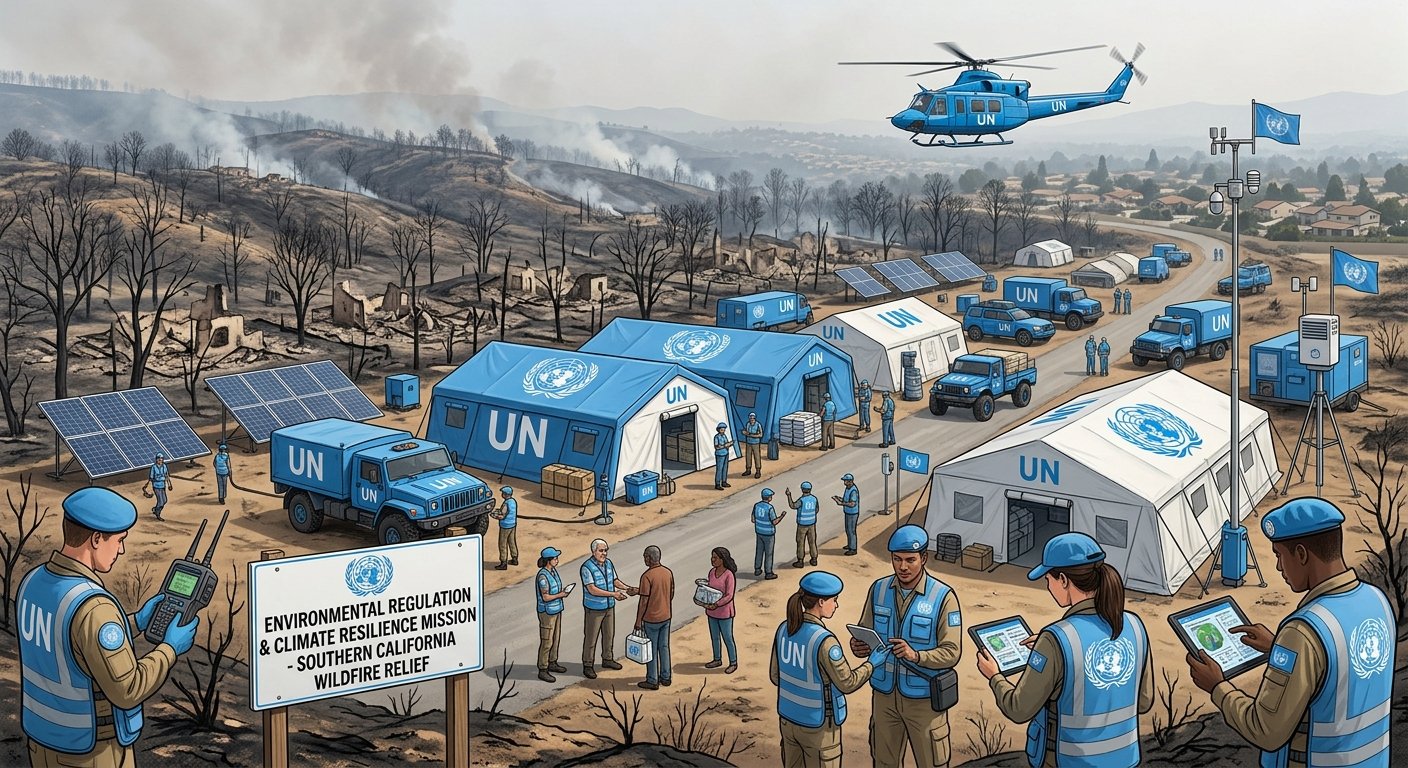
The rapid explosion of the recent wind-driven wildfire in Southern California—which swiftly tore through hundreds of acres and engulfed residential properties across San Clemente and San Juan Capistrano—serves as a stark reminder of the escalating climate crisis.Fueled by dry, fierce Santa Ana winds and prolonged regional aridification, disasters of this magnitude are no longer isolated anomalies; they are recurring systemic threats. Incidents like these underscore the urgent necessity for robust, legally binding environmental regulations and highlight why international bodies like the United Nations (UN) must take a leading role in global climate governance.
Continue reading “Environment and the United Nations”The Shadow of Progress: Automation, Global Competition, and the Imperative for International Trade Regulation
The rapid evolution of modern manufacturing has ushered in a chillingly futuristic paradigm: the “dark factory”. As explored in the CNN report, “China’s factories run in the dark. Can the rest of the world keep up?”, these fully automated, lights-out facilities operate 24 hours a day with rows of robotic arms and artificial intelligence systems functioning entirely without human presence or intervention. While this technological marvel is framed as a triumph of efficiency and a leap toward competitive dominance, it simultaneously exposes a profound crisis at the heart of the global economy. Unchecked industrial competition is no longer just a race between nations; it has transformed into a race to the bottom that threatens the livelihoods of workers and the poor worldwide. To prevent technological progress from exacerbating human misery, international institutions like the United Nations must step forward to regulate global trade and ensure that productivity serves the collective benefit of humanity rather than punishing the vulnerable.
Continue reading “The Shadow of Progress: Automation, Global Competition, and the Imperative for International Trade Regulation”Elevating the Voice of Peace: Why News Outlets Must Center Coverage on the UN Secretary-General
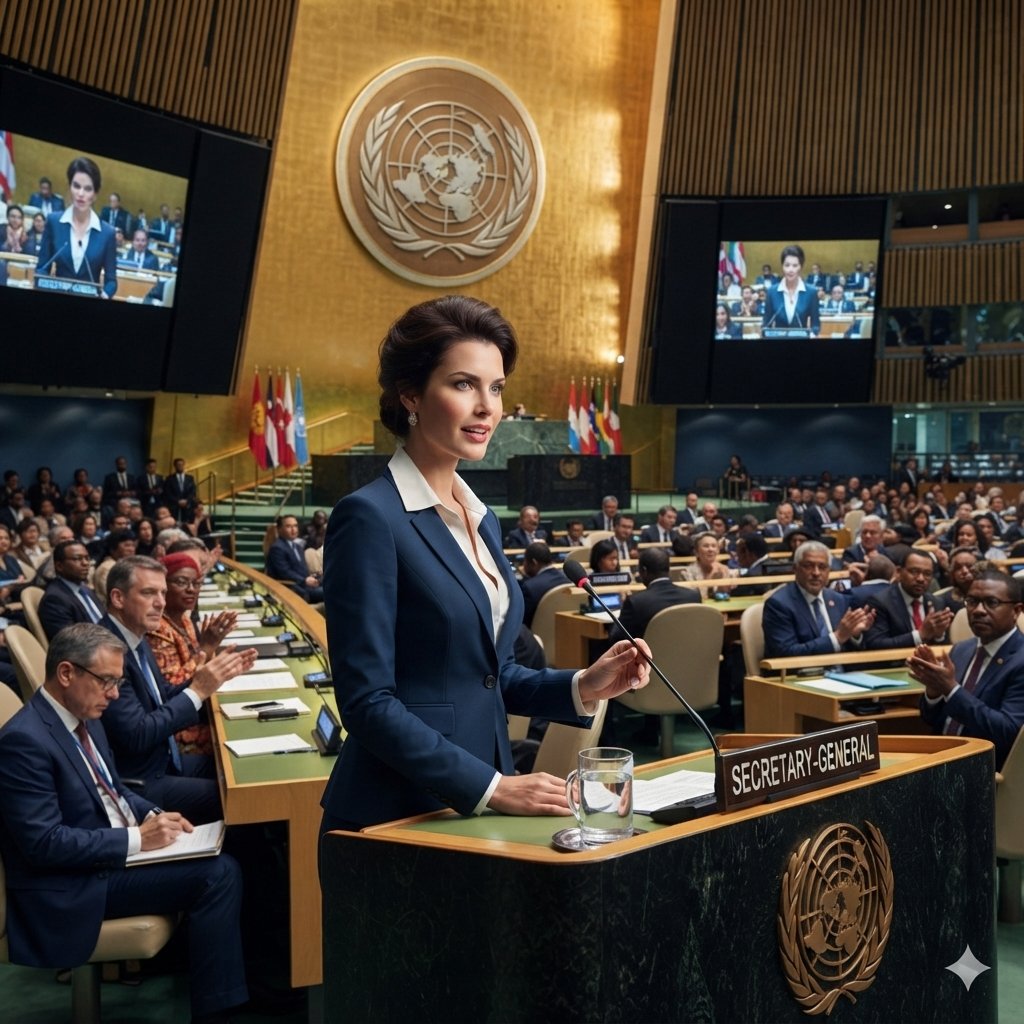
In an era defined by geopolitical division, climate emergencies, and interconnected humanitarian crises, public attention is increasingly captured by national politics and short-term partisan conflicts. Local and national news outlets naturally focus on immediate domestic debates, often reducing international coverage to breaking stories of conflict or high-stakes bilateral summits. In this fragmented media landscape, one critical global voice is frequently sidelined or reduced to a passing soundbite: the Secretary-General of the United Nations. To foster a well-informed global citizenry and uphold the ideals of international cooperation, news outlets must commit to more frequent, substantive, and prominent reporting on the UN Secretary-General and the vital work of the United Nations.
Continue reading “Elevating the Voice of Peace: Why News Outlets Must Center Coverage on the UN Secretary-General”The Concrete Foundations of Tomorrow: Data Centers, Deregulation, and the Global Fight for AI Supremacy
The global race for technological supremacy has shifted from abstract software algorithms to heavy, physical reality. As highlighted in reporting by outlets like CNN regarding the fierce domestic battles over data centers in the U.S. versus China’s rapid, state-backed expansion, the future of artificial intelligence is being anchored in concrete, steel, and electrical grids. This infrastructure race is about far more than computational capacity; it is the ultimate determinant of global hegemony. In response to China’s aggressive scaling, a powerful political and corporate consensus has emerged favoring the deregulation of AI, driven by the belief that slowing down for safety or local oversight will hand global control to Beijing.
Continue reading “The Concrete Foundations of Tomorrow: Data Centers, Deregulation, and the Global Fight for AI Supremacy”