
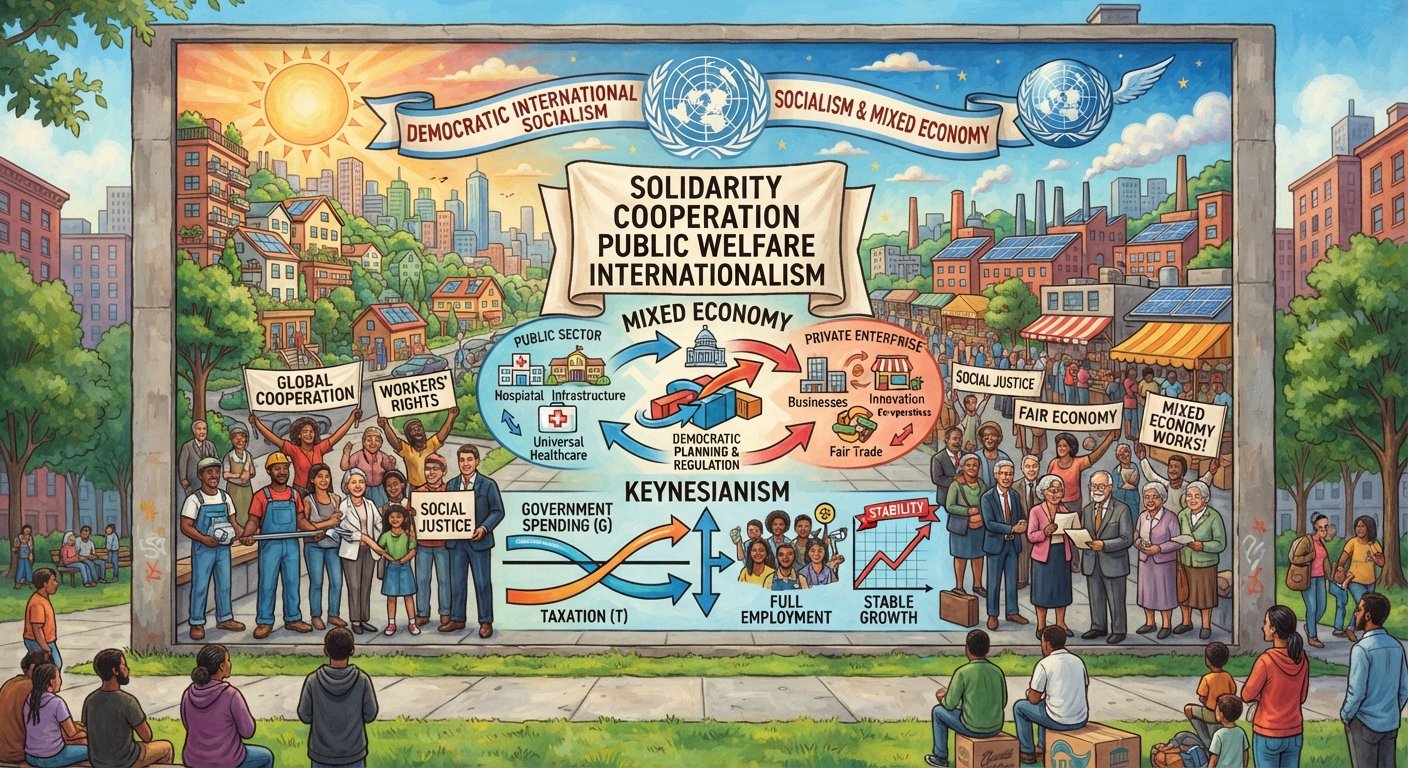
International democratic socialism, when paired with a pragmatic mixed economy, a foundation of Keynesian demand management, and a measured dose of monetarism to curb inflation, offers a compelling framework for modern global equity and stability. This model rejects the false dichotomy of pure laissez-faire capitalism and rigid state command economies, forging instead a human-centric path that harnesses market productivity while prioritizing collective well-being.
Core Pillars of the Model
- Democratic Social Ownership and Control: Major utilities, healthcare, public transit, and natural resources are democratically managed or heavily regulated to serve the public good rather than private extraction.
- The Mixed Market Engine: A vibrant private and cooperative sector drives everyday innovation, consumer goods, and small-to-medium enterprise, ensuring economic dynamism and personal choice.
- Keynesian Macroeconomic Stabilization:Governments utilize active fiscal policies—investing in green infrastructure, robust social safety nets, and public education—to maintain high employment and smooth out boom-and-bust business cycles.
- Tempered Monetarist Discipline: To prevent Keynesian stimulus from overheating into structural inflation, central banks selectively apply monetarist controls—such as prudent money supply management and targeted interest rate adjustments—safeguarding the purchasing power of working-class families.
Global Benefits and Stability
By transcending narrow national borders, an internationalized version of this framework fosters cooperative global trade rather than a race to the bottom. Where unbridled capitalism often concentrates wealth and destabilizes financial systems through speculation, a mixed democratic socialist economy institutionalizes economic security as a fundamental human right.
The inclusion of mild monetarism acts as an essential safeguard. While strict monetarism historically crippled social spending through austerity, a tempered, secondary application simply keeps price stability in check. This prevents the erosion of wages and savings without sacrificing the public investments necessary for sustainable growth. Ultimately, this balanced synthesis achieves high standards of living, ecological resilience, and enduring democratic integrity on a global scale.
Types of Economic Systems – Introduction to Sociology
This video link provides a helpful overview of how different societies balance market mechanisms and state intervention within mixed economic frameworks.