
As legal battles over congressional maps continue to shape the American political landscape—highlighted by recent decisions where courts have blocked Republican-backed redistricting plans—the fundamental vulnerability of modern democracies remains exposed. Domestic courts are continually forced to arbitrate bitter, partisan tug-of-wars over voting districts, maps, and electoral rules.
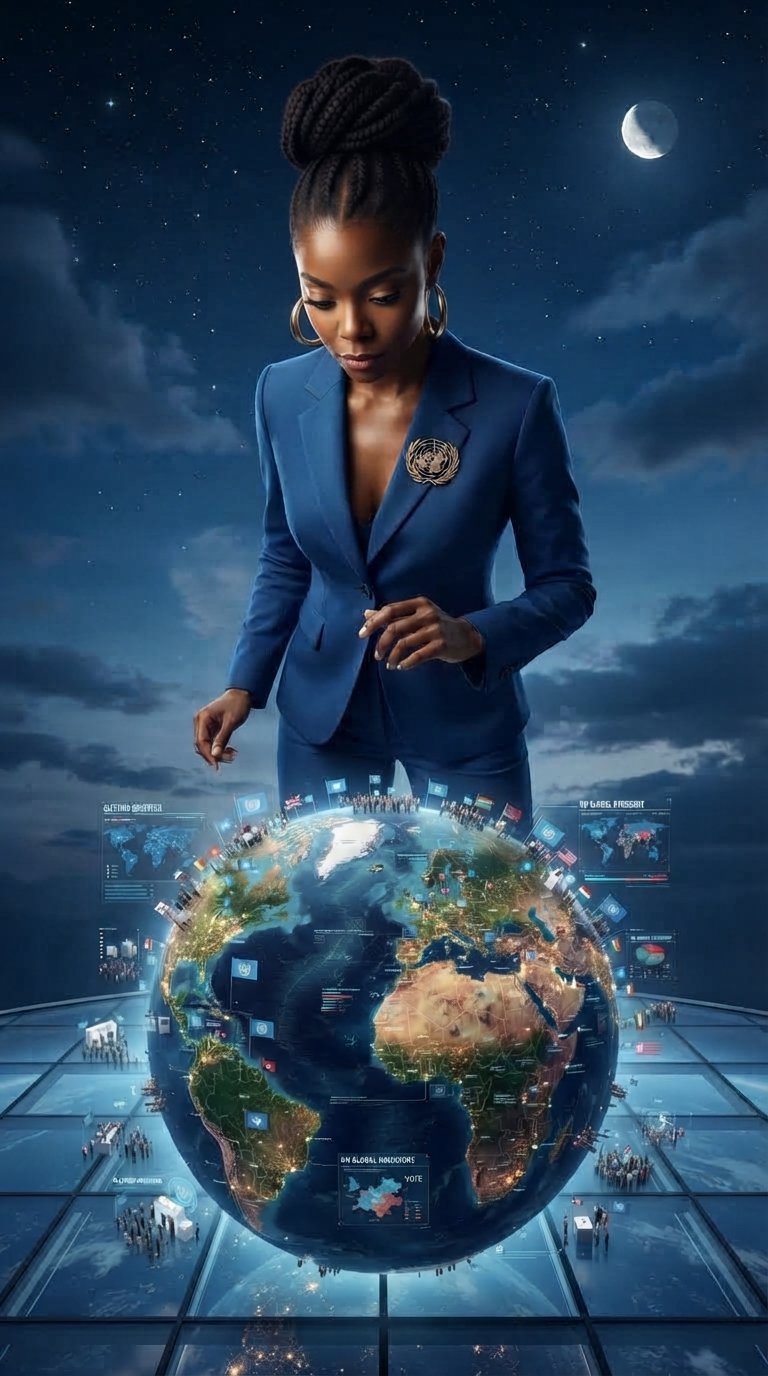
However, looking at these recurring political crises through a strictly domestic lens misses a broader systemic issue: the profound lack of centralized, objective international supervision. The core problem facing modern democratic nations is that bodies like the United Nations do not possess strict oversight capabilities over national elections. To safeguard global democracy and ensure true fairness, a strong UN must step in to overlook, validate, and guarantee that national elections in every country are fundamentally fair and valid.
The Domestic Tug-of-War and Its Limits
In polarized political environments, the rules of democracy are frequently weaponized. Whether it is political parties attempting to capture extra congressional seats through aggressive redistricting or ongoing disputes over voting access, the process of self-policing elections creates an inherent conflict of interest. When political actors hold the power to shape the maps, write the rules, and determine the validity of the systems keeping them in power, public trust invariably erodes.
While national judicial systems—such as Supreme Courts and state courts—strive to act as impartial arbiters, they are increasingly bogged down in accusations of political bias. Judges are appointed through political processes, and rulings that block or permit specific electoral maps are routinely met with public cynicism, viewed by many as partisan victories or losses rather than objective applications of justice.
Relying solely on internal mechanisms to police high-stakes political contests leaves democracies vulnerable to manipulation, erosion of voter confidence, and perpetual instability.
The Case for Global Standards and UN Oversight
This is where the international community falls short. Historically, the United Nations has played a vital role in monitoring elections in emerging democracies or post-conflict zones, helping fragile states build electoral integrity. Yet, when it comes to established industrialized nations, international oversight is virtually non-existent, often constrained by principles of national sovereignty.
This double standard assumes that wealthy or long-standing democracies are immune to structural electoral decay. Recent history proves otherwise. Gerrymandering, voter suppression, administrative bottlenecks, and partisan manipulation of election laws are global threats to democratic health.
A strong, empowered United Nations with a mandate for strict oversight could fundamentally change this dynamic. By establishing universal, objective benchmarks for electoral fairness—covering everything from transparent map-drawing processes to equal voter access—the UN could act as an independent global auditor.
What UN Oversight Would Look Like
An effective international oversight framework would not mean stripping nations of their sovereignty, but rather introducing an institutional safety net against partisan self-dealing. Key functions could include:
- Independent Electoral Audits: Routine, binding or semi-binding evaluations of a nation’s districting and voting procedures by international experts free from local political pressures.
- Standardized Fairness Metrics: Enforcing objective criteria to judge whether an election truly reflects the will of the electorate, neutralizing extreme partisan distortion.
- Transparent Dispute Resolution: Offering an unvarnished, globally respected perspective on electoral disputes, helping to restore public faith when domestic institutions are gridlocked by partisanship.
Conclusion
The continuous cycle of legal battles over congressional maps demonstrates that nations struggle to police their own political games fairly. As long as political parties can manipulate the rules to secure unearned advantages, public trust in democracy will remain fragile.
If the international community is serious about defending democratic values worldwide, it must move past the outdated notion that powerful nations are too big to need oversight. A robust, vigilant United Nations monitoring national elections would ensure that democracy is protected not just by the shifting political fortunes of domestic courts, but by objective, universal standards of fairness.