
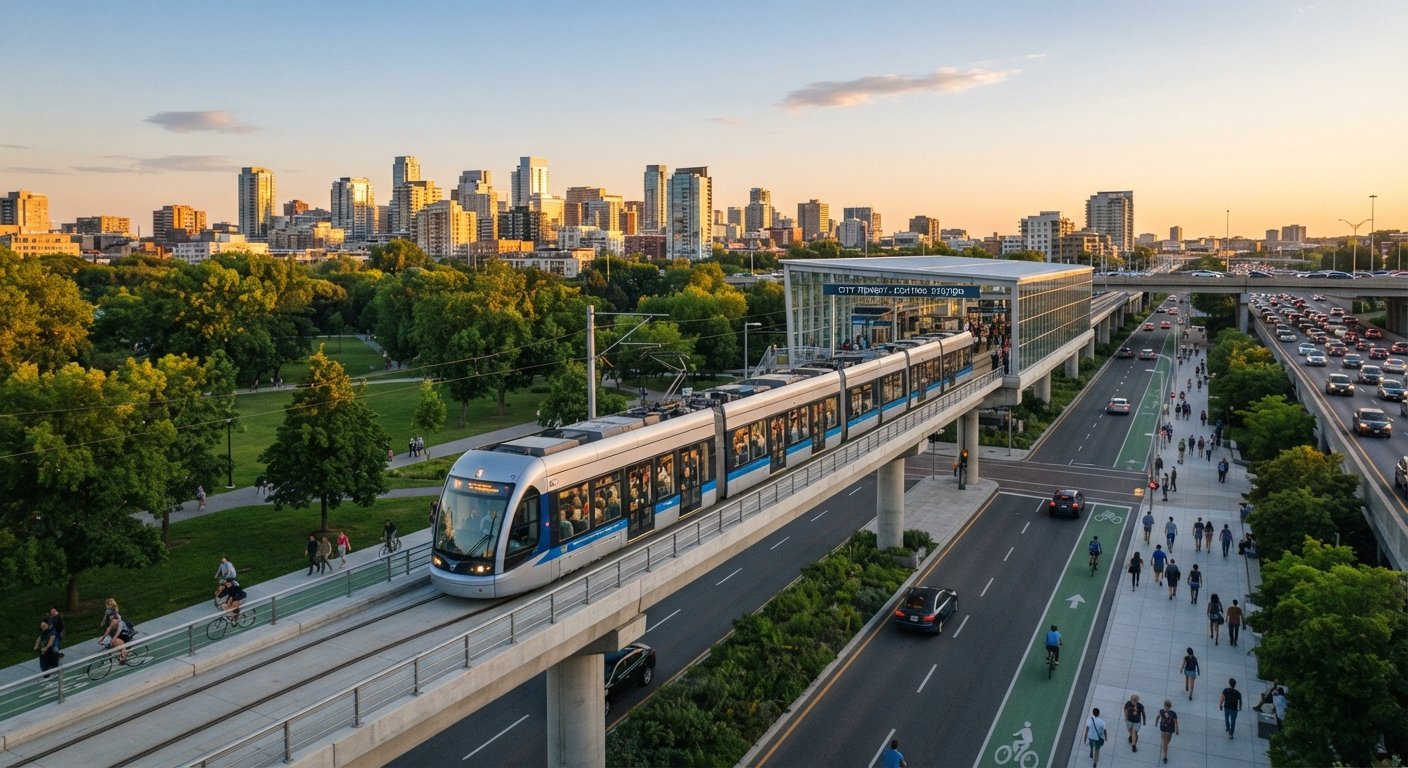
Modern civilization is built on movement. From the earliest trade routes to the asphalt webs spanning contemporary continents, how we move defines our economies, our environments, and our daily quality of life. Yet, for decades, infrastructure planning across many parts of the developed world has been tethered to a single paradigm: the private automobile. This car-centric focus has yielded congested highways, sprawling suburbs disconnected from essential services, and a heavy carbon footprint. To build a resilient, sustainable, and equitable future, governments must fundamentally pivot their transportation priorities. Investing heavily in public transit—with a special emphasis on trains, heavy rail, and intercity corridors—is no longer merely an option; it is an absolute necessity.
Mitigating Congestion and Reclaiming Urban Space
The most immediate and visible crisis of car dependency is traffic congestion. As metropolitan areas expand, single-occupancy vehicles choke roadways, turning daily commutes into hours of lost productivity and mounting frustration. Expanding highways offers only a temporary illusion of relief through induced demand: adding lanes inevitably attracts more cars, returning traffic to gridlock within a few years.
Trains and light rail systems offer a definitive geometric solution. A single passenger train can carry the equivalent of hundreds of cars, moving massive volumes of people through a narrow right-of-way that takes up a fraction of the space required by multi-lane highways. By shifting commuters from asphalt to rails, cities can reclaim valuable urban land—transforming parking lots and congested corridors into green spaces, housing, and pedestrian zones that foster vibrant, human-centric communities.
Environmental Stewardship and Decarbonization
The transportation sector remains one of the largest contributors to global greenhouse gas emissions, heavily dependent on fossil fuels. While the transition to electric vehicles (EVs) is a step forward, it does not solve the problems of particulate pollution from tire wear, urban sprawl, or staggering energy resource extraction. Furthermore, manufacturing and powering millions of private EVs still places an immense strain on electrical grids and raw material supply chains.
Rail transport, particularly when electrified, is remarkably energy-efficient. Steel wheels rolling on steel rails create significantly less friction than rubber tires on asphalt, requiring less energy per passenger-mile. When powered by renewable energy sources, electric trains and subways offer a truly low-carbon backbone for mass transit. A robust rail network removes thousands of internal combustion engines from circulation simultaneously, yielding immediate improvements in regional air quality and public health.
Economic Efficiency and Social Equity
Beyond environmental and spatial benefits, rail investment acts as a powerful catalyst for economic growth and social mobility.Maintaining a private automobile—accounting for fuel, insurance, maintenance, and depreciation—places a severe financial burden on lower- and middle-income households.Robust public transit provides a reliable, affordable alternative, freeing up disposable income for housing, education, and healthcare.
Moreover, trains stitch regions together, bridging the economic divide between major urban centers and smaller regional towns. High-capacity passenger and freight rail networks facilitate labor market integration, allowing workers to access jobs across a wider geographic area without enduring soul-crushing highway commutes. Economists consistently note that infrastructure spending on mass transit yields high multipliers, creating sustainable jobs in engineering, construction, manufacturing, and ongoing maintenance while boosting property values and commercial activity around transit hubs.
Conclusion
A society’s commitment to its future can be accurately measured by how it designs its public spaces and infrastructure. Continuing to prioritize car-dependent policies leads toward a future of locked gridlock, environmental degradation, and isolated communities. Conversely, investing in trains and rails is an investment in freedom—the freedom to move efficiently, cleanly, and affordably regardless of income or vehicle ownership. By laying down the iron arteries of modern public transit, we pave the way for connected, sustainable, and prosperous societies for generations to come.