
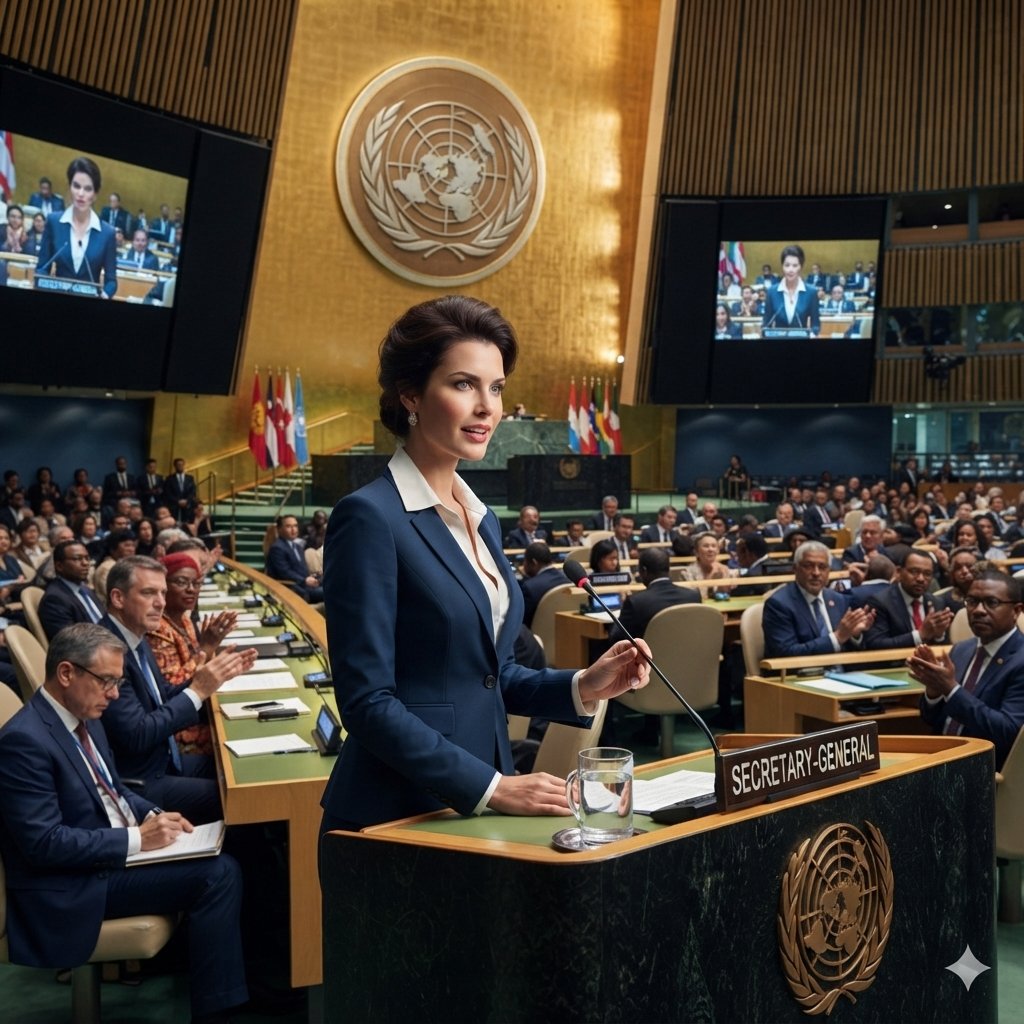
In an era defined by geopolitical division, climate emergencies, and interconnected humanitarian crises, public attention is increasingly captured by national politics and short-term partisan conflicts. Local and national news outlets naturally focus on immediate domestic debates, often reducing international coverage to breaking stories of conflict or high-stakes bilateral summits. In this fragmented media landscape, one critical global voice is frequently sidelined or reduced to a passing soundbite: the Secretary-General of the United Nations. To foster a well-informed global citizenry and uphold the ideals of international cooperation, news outlets must commit to more frequent, substantive, and prominent reporting on the UN Secretary-General and the vital work of the United Nations.
The Power of “Moral Authority” and Neutral Mediation
The Secretary-General of the United Nations occupies a singular position in international affairs. Often described as the world’s “chief administrative officer” and the voice of global conscience, the Secretary-General represents no single nation state’s partisan interests. Instead, the office embodies the principles of the UN Charter—advocating for human rights, peace, and equitable development for all peoples.
When news media consistently report on the statements, diplomatic missions, and warnings issued by the Secretary-General, they provide audiences with a neutral, evidence-based benchmark against which national policies can be measured. Unlike national leaders who operate under domestic political incentives, the Secretary-General speaks from a platform of multilateral consensus and moral authority. By failing to cover the Secretary-General’s interventions regularly, media organizations deprive the public of an essential, non-partisan narrative on global crises.
Countering Misinformation and Restoring Trust in Multilateralism
Multilateral institutions face unprecedented skepticism and strain. Misinformation, nationalist rhetoric, and cynical dismissals of international law often go unchecked when mainstream journalism neglects global governance structures. Amplifying the Secretary-General’s reporting and press briefings helps demystify the United Nations, clarifying what the organization can achieve and where it relies on member states for action.
Prominent news coverage highlights the crucial operational roles the UN plays daily—from peacekeeping deployments and refugee assistance to global health initiatives and emergency relief operations. When journalists report on the Secretary-General’s leadership, they connect public awareness with concrete international efforts, helping to restore trust in collective problem-solving.
Giving Voice to Transnational and Underreported Issues
National media outlets often struggle to cover crises that span beyond national borders or lack immediate domestic political urgency. The UN Secretary-General serves as a crucial agenda-setter for these underreported global challenges. Whether highlighting overlooked famine risks, advocating for ethics in emerging technologies, or pressing world leaders on climate targets, the Secretary-General uses the office to focus global attention on vulnerable populations and long-term threats.
Consistent reporting on the Secretary-General ensures that crucial issues do not slip from public consciousness simply because they fall outside the immediate news cycle of individual nations. It expands the public’s perspective from a narrow local lens to a broader global vision.
Conclusion
The United Nations remains humanity’s premier forum for preventing conflict and advancing shared human progress. At the center of this mission is the Secretary-General, whose voice is vital for rallying solidarity and demanding accountability from world powers. News outlets carry a professional responsibility not merely to report on conflict, but to highlight the diplomats, institutions, and leaders working to resolve it. By giving the Secretary-General the press visibility the role demands, journalism can reinforce the importance of the UN and help build a more informed, empathetic, and cooperative world.