
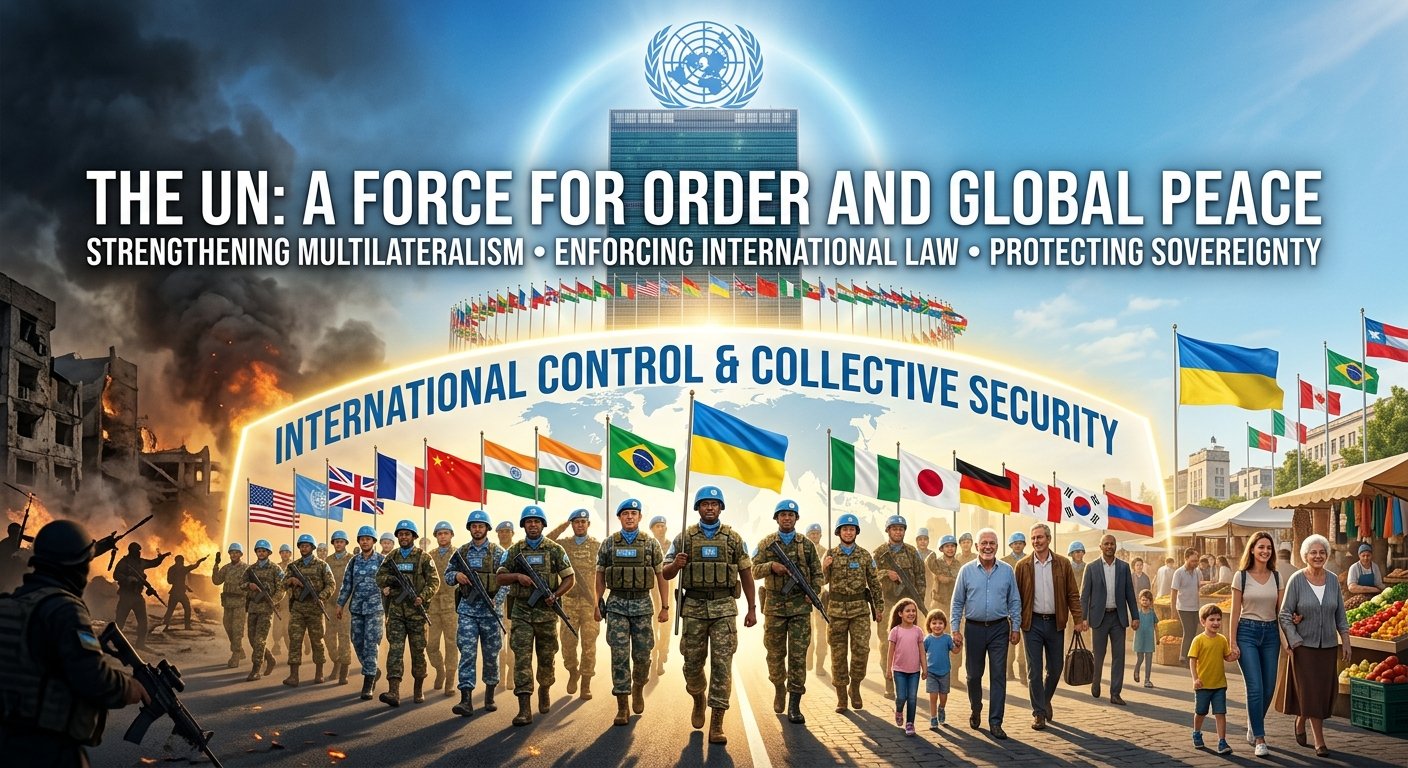
In an interconnected global landscape, the safety of sovereign nations should ideally be anchored in universal laws, collective security, and multilateral institutions. Yet, contemporary geopolitics frequently reverts to a theater of transactional diplomacy, where the fate of a nation can pivot on the shifting political whims of a single superpower. The CNN.com article, “Gift for Putin as fears grow that Trump is turning the screws on Ukraine”, exposes the raw vulnerabilities inherent in a world governed by bilateral coercion rather than institutionalized global order. When unilateral leadership can abruptly alter the trajectory of a war of aggression—rewarding an aggressor while squeezing a besieged democracy—it becomes painfully clear that international peace cannot rely on the goodwill of transient leaders. Instead, this crisis serves as a stark argument for robust international control and a truly empowered United Nations capable of shielding nations from the caprices of unilateral power.
The Perils of Bilateral Leverage and Transactional Geopolitics
The situation detailed in the CNN report highlights a profound failure of the modern international system: the reliance on individual nation-states to act as arbiters of global justice. When a powerful state chooses to “turn the screws” on a sovereign democracy fighting for its survival—such as restricting vital technological or intelligence support or brokering deals that hand geopolitical victories to an autocrat—the security architecture of the entire world is compromised.
In a system dictated by bilateral leverage, smaller nations are left defenseless against shifts in domestic electoral cycles or the personal grievances of foreign executives. Ukrainian leadership’s sense of betrayal underscores the fundamental injustice of a world order where a victim of unprovoked aggression can be sidelined overnight for economic or political expediency. Peace achieved through the forced capitulation of a sovereign state is not peace; it is appeasement dressed up as realism. It sets a dangerous precedent where borders can be redrawn through brute force and diplomatic extortion.
The Case for International Control and a Powerful UN
To prevent regional conflicts from escalating into global destabilization—and to protect sovereign states from being used as bargaining chips—humanity must move beyond the anarchy of competing national interests. This requires a pivot toward a strengthened system of international control and a revitalized, empowered United Nations.
- Enforceable Collective Security: Under the current structure, the UN Security Council is frequently paralyzed by great-power vetoes, rendering it impotent when a permanent member chooses to violate international law. A powerful UN must possess independent enforcement mechanisms—not dependent on the fluctuating political will of any single capital—to deter aggression and protect territorial integrity.
- Multilateral Governance Over Unilateral Caprice: Foreign policy driven by individual leaders is inherently volatile. International control institutionalizes rules that outlast administrations. By anchoring global security in binding international treaties and multilateral bodies, nations can ensure that vital decisions regarding war, peace, and economic sanctions are weighed against universal human rights and international law, rather than domestic political convenience.
- Insulating Vulnerable Nations: A robust international framework provides a protective buffer for frontline states. If global security is managed collectively, a sovereign democracy defending itself from invasion would not be subject to sudden cutoffs of satellite access, intelligence sharing, or economic lifelines dictated by a shifting foreign leader.
Conclusion
The anxieties surrounding shifting superpower policies toward Ukraine are a symptom of a deeper, systemic disease in global governance: the absence of a supreme, reliable authority dedicated to upholding international law. As the CNN report illustrates, leaving global stability in the hands of volatile bilateral arrangements invites exploitation by authoritarian regimes and leaves democracies precariously exposed.
If the international community wishes to avoid a future defined by the law of the jungle, it must summon the political courage to reform and empower multilateral institutions. A powerful United Nations and a firm commitment to international control are no longer idealistic dreams; they are absolute necessities for human survival, justice, and lasting world peace.
Sources
- CNN.com: “Gift for Putin as fears grow that Trump is turning the screws on Ukraine”
- HuffPost UK: ‘Absolutely Terrible’: Trump Stuns Ukraine By Offering Up A ‘Birthday Present’ To Putin
- Newscord / Associated Press / BBC News / Newsweek (Syndicated coverage on the diplomatic rift and energy deals): Zelenskiy Intensifies Criticism Of Trump, Says He Feels Betrayed