Categories
Command Line Fedora Internet Networking Programming Websites

The Foundations of Self-Hosted Web Infrastructure

Building a web hosting business from the ground up by acquiring hardware, renting commercial office or rack space, and self-managing system software is a major undertaking. It transitions an enterprise from a mere reseller of cloud services into a true infrastructure operator. Operating bare-metal servers demands a rigorous synthesis of capital investment, facility management, system administration expertise, and precise technical execution.


Categories
Command Line Internet Websites

Deploying and Hosting Websites with the Apache Web Server on Linux

Introduction

The Apache HTTP Server, commonly known simply as Apache, stands as one of the most reliable, flexible, and widely deployed open-source web servers in the history of the internet. Developed and maintained by an open community of developers under the auspices of the Apache Software Foundation, Apache powers a substantial portion of the active websites worldwide. Its modular architecture, robust security features, and extensive support for various scripting languages make it an essential tool for administrators and developers working within Linux environments.

This guide walks through the comprehensive process of installing the Apache web server on a Linux system, utilizing the command line interface, configuring firewall rules, hosting custom web pages, and verifying the deployment.

Categories
Fedora Internet

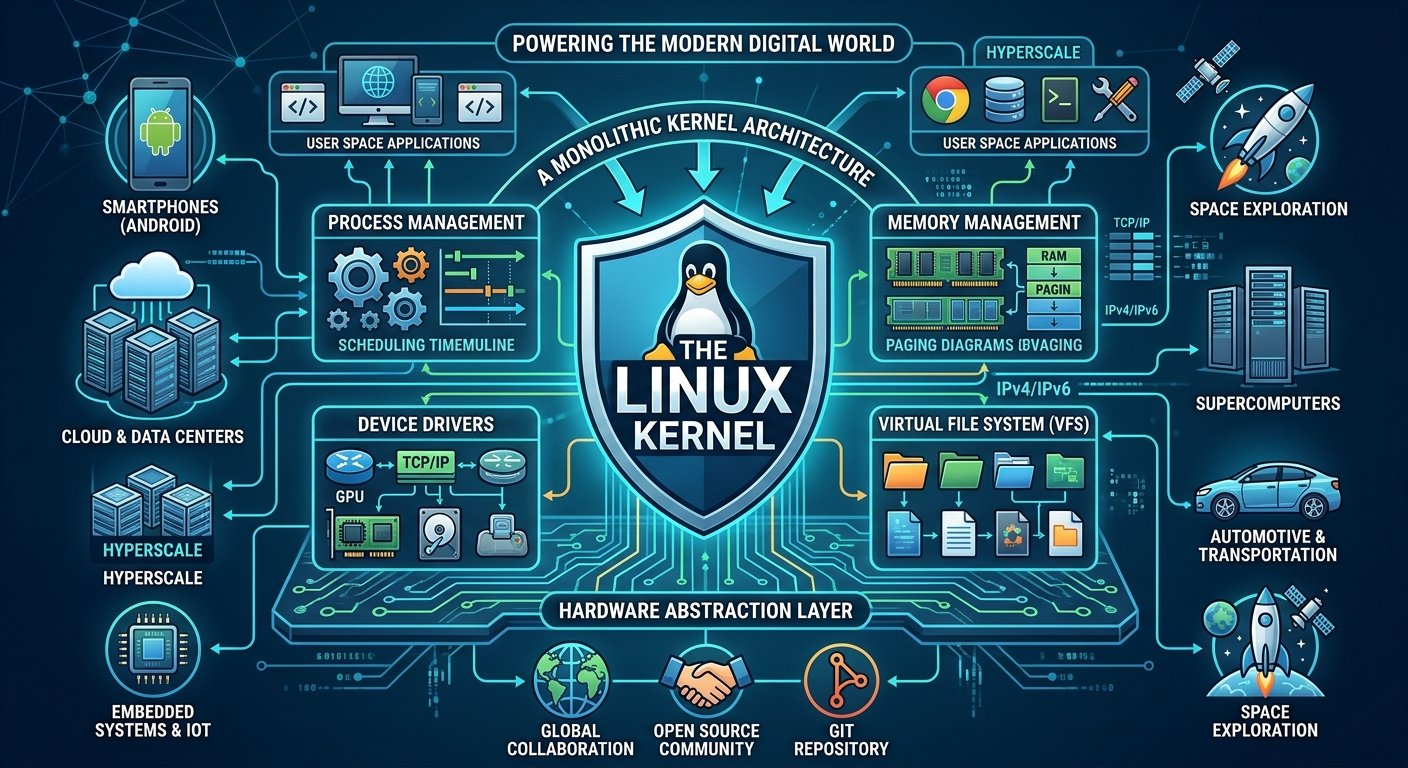
The Architecture, Evolution, and Impact of the Linux Kernel

The Linux kernel stands as one of the most remarkable collaborative engineering achievements in human history. Serving as the foundational core of the GNU/Linux operating system, it bridges physical computer hardware and user-space applications. From humble beginnings as a hobbyist project in the early 1990s, it has grown into a ubiquitous software force powering everything from embedded microcontrollers and Android smartphones to hyperscale cloud infrastructures, supercomputers, and space exploration equipment.

Categories
Internet Programming

Introduction to Python

Python is a high-level, interpreted programming language renowned for its remarkable readability and clean syntax. Created by Guido van Rossum and first released in 1991, Python was designed with a philosophy that prioritizes code readability over raw computational brevity. Its structural layout uses whitespace and indentation rather than curly braces or semicolons, making code look remarkably like plain English. This design choice dramatically lowers the barrier to entry for newcomers while empowering experienced software engineers to build massive, scalable systems rapidly.

Categories
Command Line Fedora

Fedora Linux 45 Has Arrived: Innovations, Desktop Advances, and Upgrade Paths

Today, November 3, 2026, marks the official release of Fedora Linux 45. Following its standard bi-annual release cadence and short release delays to ensure high software stability, the Fedora Project has formally made candidate RC-1.4 available to the global open-source community. As one of the flagship distributions driving desktop and enterprise Linux innovation, Fedora Linux 45 introduces updated desktop environments, fundamental installer enhancements, and updated system kernel foundations.