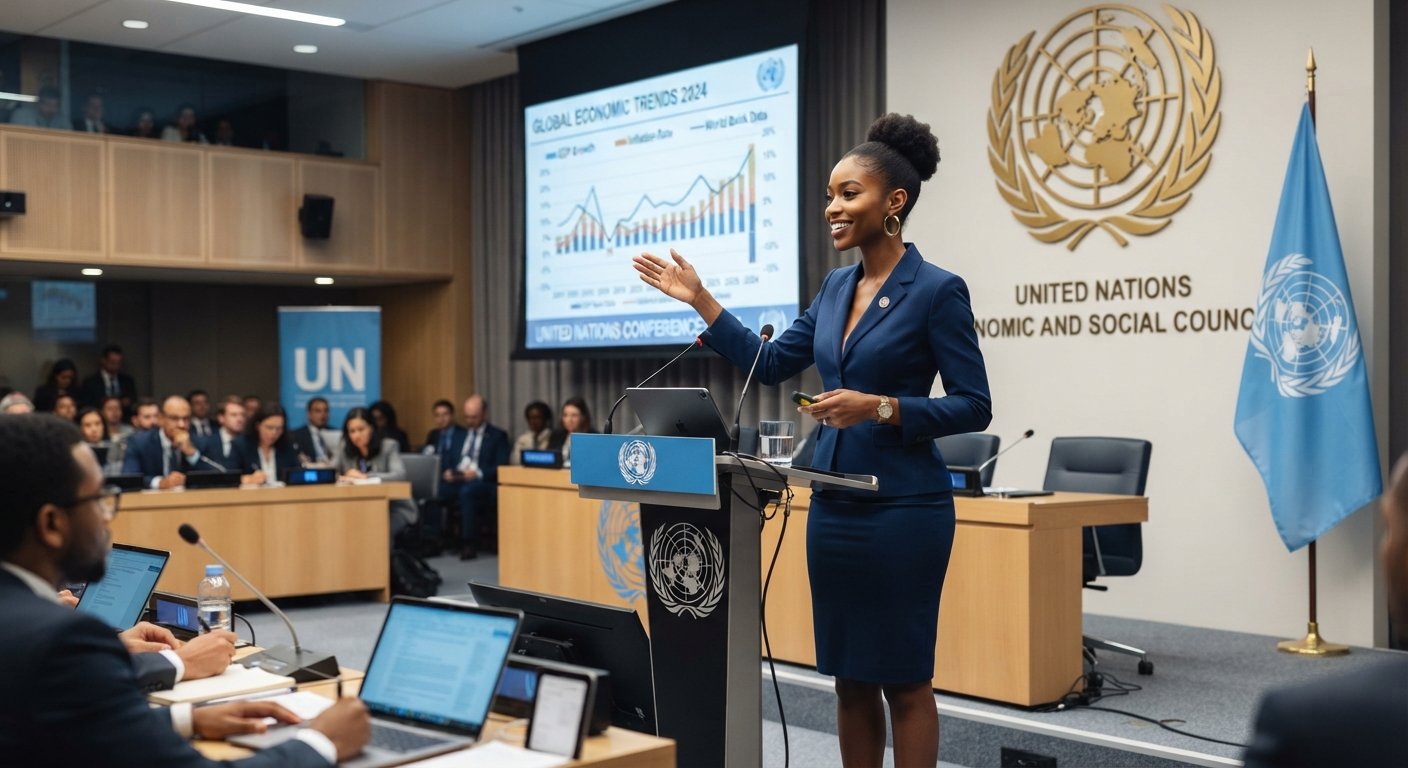
A Strong United Nations Must Regulate the World Economy

The Illusion of Unilateralism: Why Global Stability Requires a Robust United Nations

The pronouncement by former President Trump that complex geopolitical conflicts, such as the tensions with Iran, can be resolved—and oil prices subsequently stabilized—solely through the result of a domestic midterm election is a dangerous oversimplification of international affairs. Such rhetoric promotes an illusion of unilateral control over a globalized world. In reality, the interconnected nature of modern security and economics dictates that lasting peace and stability cannot be achieved through the whims of a single national administration. Instead, this essay argues that authentic geopolitical security and economic predictability can only be secured through a strengthened, centralized multilateral framework, specifically a United Nations empowered to regulate the global economy and override national fiscal policies for the greater good.

Continue reading “A Strong United Nations Must Regulate the World Economy”


Who Should be the Most Powerful Person in the World?

Humanity stands at a critical juncture, navigating an era of borderless crises—from climate collapse and runaway artificial intelligence to persistent global inequality and nuclear proliferation. The traditional architecture of international relations, built on the Westphalian model of competing sovereign nation-states, is structurally incapable of addressing threats that do not respect national boundaries. To secure a viable and prosperous tomorrow, we must urgently pivot toward a new global paradigm, one where the United Nations assumes a vanguard role and the Secretary-General of the UN becomes the most powerful person in the world.

Continue reading “Who Should be the Most Powerful Person in the World?”

UN Enforcement

The recent escalation in the Middle East—highlighted by United States Central Command strikes sinking Iranian oil tankers and prompting a retaliatory Iranian ballistic missile barrage targeting Jordan—illustrates the systemic dangers of an international order governed by unilateral reprisal. When individual superpowers take it upon themselves to punish maritime infractions and regional proxies answer with generalized geographical expansion of war, the entire globe is held hostage to a cycle of unchecked escalation. This crisis serves as a glaring indictment of the current international framework and demonstrates precisely why the world urgently requires a strengthened United Nations equipped with its own permanent, independent armed forces to enforce international law.

Continue reading “UN Enforcement”

A New Superpower!

The architecture of international law and order, alongside functional multilateral institutions like the United Nations, is frequently evaluated through the narrow lens of immediate economic aid, poverty alleviation, and crisis management. However, the deeper imperative for a rules-based global order transcends charity. At its core, international law serves as the ultimate structural safeguard to protect the weak from the strong, maintain planetary equilibrium, and manage historic shifts in global power.

Continue reading “A New Superpower!”

Linux Operating System

Mastering the foundational tools of modern computing—specifically the Linux operating system, the command line, shell scripting, and a general-purpose programming language—transforms how individuals interact with technology. At the bedrock of this ecosystem is the Linux operating system itself. Renowned for its unparalleled stability, robust security architecture, and open-source flexibility, Linux powers everything from embedded Internet of Things devices and enterprise supercomputers to the vast majority of cloud infrastructure. Its transparent file system and granular permission controls provide a secure, predictable environment that empowers both developers and system administrators to optimize hardware resources efficiently without the bloat typical of proprietary operating systems.

Continue reading “Linux Operating System”