The Shadow of Progress: Automation, Global Competition, and the Imperative for International Trade Regulation


The rapid evolution of modern manufacturing has ushered in a chillingly futuristic paradigm: the “dark factory”. As explored in the CNN report, “China’s factories run in the dark. Can the rest of the world keep up?”, these fully automated, lights-out facilities operate 24 hours a day with rows of robotic arms and artificial intelligence systems functioning entirely without human presence or intervention. While this technological marvel is framed as a triumph of efficiency and a leap toward competitive dominance, it simultaneously exposes a profound crisis at the heart of the global economy. Unchecked industrial competition is no longer just a race between nations; it has transformed into a race to the bottom that threatens the livelihoods of workers and the poor worldwide. To prevent technological progress from exacerbating human misery, international institutions like the United Nations must step forward to regulate global trade and ensure that productivity serves the collective benefit of humanity rather than punishing the vulnerable.

Continue reading “The Shadow of Progress: Automation, Global Competition, and the Imperative for International Trade Regulation”

The Shrinking Employee: Denouncing the Systemic Problem of Workplace Bullying

The Tale of Jeff and Karen

Every morning when Jeff walked into the open-plan office, he felt a familiar knot form in his stomach. A quiet, conscientious worker who preferred to let his results speak for themselves, Jeff was diligent, soft-spoken, and non-confrontational. Unfortunately, in his department, those traits made him an easy target.

Karen was not Jeff’s supervisor. She held the exact same job title, but operated with a self-appointed authority that dominated the floor. She controlled group conversations, claimed prime assignments, and delivered unsolicited evaluations of her peers. Her favorite target was Jeff.

Whether it was interrupting him in meetings, making condescending remarks about his pace, or publicly standardizing how he should format his emails, Karen took every opportunity to project dominance. The psychological dynamic was visually clear to anyone watching: in Karen’s presence, Jeff felt reduced to a fraction of his size—as if he were barely five inches tall, standing in the palm of her hand, defenseless against her critical gaze.

Continue reading “The Shrinking Employee: Denouncing the Systemic Problem of Workplace Bullying”

The Shadow in the Living Room

The antique grandfather clock ticked rhythmically in the dimly lit living room, but for Ed, time felt entirely suspended. Standing in the center of her palm, reduced to a fraction of his true self, Ed looked up into the towering figure of Jennifer. Her dark, piercing eyes locked onto his, carrying a cold, calculating smirk that sent a chill straight through his spine.

Ed was, by nature, a quiet and gentle man—a skilled computer programmer who took pride in solving complex problems, writing clean code, and providing a stable life for those he cared about. But inside his home, no amount of logic could fix the environment Jennifer had cultivated.

Continue reading “The Shadow in the Living Room”

Reimagining Global Secondary Education: Why the United Nations Should Establish International High Schools

Education is increasingly treated as a privilege determined by zip code, wealth, and national policy rather than a universal human right. Across the globe—from developing nations struggling with resource shortages to world powers facing systemic inequality—secondary education is in crisis.

To bridge these gaps, the United Nations should step into public secondary education directly by launching a global network of UN International High Schools (UNIHS). Funded internationally, tuition-free, and open to all through equitable lottery systems, these schools would address educational crises worldwide—including in developed nations like the United States—while promoting a democratic socialist, globally minded worldview centered on solidarity, equality, and human rights.

Continue reading “Reimagining Global Secondary Education: Why the United Nations Should Establish International High Schools”

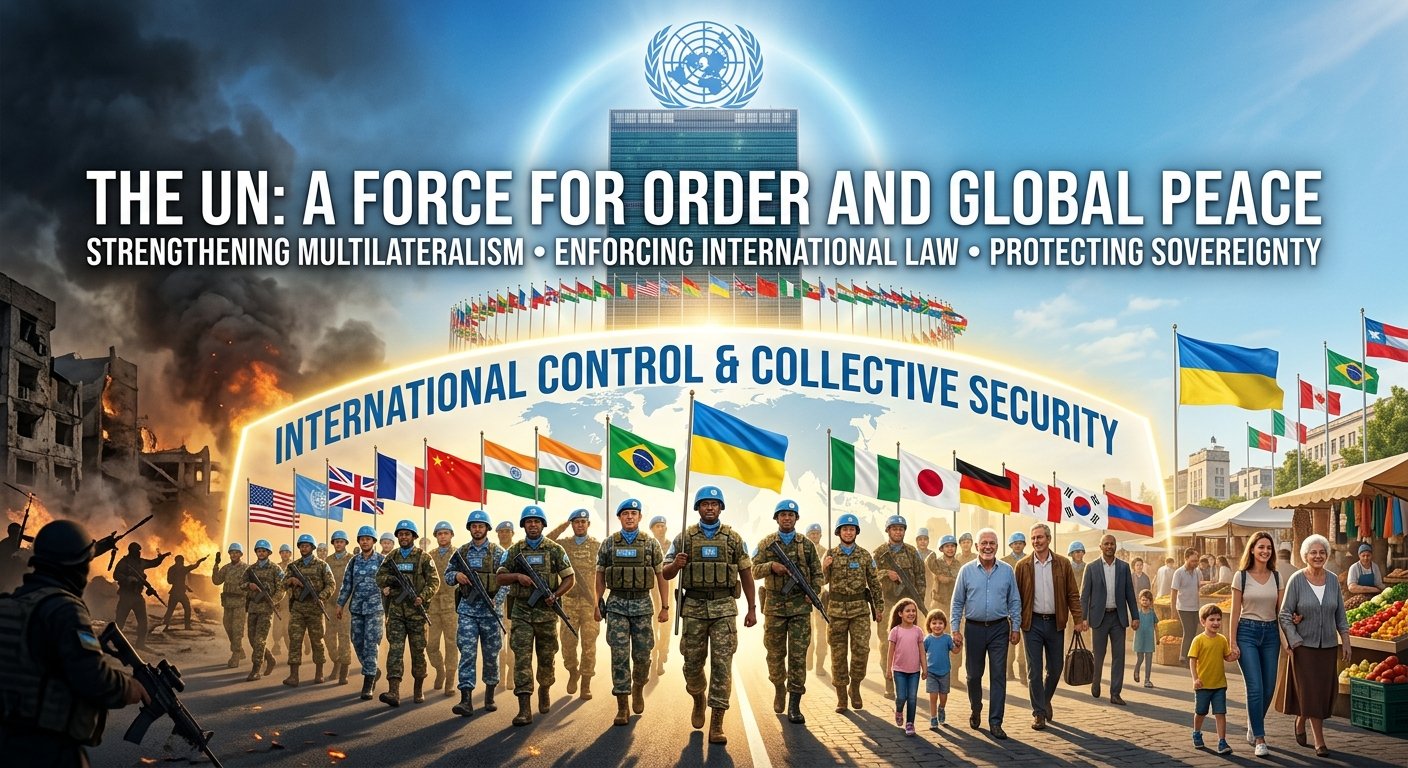
The Fragility of Sovereign Survival: Why the Ukraine Crisis Demands a Powerful UN and International Control

In an interconnected global landscape, the safety of sovereign nations should ideally be anchored in universal laws, collective security, and multilateral institutions. Yet, contemporary geopolitics frequently reverts to a theater of transactional diplomacy, where the fate of a nation can pivot on the shifting political whims of a single superpower. The CNN.com article, “Gift for Putin as fears grow that Trump is turning the screws on Ukraine”, exposes the raw vulnerabilities inherent in a world governed by bilateral coercion rather than institutionalized global order. When unilateral leadership can abruptly alter the trajectory of a war of aggression—rewarding an aggressor while squeezing a besieged democracy—it becomes painfully clear that international peace cannot rely on the goodwill of transient leaders. Instead, this crisis serves as a stark argument for robust international control and a truly empowered United Nations capable of shielding nations from the caprices of unilateral power.

Continue reading “The Fragility of Sovereign Survival: Why the Ukraine Crisis Demands a Powerful UN and International Control”