
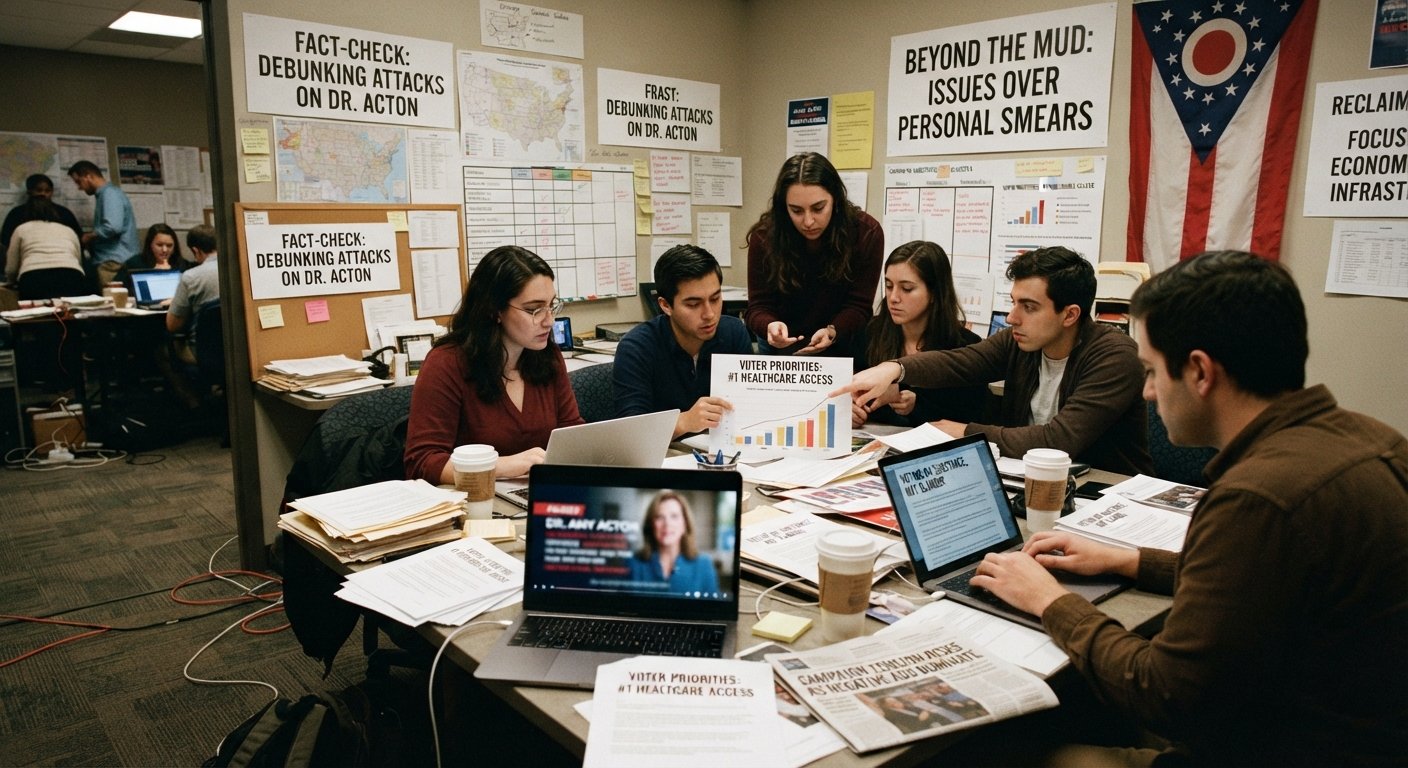
Elections are supposed to be a marketplace of ideas—a structured debate where voters weigh competing visions for the economy, healthcare, education, and infrastructure. Yet, modern political advertising has increasingly devolved into a theater of personal destruction. Rather than engaging voters with policy proposals, campaigns frequently lean on character assassinations, irrelevant personal attacks, and manufactured outrage.
The gubernatorial race in Ohio serves as a prime case study of this alarming trend, particularly regarding the aggressive tactics deployed against candidate Dr. Amy Acton.
The Descent Into Personal Smears
In recent campaign cycles, attack ads targeting Acton have frequently bypassed substantive critique in favor of low-blow personal narratives. Rather than focusing strictly on legislative records or fiscal plans, opponents have pushed deeply personal and misleading claims—ranging from baseless attacks on her medical credentials and career to viral, out-of-context social media spins regarding personal moments and unverified accusations concerning her health and private life.
Independent fact-checkers and watchdogs have repeatedly stepped in to debunk these narratives, pointing out that political action committees and opponents have fabricated positions she never held and twisted her professional history out of context.
When campaigns invest millions into misleading voters about personal matters, substance is entirely lost.
Why Focus Matters: Back to the Issues
Voters face very real, tangible challenges: the cost of living, economic development, housing affordability, and community safety. When airwaves are saturated with personal smears, several negative consequences follow:
- Erosion of Public Trust: Constant negativity convinces voters that all politicians are corrupt or incompetent, driving down voter turnout and civic engagement.
- Distraction from Policy:Critical platforms—such as Acton’s economic proposals centered on reducing medical costs and expanding tax credits—get buried beneath a mountain of sensationalized noise.
- Exclusion of Qualified Leaders: The vicious nature of personal smears deters many qualified professionals from entering public service, fearing that their personal lives and past careers will be distorted for political gain.
Reclaiming the Democratic Process
Elections should respect the intelligence of the electorate. Campaigns must be challenged to pivot away from playground politics and personal grievances, returning instead to robust debates on governance, ethics, and economic strategy.
Voters deserve to hear how candidates plan to solve problems, not fabricated gossip designed to manipulate emotions. By rejecting smear tactics at the ballot box, the electorate can send a clear message: substance matters more than mudslinging.
Dr. Amy Acton Responds to Controversial Attack Ads in Ohio
This video provides a direct look at how candidates are forced to publicly address and debunk invasive personal smear campaigns rather than focusing on substantive policy discussions.