
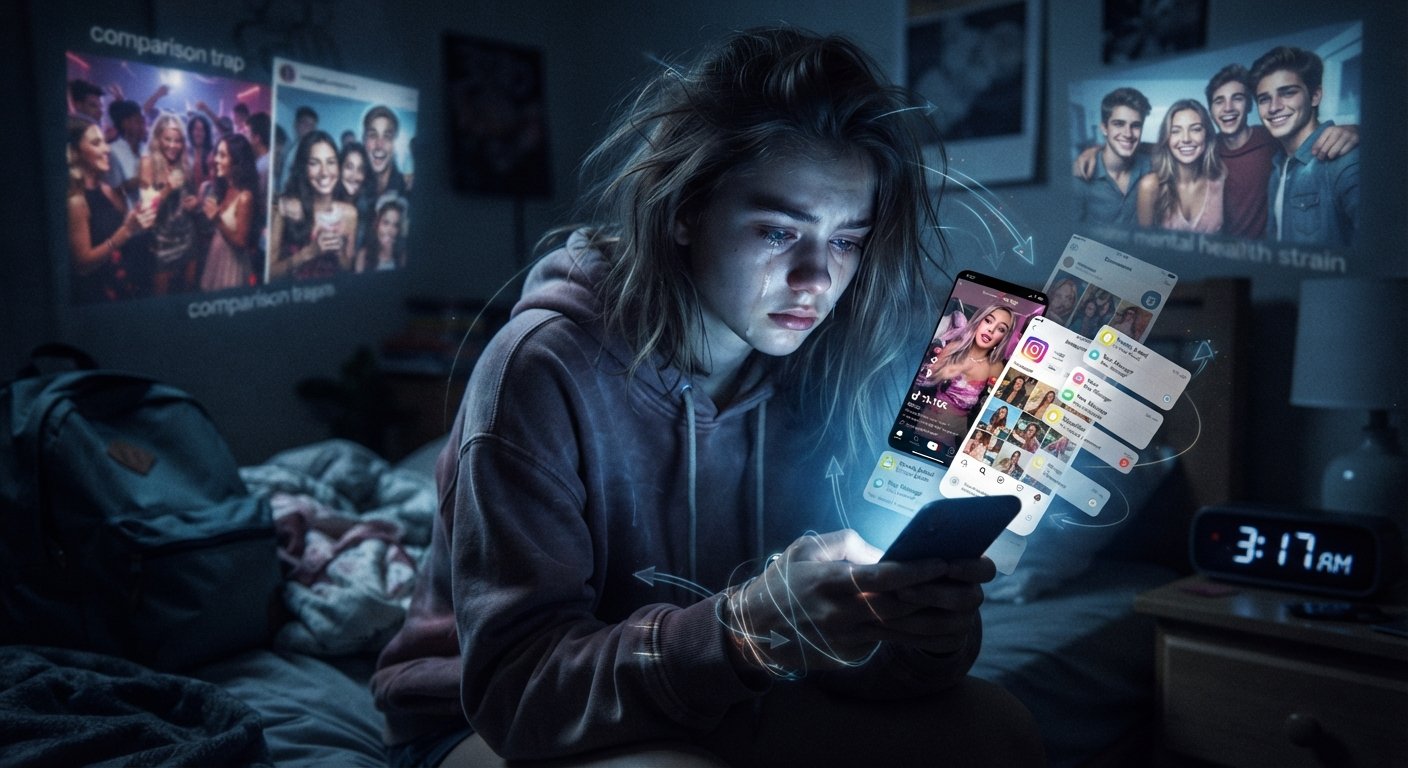
Over the past decade, smartphones and high-speed internet have fundamentally reshaped the developmental landscape for young people. Platforms like TikTok, Instagram, and Snapchat are no longer just optional entertainment; they are central infrastructure for adolescent social life. However, mounting empirical research from institutions like the Pew Research Center and public health warnings from the U.S. Surgeon General highlight a troubling reality: excessive social media consumption is taking a severe toll on the mental health, sleep, and overall well-being of the younger generation.
1. Mental Health Strain and the Comparison Trap
Adolescence is a delicate developmental period defined by identity formation and a heightened sensitivity to peer evaluation. Social media hyper-amplifies this vulnerability by transforming peer interactions into a quantified, round-the-clock popularity contest.
- The Illusion of Perfection: Platforms are curated highlights reels. When youth endlessly scroll through idealized depictions of beauty, wealth, and success, they engage in upward social comparison. According to findings highlighted by the World Happiness Report, social media is harming adolescents at a scale capable of shifting population-level mental health metrics.
- Anxiety and Depression: Studies evaluated by Yale Medicine indicate that teens aged 12 to 15 who spend three or more hours a day on social media face double the risk of experiencing symptoms of depression and anxiety.
2. Disrupted Sleep Architecture
Sleep is the cornerstone of healthy neurological and physical development during youth. Unfortunately, the infinite scroll is engineered to defy natural circadian rhythms.
- Late-Night Engagement: Reports compiled by the U.S. Department of Health and Human Services show that nearly one in three adolescents report using screen media until midnight or later on typical weekdays.
- The Blue Light and Overstimulation Cycle: Artificial blue light suppresses melatonin production, while emotional or dramatic content keeps the brain’s reward centers hyper-aroused, leading to chronic sleep deprivation. This deficit heavily impairs cognitive functioning, academic performance, and emotional regulation.
3. The Mechanics of Compulsive Use and Addiction
Modern platforms utilize sophisticated algorithms designed to maximize user retention through intermittent variable rewards—much like a slot machine.
- Behavioral Overstimulation: Frequent and compulsive usage can overstimulate the brain’s reward pathways, triggering dependency patterns comparable to substance use disorders (Sokolove Law Statistics).
- Loss of Agency: A growing share of adolescents recognize this dynamic. According to data from the Pew Research Center, roughly 45% of teens now admit that they spend too much time on social media, fighting a daily tug-of-war between connection and compulsion.
Moving Forward
While social media does offer youth spaces for creativity and community connection, the unchecked escalation of excessive screen time presents clear public health hazards. Addressing this challenge requires a coordinated cultural shift—one where tech platforms face stricter accountability for algorithmic design, parents establish firm digital boundaries, and young people are empowered to reclaim offline spaces for genuine human connection.