
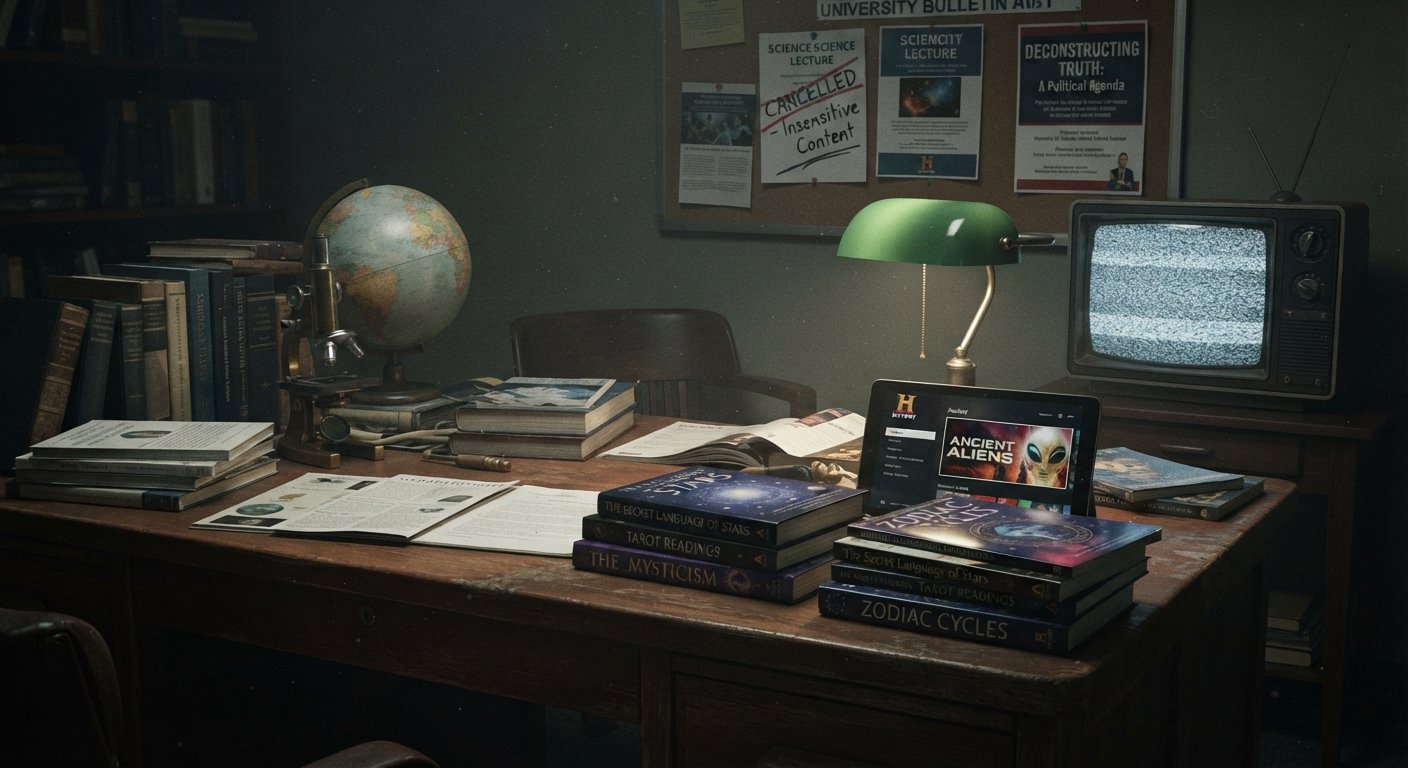
The advancement of human civilization rests upon a fragile foundation: the commitment to objective truth, empirical inquiry, and rigorous skepticism. Science and critical thinking do not happen by accident; they require discipline, peer review, and a willingness to be proven wrong. Today, however, this foundation is eroding. Pseudoscience—masked as entertainment, wellness, or ideological purity—is seeping into the mainstream. When society loses its grip on what constitutes valid knowledge, truth becomes merely a matter of preference, threatening both intellectual progress and cultural sanity.
The Cultural Drift: From Astrology to “Ancient Aliens”
In contemporary culture, superstition has made a stunning comeback, repackaged for the digital age. Practices like astrology, once relegated to the back pages of tabloid newspapers, now enjoy a lucrative renaissance among younger generations seeking comfort and identity online. More damaging, however, is the mainstreaming of pseudo-history through powerful media platforms.
A prime example is the trajectory of the History Channel. Once a venue for documentaries, it drifted heavily into speculative entertainment, most notably with programs like Ancient Aliens. Rather than engaging in genuine historical or archaeological inquiry, such shows rely on rhetorical manipulation—posing baseless questions to attribute humanity’s greatest achievements to extraterrestrials. As critics note, dismissing human ingenuity in favor of sensationalist fiction isn’t just lazy television; it is a direct assault on historical reality that actively erodes public science literacy.
Higher Education and the Trap of Ideological Dogma
While popular media appeals to entertainment-driven credulity, a parallel crisis is unfolding within institutions built to protect rigorous thought: universities. Ideally, academia should be a sanctuary for fearless inquiry, where any hypothesis can be tested and debated. Increasingly, however, universities face pressure from political correctness and ideological conformity.
When institutional priorities shift from the pursuit of objective truth to the enforcement of political dogmas—often categorized under “woke politics”—knowledge is forced to bend to narrative. Certain empirical questions become taboo, and alternative frameworks of understanding are mandated not because they withstand scientific scrutiny, but because they align with prevailing moral orthodoxies. When universities prioritize emotional comfort and political alignment over open debate, they abandon their core mandate, producing graduates trained in compliance rather than critical thought.
Why the Death of Truth Matters
The proliferation of pseudoscience—whether it is cosmic mysticism, manufactured history, or ideologically filtered academia—is not a harmless quirk. It has real-world consequences. When society loses the tools to distinguish between rigorous evidence and comforting fiction, it becomes vulnerable to manipulation, conspiracy theories, and policy failures.
Safeguarding knowledge requires a collective re-commitment to skepticism, free inquiry, and intellectual humility. We must demand better from our media creators, protect our educational institutions from ideological capture, and remember that objective reality cares little for our preferences, politics, or beliefs.