The conversation surrounding modern transportation is inextricably linked to the future of electric vehicles (EVs). Among the pioneers of this shift, Tesla has played a foundational role in dragging the automotive industry out of a century-long reliance on the internal combustion engine. To secure a sustainable future, the continuous development of Tesla’s vehicle technology remains a vital endeavor. Supporting this evolution is not merely a preference for modern engineering; it is an environmental necessity and, increasingly, an economic one. Crucially, evaluating this technology requires a clear separation between the machinery itself and the polarizing political persona of its chief executive officer.
Continue reading “Driving Forward: The Environmental, Economic, and Independent Evolution of the Electric Vehicle”The Executive Palm: A Parable of Capitalism and the Need for a Mixed Economy
The Glass Tower and the Power of Capital
Paul, a dedicated stock clerk in the massive fulfillment center of OmniCorp, smoothed the front of his sweater. He was about to meet with Helen, the company’s CEO. For weeks, he and his colleagues had tried to form a union to negotiate for a living wage—a living wage that would lift them out of poverty and allow them to afford the very goods they handled every day. As Paul entered the executive boardroom, a space gleaming with glass and chrome, he felt small. He felt insignificant. At the far end of the vast room, bathed in the cool light of floor-to-ceiling windows, sat Helen. Her tailored suit spoke of unimaginable wealth, and a faint, knowing smile played on her lips.
To Paul, she didn’t just look wealthy; she looked monumental. She was a figure of unassailable power, like an executive giant. When she raised her hand, Paul almost instinctively took a step back. But then, a surreal scene unfolded. As Paul stepped onto the conference table, Helen extended her hand, palm upward. In a moment that blurred the line between the metaphorical and the physical, Paul found himself standing in the literal palm of her hand. He was, quite literally, one of the “little people” she controlled.
Continue reading “The Executive Palm: A Parable of Capitalism and the Need for a Mixed Economy”The Architecture of Harmony: Why Global Governance Under the United Nations is the Imperative of Our Time
The image provided serves as a striking metaphorical blueprint for the modern dilemma of international relations. A towering, poised stateswoman—embodying supreme institutional authority and draped in the symbolic blue of the United Nations—stands watch over a sleek conference table where tiny, fragmented figures clutch the isolated flags of individual nation-states. The backdrop features the iconic UN emblem and a matching flag, emphasizing an omnipresent framework of international cooperation. Visually, the scale disparity is profound: the individual delegates appear constrained by their local boundaries, while the unified authority represents the overarching perspective needed to comprehend the whole room.
Continue reading “The Architecture of Harmony: Why Global Governance Under the United Nations is the Imperative of Our Time”The Erosion of Reason: How Pseudoscience and Dogma Threaten Modern Knowledge
The advancement of human civilization rests upon a fragile foundation: the commitment to objective truth, empirical inquiry, and rigorous skepticism. Science and critical thinking do not happen by accident; they require discipline, peer review, and a willingness to be proven wrong. Today, however, this foundation is eroding. Pseudoscience—masked as entertainment, wellness, or ideological purity—is seeping into the mainstream. When society loses its grip on what constitutes valid knowledge, truth becomes merely a matter of preference, threatening both intellectual progress and cultural sanity.
Continue reading “The Erosion of Reason: How Pseudoscience and Dogma Threaten Modern Knowledge”We Must Return to the Wisdom of the “Old Left”
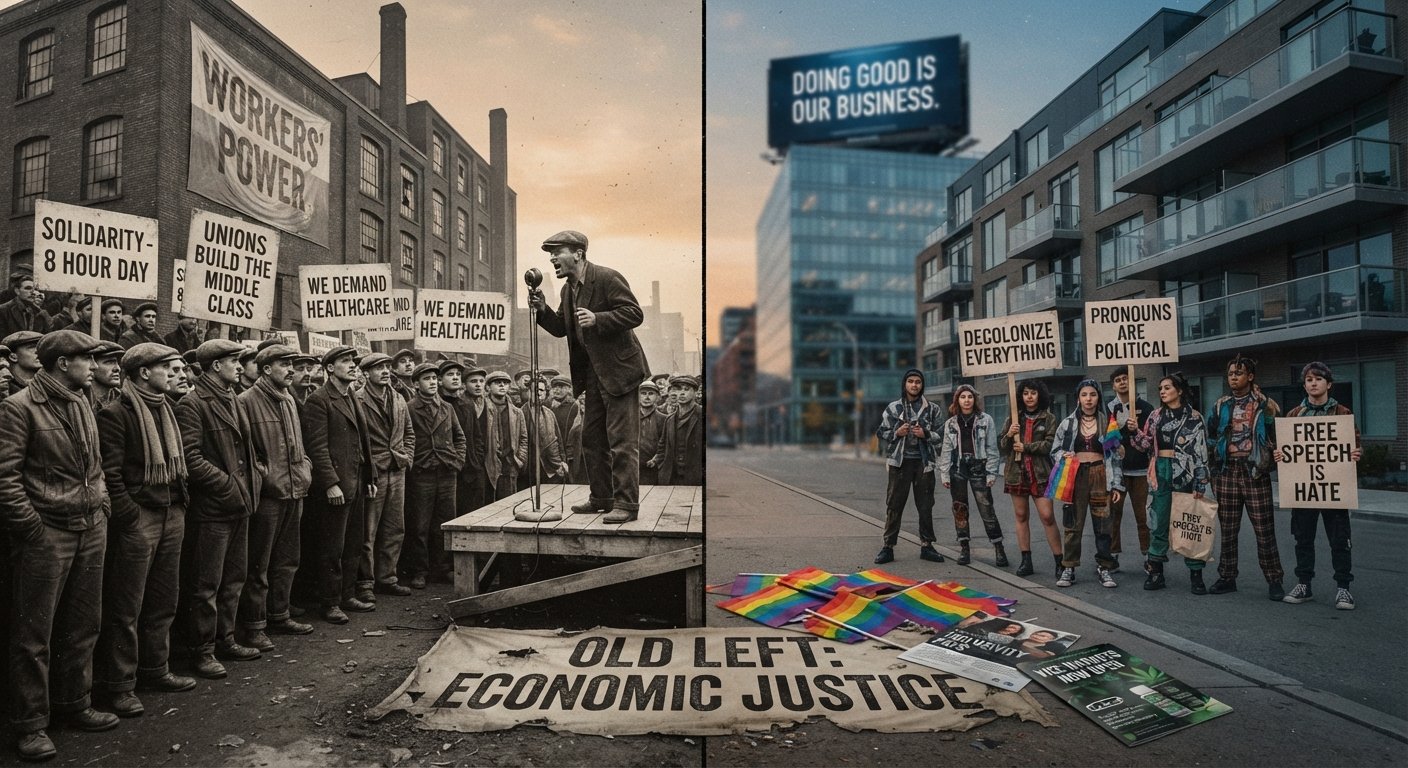
The political evolution of the Western left over the past century represents a fundamental shift in focus—from material economic security to cultural individualism. While the “Old Left” of the mid-20th century prioritized labor, wages, and social welfare, the “New Left” that emerged post-1960 pivoted toward cultural identity, permissive lifestyles, and symbolic politics. For the lower and working classes, this transition has been a disaster, trading tangible material gains for symbolic gestures that ultimately strengthen corporate power and hand political victories to the right.
Continue reading “We Must Return to the Wisdom of the “Old Left””