
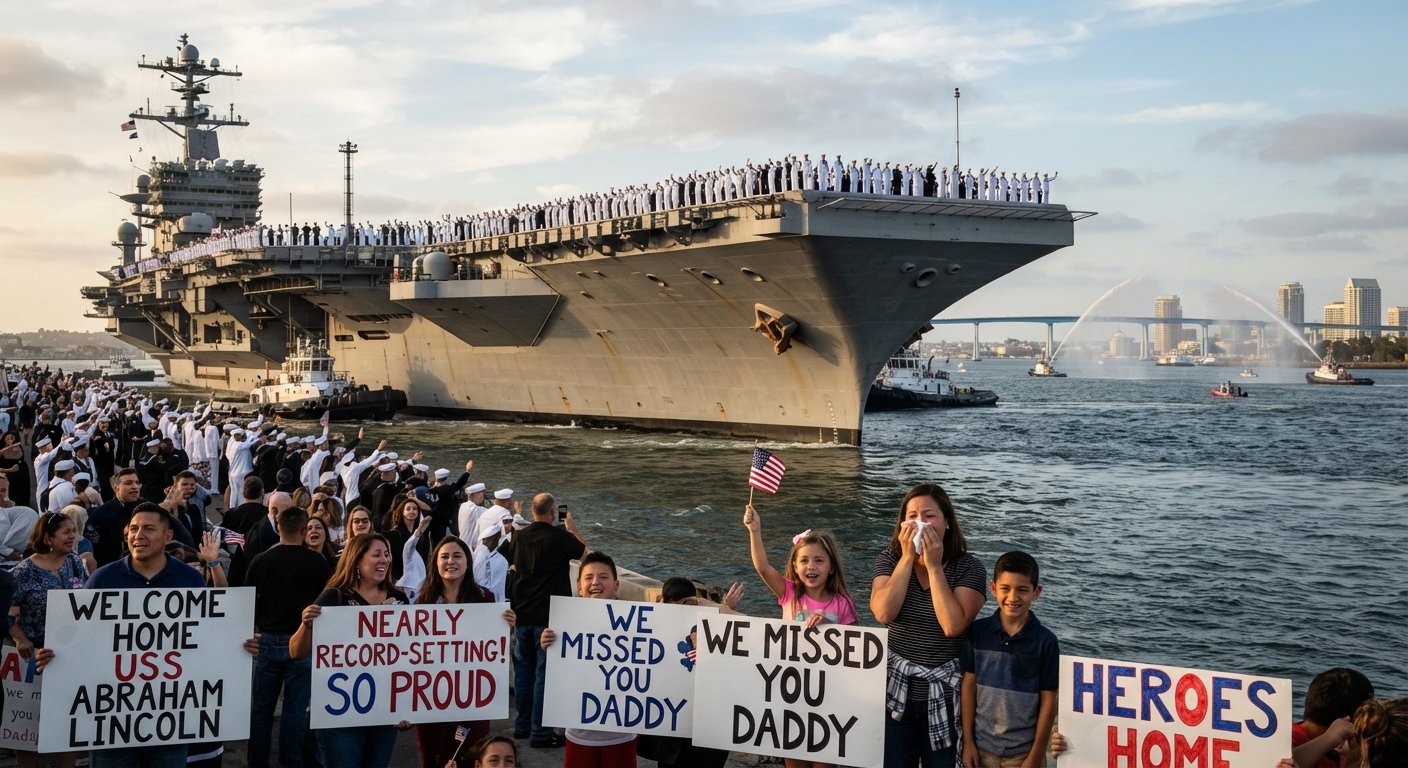
The return of the USS Abraham Lincoln to port after a near-record, grueling deployment marks more than just a logistical milestone for the United States Navy; it highlights a profound human and structural crisis in modern global security. As detailed in coverage surrounding the carrier’s extended tour supporting operations tied to the Iran conflict, the nearly year-long mission pushed thousands of sailors and Marines to the absolute brink.Facing severe supply shortages, deteriorating mental health conditions, and the immense psychological strain of modern combat positioning, the crew’s ordeal brings a hidden cost of unilateral superpower policing into sharp focus. Incidents like this underscore an urgent, systemic need for a paradigm shift in maritime governance: the responsibility of patrolling and policing the world’s “seven seas” should no longer fall primarily on the shoulders of a single nation’s military, but should instead be transitioned to a collective, robust mandate under the United Nations.
For decades, the United States has acted as the de facto global sheriff, maintaining a perpetual presence across critical shipping lanes, the Indo-Pacific, and the Middle East to guarantee freedom of navigation. While proponents argue that this Pax Americana is essential for global trade and geopolitical stability, events surrounding the Lincoln demonstrate that this model is unsustainable. Maintaining continuous carrier strike group presences requires stretching naval fleets to hazardous limits. As reports from the ship highlighted critical shortages—ranging from food and hygiene products to fresh water—and revealed alarming mental health crises among the personnel, it became evident that human beings are paying the price for a unilateral security architecture. A single nation cannot indefinitely bear the financial, material, and psychological toll of policing the globe without severely compromising the well-being of its own service members.
Shifting the burden of maritime security to the United Nations offers a sustainable, multilateral alternative rooted in collective responsibility. The oceans are a global commons, vital to the economic survival of virtually every nation on Earth. Consequently, protecting international shipping routes, combating piracy, and deterring state-sponsored maritime aggression are duties that logically belong to the international community as a whole, rather than the US Department of Defense alone. A UN-led maritime security framework—potentially executed through a permanent, pooled international naval coalition operating under a unified command—would distribute the financial and operational weight across member states. This cooperative approach would prevent the exhaustion of any single military force and align security operations with international law and global consensus.
Furthermore, internationalizing the policing of the seven seas would enhance the legitimacy and effectiveness of global interventions. Unilateral enforcement often triggers regional suspicions, escalates arms races, and draws accusations of imperialism or hyper-interventionism. In contrast, a coalition operating under the auspices of the United Nations would possess broader diplomatic backing, making it harder for rogue actors or hostile states to frame routine freedom-of-navigation operations as acts of single-nation aggression. By pooling resources, intelligence, and naval assets from diverse nations, a UN maritime force could maintain a persistent, effective deterrent presence without forcing any one country’s sailors to endure near-year-long, high-stress deployments that invite operational fatigue and humanitarian crises.
The harrowing homecoming of the Lincoln should serve as a wake-up call for policymakers and global leaders alike. When the safety of global commerce relies on driving individual service members to physical and psychological collapse, the current system is fundamentally broken. It is time to retire the outdated model of unilateral global policing and embrace a cooperative future. By empowering the United Nations to take the helm in safeguarding the world’s oceans, the international community can protect global trade, preserve regional stability, and—most importantly—spare human lives from the unsustainable burdens of empire.