Global International Socialism

The modern global architecture faces compounding crises that transcend national borders—from widening economic inequality and ecological degradation to financial volatility and the displacement of labor. Traditional Westphalian sovereignty, built upon the competition of isolated nation-states, proves increasingly incapable of managing a globally integrated economy dominated by transnational capital. Addressing these systemic failures requires a structural evolution toward international socialism, manifested through a globally regulated mixed economy coordinated by an empowered United Nations.

Continue reading “Global International Socialism”

International Authority to Regulate the Private Sector

Standing Tiny Before the Global Common Good: The Imperative for a Strong United Nations Regulatory Commission

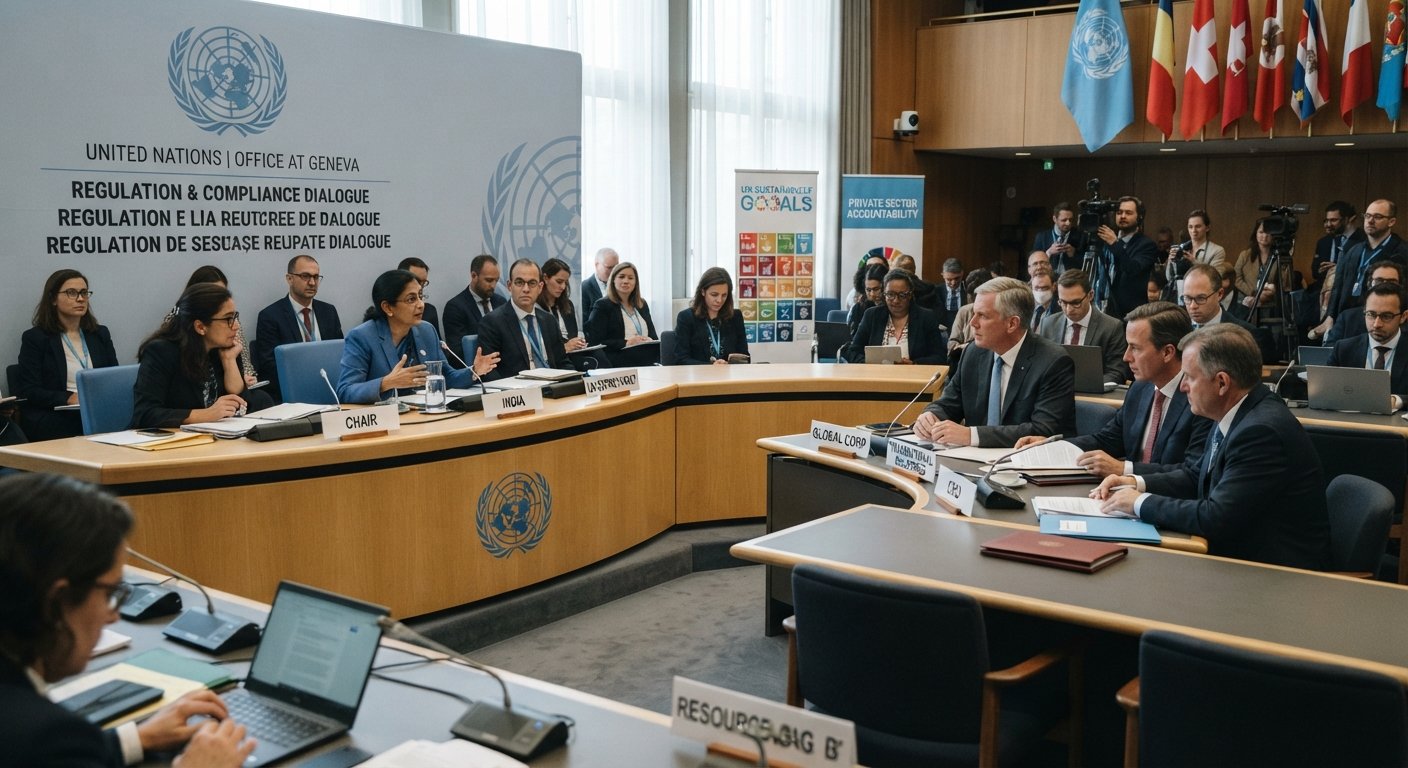
Capitalism, in its purest and most unbridled form, is driven by a singular, relentless imperative: the accumulation of capital. While this engine of private enterprise has generated unprecedented technological innovation and material wealth over the past few centuries, leaving it entirely unchecked and unregulated produces systemic crises that threaten the very fabric of human society and the natural world. In an era of globalization, where corporate entities transcend national borders with ease, the traditional nation-state often finds itself outmatched, captured, or coerced by transnational capital. To protect humanity from the perils of corporate hegemony, environmental collapse, and extreme inequality, we must envision a paradigm shift: a strengthened United Nations endowed with the authority to regulate international corporations for the collective good, redistribute wealth and income, and act as an ecological guardian. Within this new order, corporate giants—no matter how vast their market capitalization or global reach—must stand tiny and small before the regulatory commissions of the United Nations.

Continue reading “International Authority to Regulate the Private Sector”

United Nations International Military Force

The recent shutdown of Saudi Arabia’s vital East-West oil pipeline following explosive strikes and subsequent fires is far more than a localized regional disruption—it is a glaring symptom of systemic global anarchy. When critical civilian and economic infrastructure can be targeted at will, plunging energy markets into chaos and threatening regional stability, it exposes the profound toothlessness of contemporary international relations. We are living under a system of glorified international lawlessness, where sovereign states and non-state actors alike operate in a perpetual state of unpunished aggression, completely unbound by any enforceable global social contract.

Continue reading “United Nations International Military Force”

A New World in the Making

The dawn of a unified global era demands the complete dismantling of legacy frameworks that have long fractured human progress. Transitioning away from the fragmentation of competitive national rule, humanity must forge a single, cohesive planetary authority under the governance of the United Nations. This structural evolution replaces arbitrary borders and localized geopolitical friction with synchronized, international administration. Sovereignty is no longer hoarded by individual states, but pooled collectively to address planetary challenges—from ecological preservation to equitable resource distribution—through universal legislation and collaborative enforcement.

Continue reading “A New World in the Making”

United Nations Must Have Its Own Nuclear Arsenal

The modern international system remains anchored in the precarious architecture of sovereign nation-states, an arrangement defined by recurring friction, shifting balances of power, and the inherent instability of competitive deterrence. To transcend this perpetual state of geopolitical anarchy and establish enduring global stability, the United Nations must evolve beyond its current status as a forum for debate into a sovereign authority endowed with ultimate coercive power. Granting the United Nations an independent nuclear arsenal—and transforming it into the foundational prelude to a legitimate world government—is not a radical dismantling of international law, but the logical culmination of collective security.

Continue reading “United Nations Must Have Its Own Nuclear Arsenal”