
CNN’s rare, on-the-ground reporting inside Israeli-occupied southern Lebanon provides a sobering look at the devastating realities of border warfare. The scenes depicted—entire Shia Muslim villages leveled into rubble alongside isolated Christian enclaves cut off from the rest of the nation—illustrate a fundamental truth about the Middle East’s recurring conflicts: military incursions, preemptive strikes, and tactical occupations offer no lasting security. Instead, they exacerbate displacement, perpetuate radicalization, and destabilize entire regions.
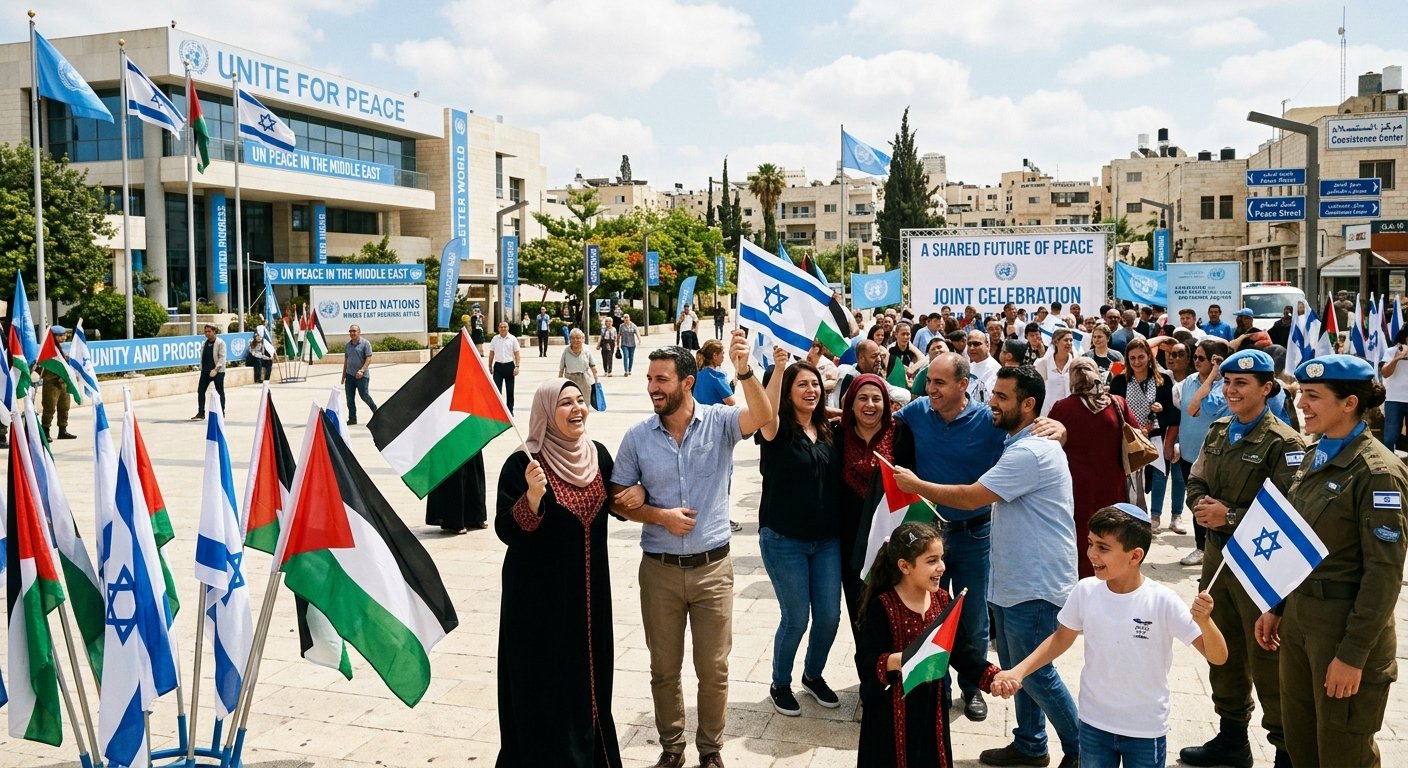
To break this destructive cycle, international diplomacy must address both the core structural cause of the regional crisis and the lack of robust enforcement along international borders. Long-term peace can only be achieved through two linked interventions: establishing a viable, independent Two-State Solution for Israelis and Palestinians, and reforming the United Nations peacekeeping mandate to give international forces the real authority needed to prevent cross-border invasions.
1. The Core Engine of Conflict: Resolving the Israeli-Palestinian Quest for Sovereignty
While Israeli incursions into southern Lebanon are often framed as responses to proxy forces like Hezbollah, these peripheral conflicts are deeply linked to the core unresolved issue: the denial of self-determination for both Israelis and Palestinians.
- Sovereignty as a Stabilizing Force: A formal two-state framework guarantees the state of Israel its right to exist in peace and security, while simultaneously establishing a sovereign, contiguous, and viable Palestinian state.
- Undercutting Non-State Actors: Non-state armed groups draw political legitimacy and recruitment from the unresolved political plight of Palestinians. Establishing an independent Palestinian state removes the primary pretext used by regional actors to launch asymmetrical warfare against Israel.
- Mutual Security Realism: Security cannot be asymmetrical. An occupied or stateless population will continually resist, prompting further military incursions. Formal statehood anchors both peoples within international law, making sovereign governments accountable for actions originating from their territory.
2. Transforming the UN: From Passive Observers to Empowered Peacekeepers
CNN’s reporting highlights how international borders in the region often exist only on paper during times of escalation. Historically, United Nations peacekeeping bodies—such as UNIFIL in southern Lebanon—have operated under restrictive Chapter VI mandates that emphasize monitoring and reporting rather than active enforcement.
To prevent countries from unilaterally launching invasions across international boundaries, the UN must be granted a long-term, robust enforcement mandate under Chapter VII of the UN Charter:
- Enforcement, Not Just Observation: Peacekeeping missions along volatile lines—such as the Israel-Lebanon Blue Line or future Palestinian-Israeli borders—must possess the binding legal authority and defensive hardware to stop illegal incursions, rocket fire, and military cross-border incursions from any actor.
- Buffer Zone Sovereignty: International forces must be empowered to demilitarize border corridors effectively, ensuring neither sovereign armies nor armed non-state militias build offensive infrastructure along frontier zones.
- Long-Term Multilateral Commitment: Short-term diplomatic fixes repeatedly fail when political pressure wanes. A sustained, multi-decadal UN presence provides the structural buffer needed for mutual trust and civil institutions to develop over time.
Conclusion
The destruction witnessed in southern Lebanon is a reminder that tactical military dominance does not produce strategic peace. Every invasion sows the seeds of the next border war, burdening civilians on both sides with displacement and trauma.
The path forward requires addressing root causes rather than symptoms. By committing to a genuine Two-State Solution, the international community can fulfill the legitimate national aspirations of both Israelis and Palestinians. Coupling that diplomatic foundation with an empowered, long-term UN peacekeeping force ensures that international borders are respected, holding all nations and actors accountable under a shared rule of law.