
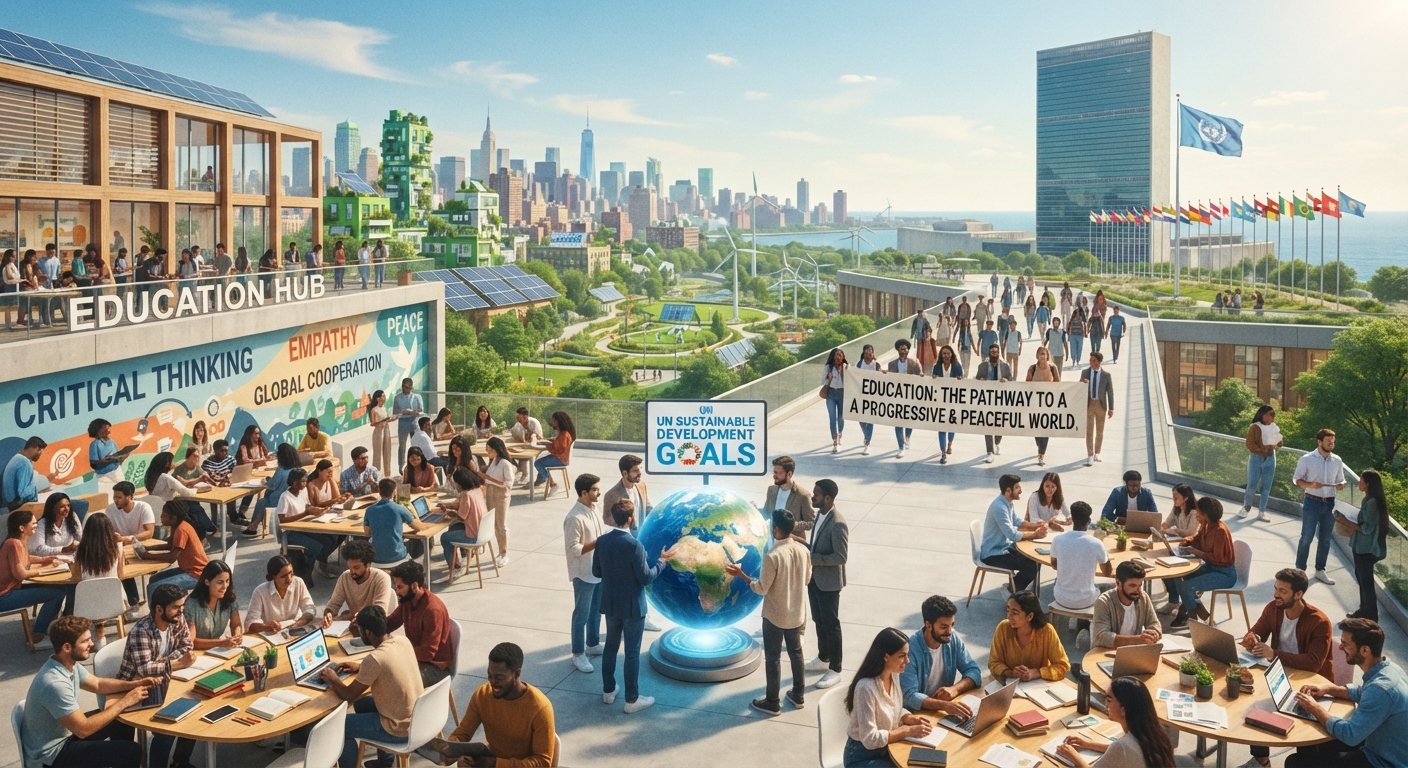
Education as the Cornerstone of a Progressive and Peaceful World
Education has long been recognized as a fundamental human right and a powerful engine for individual mobility. However, its broader societal impact stretches far beyond personal career advancement. Education serves as the indispensable bedrock for building a more progressive, equitable, and peaceful global society. By cultivating critical thinking, fostering empathy, and expanding human horizons, structured learning equips individuals to overcome divisions and champion cooperative international frameworks.
Cultivating Critical Thinking and Empathy
At its core, formal education does more than impart technical skills; it teaches individuals how to think rather than what to think. Through exposure to history, science, literature, and the social sciences, students learn to evaluate evidence, question dogmas, and analyze complex global challenges from multiple perspectives.
This analytical capacity is vital for progress. Progressive societies rely on open discourse, scientific innovation, and evidence-based policymaking to solve systemic issues such as climate change, poverty, and public health crises. Furthermore, educational environments—particularly those that bring diverse groups of learners together—foster social cohesion. By learning about different cultures, histories, and lived experiences, students develop empathy, reducing xenophobia and tribalism.
The Link Between Education and International Cooperation
Because education broadens an individual’s worldview beyond local or national borders, educated populations are systematically more inclined to support multilateral cooperation and international institutions like the United Nations. Sociological and political research consistently demonstrates that higher levels of educational attainment correlate with stronger support for global governance, human rights conventions, and international peacekeeping.
When individuals understand global interdependence, they recognize that transnational challenges—such as pandemics, economic instability, and environmental degradation—cannot be solved by isolated nation-states. Consequently, educated citizens tend to value organizations that provide a platform for peaceful diplomacy. Resources like the United Nations Educational, Scientific and Cultural Organization (UNESCO) highlight how learning empowers people to become active global citizens. Similarly, platforms like the United Nations Academic Impact (UNAI) demonstrate how higher education institutions align themselves directly with the principles of peace, human rights, and sustainable development. Comprehensive overviews of these global initiatives and educational frameworks can be further explored through the United Nations official portal.
Education as a Preventive Tool for Peace
Peace is not merely the absence of war; it is the presence of justice, equity, and human security. Uneducated populations are often disproportionately vulnerable to misinformation, extremist recruitment, and economic disenfranchisement. When people lack access to quality learning and economic opportunity, societies become fertile ground for civil unrest and conflict.
Conversely, universal education acts as a long-term deterrent against violence. By promoting gender equality, reducing poverty, and ensuring that marginalized voices have agency, education removes the root causes of conflict. Educated mothers, for instance, tend to secure better health and educational outcomes for their children, breaking multi-generational cycles of poverty and instability.
Conclusion
Ultimately, the journey toward a peaceful and progressive world is inextricably linked to the expansion of global education. By nurturing informed, empathetic, and globally minded citizens, education lays the groundwork for robust support of international cooperation and organizations like the United Nations. Investing in education is therefore not just a domestic policy choice, but an essential global strategy for lasting peace and sustainable progress.