
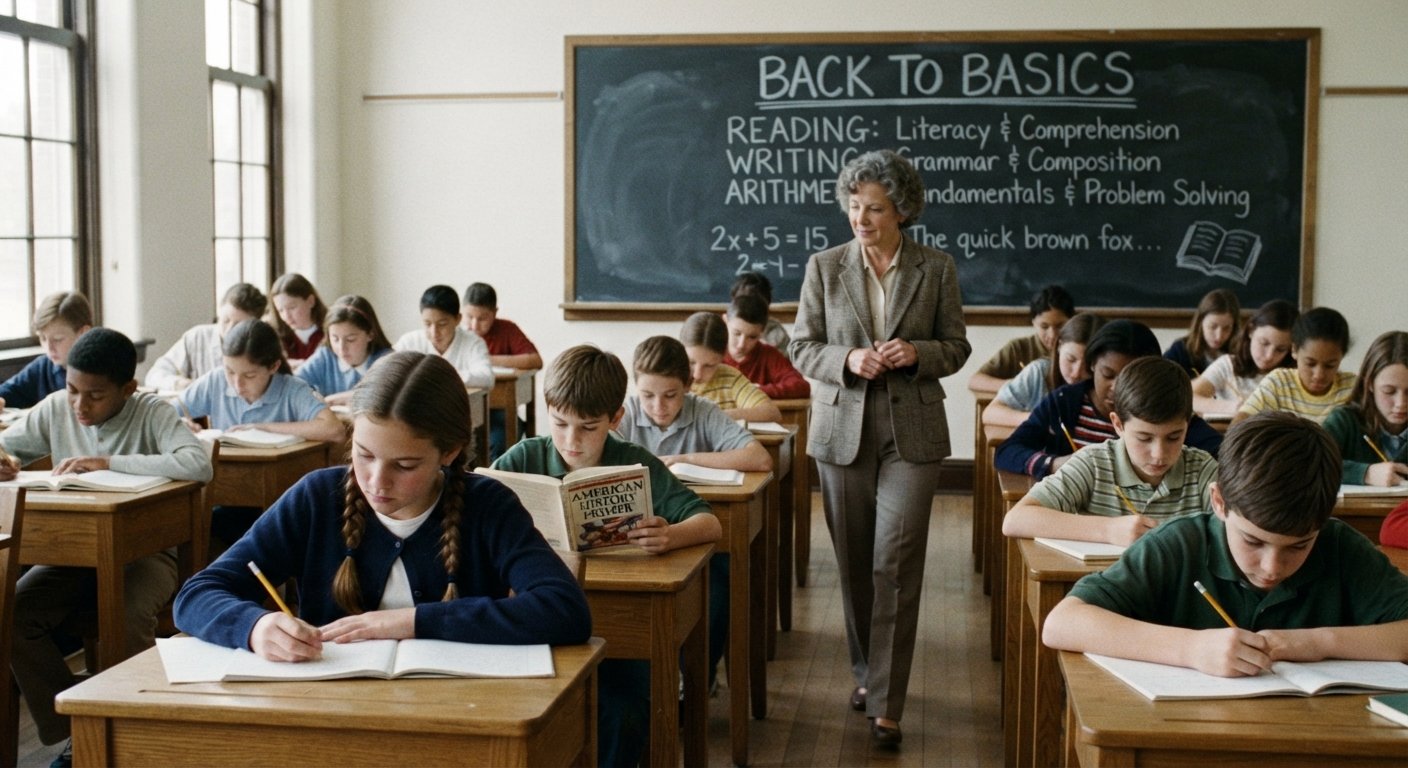
American education is facing a profound quality crisis. For years, national metrics and longitudinal studies have signaled a troubling downward trend in student achievement across core academic subjects. To reverse this trajectory, schools must strip away administrative bloat and pedagogical fads, anchoring themselves in a proven remedy: a rigorous return to the basics—reading, writing, and arithmetic—bolstered by a renewed commitment to classroom discipline.
The Anatomy of the Current Crisis
The indicators of distress in America’s classrooms are well-documented. Data from the National Assessment of Educational Progress (NAEP) and comprehensive studies from academic institutions like Harvard University’s Center for Education Policy Research have highlighted a generation-long decline in student proficiency. Long-term trend assessments reveal sharp drops in fundamental competencies, with high school senior reading and math scores recently plummeting to multi-decade lows.
Rather than focusing squarely on core academic mastery, modern curricula have frequently fragmented instructional time with shifting trends and extraneous programs. When students transition to higher grades without firm footing in basic literacy and numeracy, they experience widespread academic fatigue, low comprehension, and diminished critical thinking skills.
The Power of “Back to Basics” (The Three Rs)
The most effective strategy to restore educational rigor is a systematic return to the three Rs: Reading, wRiting, and aRithmetic.
- Foundational Competence:Strong skills in reading, writing, and mathematics serve as the absolute backbone of all intellectual development. A student cannot successfully analyze history, engage with scientific concepts, or solve complex word problems without first achieving basic literacy and numerical fluency.
- Structured Progress:The back-to-basics framework emphasizes direct instruction, deliberate practice, and rapid feedback.Rather than rushing students through advanced concepts before they are ready, this approach ensures deep comprehension and builds authentic academic confidence through steady, measurable achievement.
The Essential Role of School Discipline
Academic instruction cannot thrive in an environment of chaos. Alongside a curricular reset, a strict re-establishment of school discipline is paramount.
Effective learning requires predictable routines, respect for authority, and safe classrooms where teachers can teach and students can concentrate. When behavioral standards are compromised, instructional time evaporates, and student morale deteriorates. Restoring clear, enforceable codes of conduct protects the learning environment and teaches invaluable habits of self-control, punctuality, and accountability that students will carry into adulthood.
Conclusion
The crisis in American education requires decisive course correction. By refocusing classrooms on the non-negotiable fundamentals of the three Rs and pairing academic rigor with robust discipline, schools can rebuild competence and character. Embracing this disciplined, back-to-basics model is the surest path to equipping the next generation with the tools they need to succeed.