
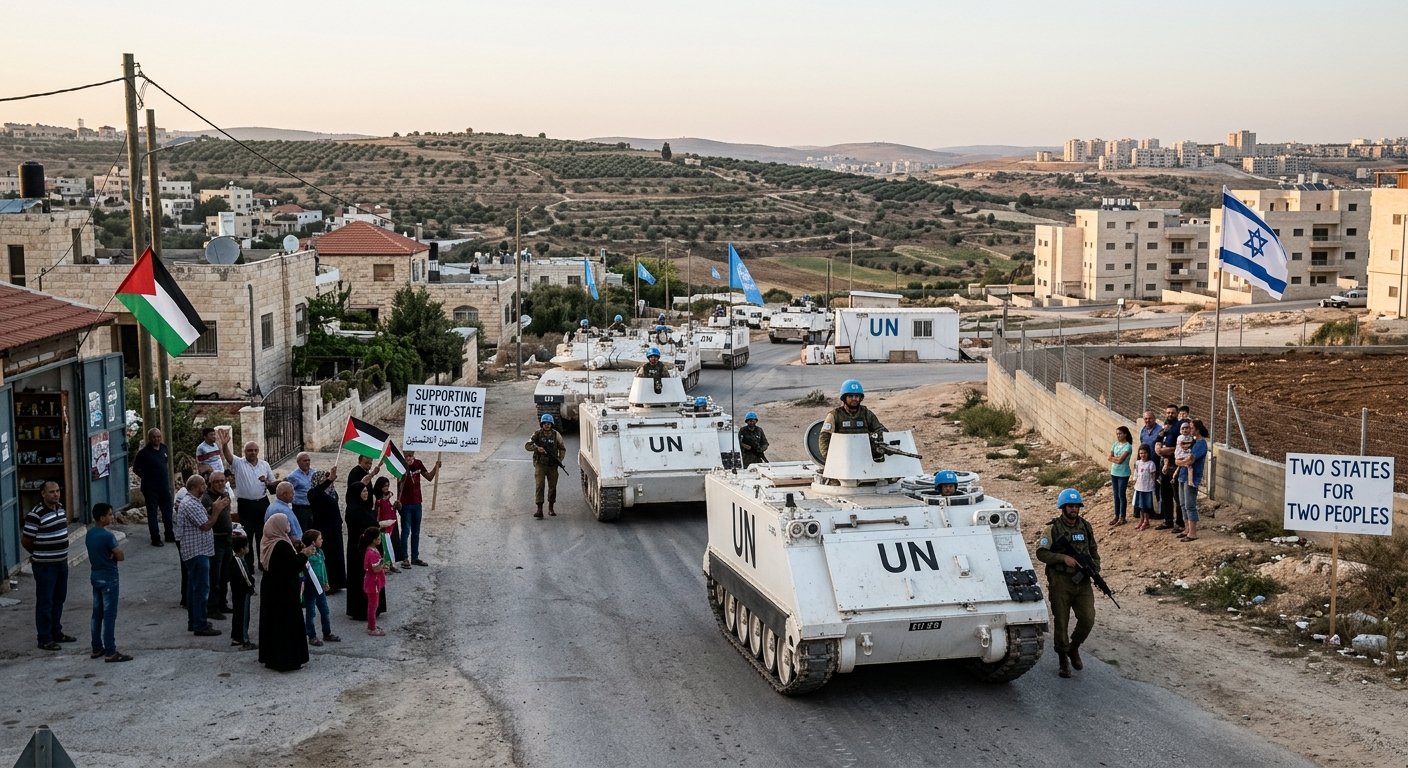
The recent violent assault on Washington Post photojournalist Heidi Levine by Israeli settlers in the occupied West Bank serves as a grim reminder of the escalating instability plaguing the region. While covering the traditional Palestinian olive harvest, Levine was targeted, knocked down, and beaten, yet she firmly stated that the attack has only strengthened her resolve to keep documenting the realities on the ground. Incidents like this, widely covered by global outlets such as CNN, Common Dreams, and the Associated Press, underscore an urgent, undeniable truth: the situation in the West Bank and the broader Middle East is spiraling out of control. In the face of intensifying localized violence, structural gridlock, and governmental failures, it is the fundamental responsibility of the United Nations (UN) to step forward, enforce international law, and pave the way toward a viable, lasting two-state solution.
The Ground Realities: Impunity and Escalation
Levine’s harrowing account highlights a daily reality for Palestinians and the journalists who document their lives. According to reports detailed by Reuters and BBC News, violence carried out by extremist settlers has surged significantly, frequently occurring under the watchful or protective gaze of military forces. When journalists wearing explicit “PRESS” markings and foreign diplomats can be targeted without immediate domestic accountability, local enforcement mechanisms have clearly proven inadequate.
This environment of impunity fosters a continuous cycle of retaliation and despair. As highlighted by analyses in Al Jazeera and The Guardian, the systematic expansion of unauthorized settlements systematically dismantles the geographic and economic viability of a future Palestinian state. Without an authoritative external actor to halt illegal expansion and protect vulnerable civilian populations, the ground realities will only deteriorate further.
The Role of the United Nations in Crisis Resolution
While individual sovereign states often become paralyzed by geopolitical alliances, domestic political pressures, and diplomatic gridlock, the United Nations remains the premier global body engineered precisely for this purpose. The UN’s charter mandates the maintenance of international peace and security, making the realization of Middle Eastern stability a core institutional obligation.
To effectively solve these persistent issues, the UN must transcend passive condemnations. This requires deploying robust monitoring missions to document human rights violations objectively, holding perpetrators of settler and state-sponsored violence accountable through international legal frameworks, and coordinating unified global economic and diplomatic pressure. Outlets like Politico and The New York Times frequently report on the diplomatic friction at the UN Security Council; however, bypassing obstructionist vetoes through robust General Assembly resolutions and international coalitions is essential to re-establishing international order.
Toward an Effective Two-State Solution
At the heart of a sustainable resolution lies the long-advocated two-state solution—a framework where a sovereign, independent Palestine exists side-by-side in peace and security with the State of Israel. Decades of bilateral “peace processes” managed entirely outside comprehensive multilateral frameworks have repeatedly collapsed because power asymmetries heavily favor the occupier over the occupied.
The UN must actively spearhead a renewed, binding international peace conference backed by global superpowers and regional stakeholders alike. This roadmap must establish clear, non-negotiable benchmarks: halting settlement expansion, defining secure and recognized borders based on pre-1967 lines with mutually agreed land swaps, resolving the status of Jerusalem equitably, and addressing the rights of refugees.
Conclusion
Heidi Levine’s refusal to be silenced mirrors the resilience of those who continue to advocate for justice and peace in the Middle East. However, journalists and local farmers should not have to rely on sheer luck and human shields to survive daily life. The ongoing crisis demands more than temporary outrage; it requires structural, multilateral intervention. By championing human rights, enforcing international law, and aggressively steering the international community toward a just two-state solution, the United Nations can fulfill its historical mandate and help forge a future defined by dignity, security, and lasting peace.
Source List
- Associated Press (AP) – Global news coverage regarding Middle Eastern diplomacy and regional conflicts.
- Al Jazeera – On-the-ground reporting concerning West Bank settlement expansion and humanitarian conditions.
- BBC News – International analysis on Israeli-Palestinian security dynamics and political developments.
- CNN – Primary reporting on the assault of Washington Post journalist Heidi Levine and localized West Bank violence.
- Common Dreams – Independent coverage detailing human rights abuses and international reactions.
- Politico – Insights into international diplomacy, UN Security Council dynamics, and Western foreign policy.
- Reuters – Factual reports on military actions, settler violence, and diplomatic pressures.
- The Guardian – Investigative journalism focusing on human rights in the occupied territories.
- The New York Times – Comprehensive editorials and reporting on the feasibility of the two-state solution.