
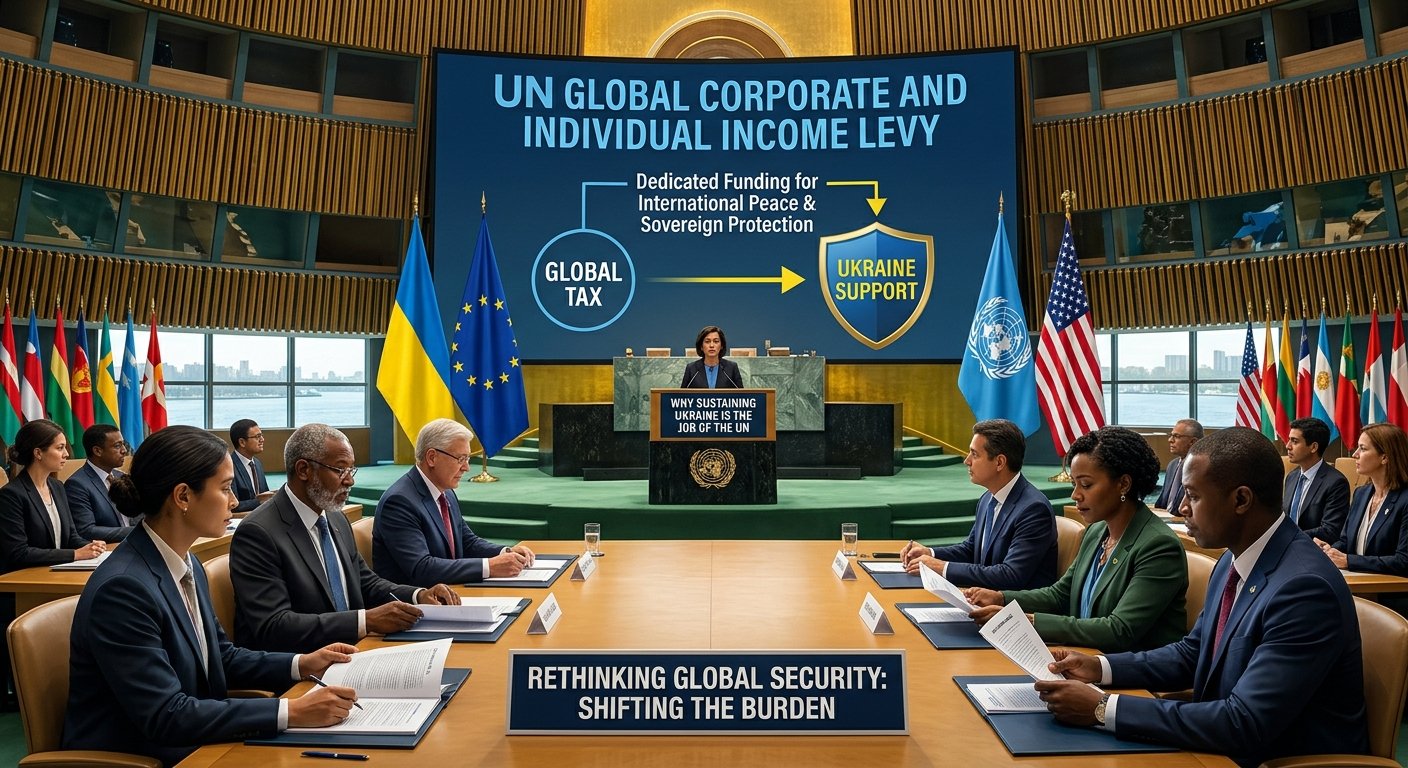
As the war in Ukraine persists, the fundamental vulnerabilities of Kyiv’s security landscape have become starkly apparent. The CNN report, “How reliant is Ukraine on US support – and could Kyiv carry on without it?”, outlines the dangerous precariousness of Ukraine’s dependency on political, financial, and military assistance from Washington. While American aid has been the linchpin of Ukraine’s defense, political shifts in the United States routinely threaten to disrupt critical deliveries, leaving Ukrainian forces vulnerable to severe shortages in essential defense material. This structural fragility underscores a critical reality: sustaining Ukraine’s sovereignty cannot remain solely the duty of a single superpower. To build a reliable foundation for international security, the United Nations must step into a primary role, establishing dedicated, permanent funding mechanisms—including targeted global taxation—to support nations facing unprovoked aggression.
The Limits of Unilateral Support
The analysis provided by CNN underscores that Ukraine’s reliance on the United States is both vast and precarious. Bilateral assistance is inherently subject to domestic political dynamics, election cycles, and shifting legislative priorities within the donor nation. When political deadlocks or policy pivots occur in Washington, the real-world consequences on the Ukrainian battlefield are immediate and devastating, resulting in gaps in air defense, ammunition shortages, and strained strategic planning.
Reporting from The Kyiv Independent highlights that while European allies have stepped in with substantial financial packages and equipment, the overall apparatus remains fragmented without a centralized, guaranteed funding backing. When aid depends on single-country legislative approvals, security becomes transactional and uncertain. This erratic structure exposes a dangerous flaw in modern international law enforcement: a sovereign country defending its existence should not have its survival tied to the political debates of another nation’s capital.
The United Nations’ Mandatory Duty
The United Nations was founded on the mandate to maintain international peace and security and to prevent the unilateral alteration of sovereign borders by force. Leaving the financial and military burden of defending these principles primarily to the United States undermines the multilateral purpose of the UN Charter.
While the UN has organized critical regional relief efforts and humanitarian aid appeals, its structural contribution to Ukraine’s long-term economic resilience remains secondary compared to sovereign nation-state donors. Allowing individual countries to shoulder the defense of international law enables other member states to act as free riders, benefiting from global stability without contributing proportionally to its preservation. It is time for the UN as a collective body to share the responsibility of defending sovereignty. Protecting international norms requires collective institutional backing, not just voluntary contributions from a few nations.
Funding Security: The Case for a UN Corporate and Individual Income Levy
To systematically solve the chronic underfunding of defense and reconstruction support, the UN should petition member nations for a direct, dedicated funding instrument: a standardized UN global tax on corporate profits and high-net-worth individual incomes specifically earmarked for international peace, border integrity, and sovereign defense funds.
Currently, UN humanitarian appeals rely on voluntary pledges from member states, leaving international aid programs subject to budget shortfalls and donor fatigue. As detailed in broader global economic discussions reported by CBC News, relying on volatile, voluntary commitments leaves international systems perpetually vulnerable to shift.
A micro-levy on international corporate earnings and high-net-worth individuals—administered through member states—would generate a predictable, insulated stream of revenue. This dedicated funding mechanism would serve key international stability priorities:
- Sustained Security and Economic Defense: Provides non-partisan, consistent assistance to nations facing territorial aggression without depending on the political approval of individual parliaments.
- Equitable Global Responsibility: Distributes the cost of defending international law across multinational entities and ultra-high-net-worth entities that rely on stable global markets and safe trade routes.
- Depoliticized Assistance: Converts security aid from discretionary political favors into an established framework of international public safety infrastructure.
Conclusion
The insights from CNN’s report serve as a warning about the risks of single-source reliance in international conflict. Relying primarily on the United States to uphold democratic borders is unsustainable for Washington, hazardous for Kyiv, and an avoidance of duty by the rest of the international community. The United Nations must reassert its founding purpose by taking a leading, structured role in securing aid for Ukraine. By petitioning for a dedicated international corporate and individual income tax to fund peace and sovereign protection, the UN can replace fragile, voluntary assistance with a stable institutional foundation capable of defending international order.
Sources
- CNN: How reliant is Ukraine on US support – and could Kyiv carry on without it?
- The Kyiv Independent: CNN: US aid slump unlikely to have major short-term impact
- Evening Standard: How long can Ukraine hold out without United States aid?
- CBC News: Carney says ‘direct casualties’ are result of Ukraine’s restricted access to Starshield
- UN News / OCHA: UN Relief Chief calls for US$2.6 billion to support Ukraine’s humanitarian plan