
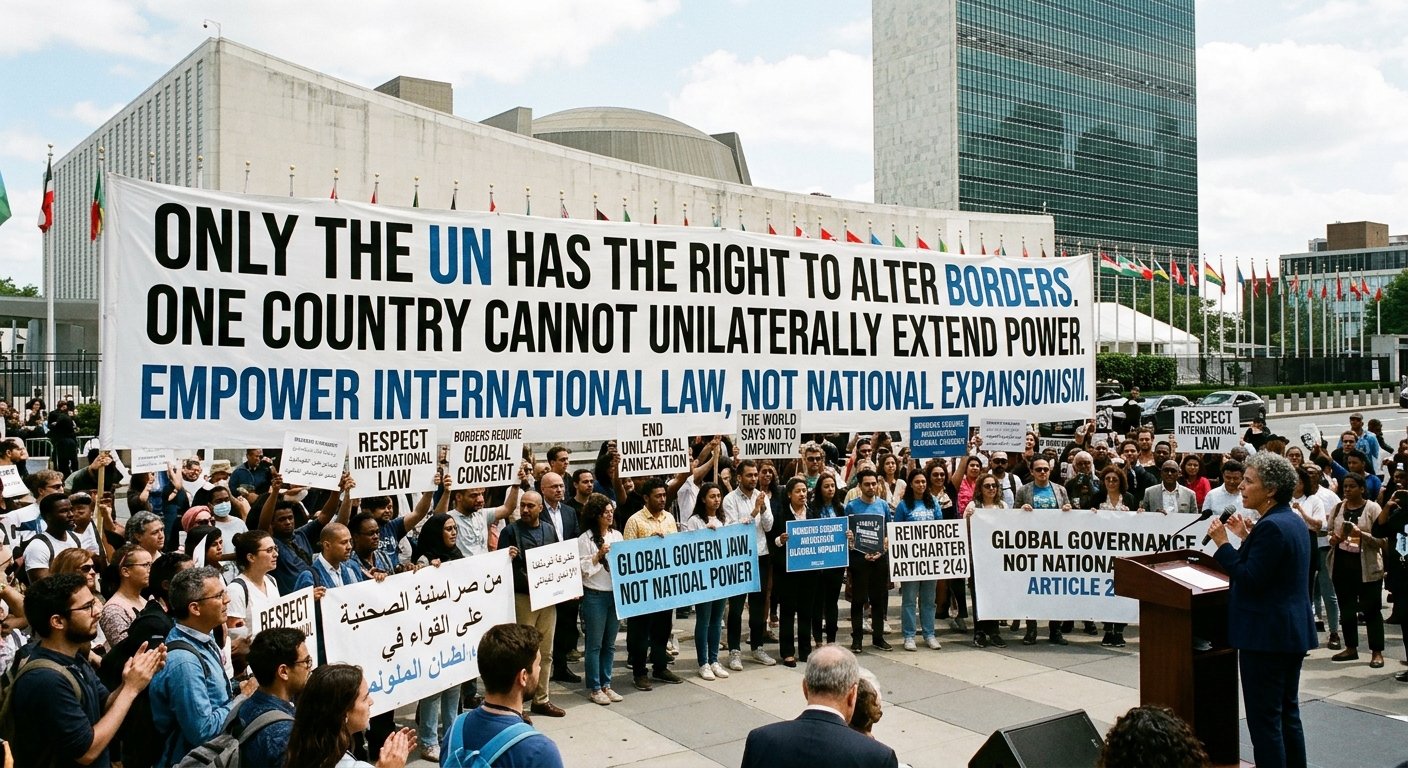
In an investigative report titled “Expansion with impunity: How Israel under Netanyahu has reshaped the West Bank”, CNN details the mechanism through which illegal outposts and retroactive state legalizations have systematically altered the geographic and demographic reality of the occupied territory. The report illustrates how outposts like Esh Kodesh act as launchpads for violence and land seizures, subsequently receiving state approval and integration into national infrastructure. This dynamic highlights a fundamental crisis in contemporary geopolitical order: the ongoing attempt by an individual nation-state to unilaterally alter borders and extend sovereign power beyond its internationally recognized boundaries.
No single country possesses the inherent right to expand its sovereign territory through force, settlement, or administrative decree. In a modern international system designed to prevent imperial conquest, the authority to alter national boundaries, mediate territorial sovereignty, and legitimize changes to geopolitical borders must reside exclusively within global governance institutions—principally a strengthened United Nations.
The Danger of Unilateral Territorial Alteration
The post-World War II global architecture was constructed specifically to end the era in which powerful nations could unilaterally expand their borders at the expense of their neighbors. Article 2(4) of the United Nations Charter explicitly prohibits the threat or use of force against the territorial integrity or political independence of any state. As detailed in reporting from Amnesty International, the ongoing expansion of state-backed settlements in the West Bank directly undermines this principle by incrementally annexing occupied land through de facto control, property destruction, and forced displacement.
When an individual state grants itself the right to reshape borders, it reverts to the rule of “might makes right.” Unilateral expansion creates a precedent where international law is subordinated to domestic political agendas. If one nation can redefine its borders under the guise of security or historical claims, any nation can justify military expansionism or territorial encroachment against a weaker neighbor.
Why Boundary Changes Require Universal Legitimacy
Borders are not merely line drawings on a map; they are international covenants that define the limits of a state’s legal jurisdiction and the rights of the people residing within those lines. Therefore, altering the size or sovereign boundaries of a country cannot be left to internal legislative votes or judicial rulings of the expanding state.
Only a collective body representing the international community possesses the authority to adjudicate, alter, or recognize territorial borders. As emphasized in analysis by the University of Minnesota Human Rights Library, the UN General Assembly’s 1970 Declaration on Friendly Relations explicitly codifies that no territorial acquisition resulting from the threat or use of force shall be recognized as lawful.
Because border changes affect global stability, refugee flows, and international commerce, sovereign adjustments require multi-state consensus. Granting international organizations the sole prerogative to recognize or mandate changes to state borders ensures that self-determination and civilian protections are weighted equally against territorial claims.
The Case for Empowering the United Nations
The ongoing unilateral reshaping of the West Bank highlights the weaknesses of the current international legal framework: the UN holds normative authority but lacks strong enforcement mechanisms. To prevent state-driven expansionism worldwide, the global community must grant greater enforcement power to the United Nations.
1. Mandatory Arbitration of Border Disputes
The UN Security Council and the International Court of Justice (ICJ) should be empowered as the binding arbitrators for all international territorial disputes. Domestic laws passed by national parliaments that attempt to annex or legalize outposts beyond recognized borders should be rendered automatically null and void in international civil, commercial, and diplomatic law.
2. Binding Sanctions for Illegal Expansion
Nations that engage in unilateral border modifications—whether through military conquest or settlement construction—must face immediate, compulsory multilateral sanctions administered directly by the UN. Removing the ability of individual Security Council members to veto responses to explicit territorial violations would ensure that global standards are enforced consistently.
3. Peacekeeping and Border Monitoring
Where borders are actively disputed or subject to illegal settlement, the UN should have the authority to deploy independent peacekeeping forces and monitoring missions to preserve the territorial status quo and prevent civilian displacement.
Conclusion
CNN’s reporting on the West Bank serves as a stark reminder of what occurs when state expansion goes unchecked by international oversight. Unilateral territorial acquisition represents an existential threat to global security and human rights. To maintain global order, the world must reaffirm a fundamental principle: no nation state has the unilateral authority to redrawn borders or extend its sovereignty over external land.
Only a empowered, reformed United Nations—operating with true enforcement capacity—can serve as the sole legitimate authority over international borders, ensuring that sovereignty is governed by international law rather than unilateral force.
Source List
- CNN: Expansion with impunity: How Israel under Netanyahu has reshaped the West Bank
- Amnesty International: Israel’s ethnic cleansing of West Bank Palestinian communities
- Diplomacy & Law: Principle of Territorial Integrity in International Law
- University of Minnesota Human Rights Library: Declaration on Principles of International Law Concerning Friendly Relations