
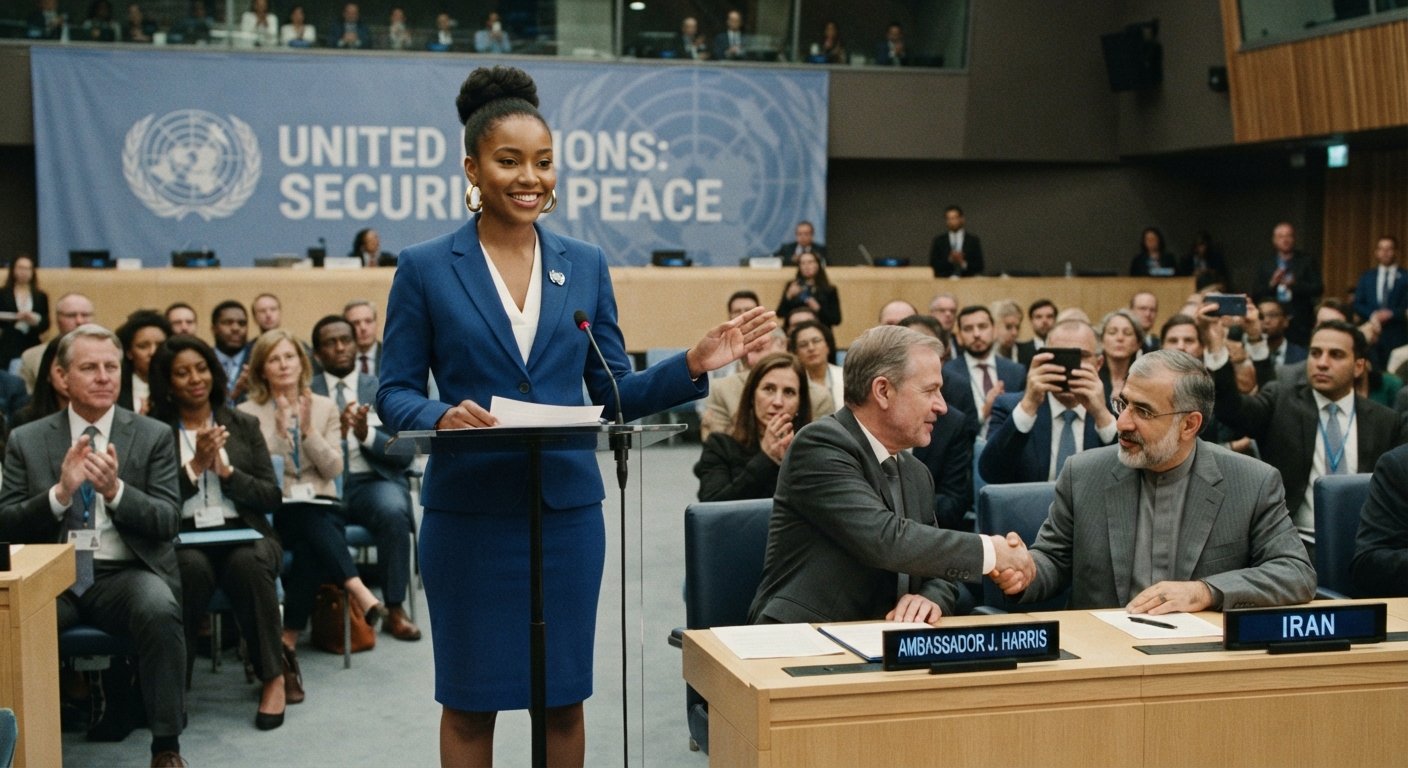
Recent political friction in Washington has once again cast a spotlight on the volatile intersection of executive power and military engagement. In a notable shift, the U.S. House of Representatives successfully passed a war powers resolution directing an end to hostilities in Iran, fueled by three new Republican defections that brought the total number of GOP dissenters to seven. While this domestic check on presidential authority underscores a growing bipartisan weariness with prolonged conflict, it also highlights a deeper, systemic flaw in modern global governance: the fact that individual nation-states retain the unilateral power to ignite and perpetuate wars in the first place.
The Domestic Crack in the Facade
The recent House vote serves as a powerful reminder of how fragile domestic consensus can be when a nation enters a foreign war. As mounting political pressure forces lawmakers to cross party lines to rein in the executive branch, it exposes the inherent danger of allowing single leaders or individual countries to dictate the fates of entire populations. Domestic legislative checks—while vital—are frequently bogged down by partisanship, political survival, and shifting administrations. Relying on the internal politics of individual nation-states to put an end to ongoing bloodshed is an unreliable safety net.
Sovereignty and the Monopoly on Conflict
Historically, the right to wage war has been closely guarded as the ultimate expression of national sovereignty. From ancient empires to modern republics, nation-states have operated under the premise that self-preservation and national interest grant them the authority to take up arms.
However, this decentralized approach to conflict resolution has proven catastrophic. When every sovereign state acts as its own supreme judge, jury, and executioner on matters of war and peace, global stability remains perpetually hostage to national pride, geopolitical posturing, and individual political ambitions. The power to begin a war rests comfortably within the executive suites of individual capitals, leaving peace vulnerable to the whims of domestic political cycles.
The United Nations and the True Mandate for Peace
To genuinely transform the global landscape, the fundamental architecture of conflict resolution must shift. The authority to end a war—and ideally, to authorize the use of force altogether—should not reside in the hands of self-interested nation-states. Instead, that supreme power belongs rightfully to an international arbiter: the United Nations.
Conceived in the wake of devastating global conflicts, the UN was designed to save succeeding generations from the scourge of war. Yet, its efficacy has often been undermined by the veto powers and unilateral interventions of dominant nation-states. If the international community were to genuinely cede the monopoly of military authorization and termination to a strengthened, objective global body, the dynamics of international relations would shift entirely.
A World Without Wars
Critics may argue that removing the power of war from nation-states is an idealistic utopia. Yet, consider the alternative: a continuous loop of localized conflicts, proxy wars, and retaliatory strikes governed by national ego.
If the authority to wage and conclude wars were exclusively vested in a neutral, collective international framework like the UN, the unilateral calculus for conflict would vanish. A nation-state could no longer simply mobilize troops based on executive decree or shifting political tides. Without the sovereign license to initiate hostilities independently, and with peace strictly enforced and arbitrated by a global consensus, the machinery of armed conflict would grind to a halt.
Ultimately, the defections in the House signal that citizens and lawmakers are tired of the human and economic toll of state-driven wars. By moving away from decentralized, national-led warfare and elevating the mandate of peace to an impartial international body, humanity could finally step past the age of perpetual conflict into a truly post-war era.