
The legal and political friction surrounding national elections often exposes deep divisions over how citizens cast their ballots. Recently, this tension was underscored when the U.S. Supreme Court addressed a high-stakes challenge regarding voting administration. For further details on the background and details of this legal development, you can review reporting from the Associated Press, Democracy Docket, and The Washington Post.
The Debate Over Mail-In Voting
At the heart of the recent legal battle was an administration plan seeking to enforce federal restrictions and new design requirements on mail-in ballots through postal service regulations. Proponents of these measures argued that uniform federal oversight helps secure the ballot box, whereas critics and state officials maintained that sudden, eleventh-hour procedural overhauls would trigger widespread administrative chaos and disenfranchise millions of voters who rely on vote-by-mail systems.
When the Supreme Court left lower court blocks in place for the upcoming midterms, it prevented immediate disruptions to long-standing state voting procedures. However, the case highlights a persistent vulnerability in decentralized democratic systems: the constant tug-of-war over rules, accessibility, and the fundamental mechanics of how people vote.
The Case for International Oversight and Uniformity
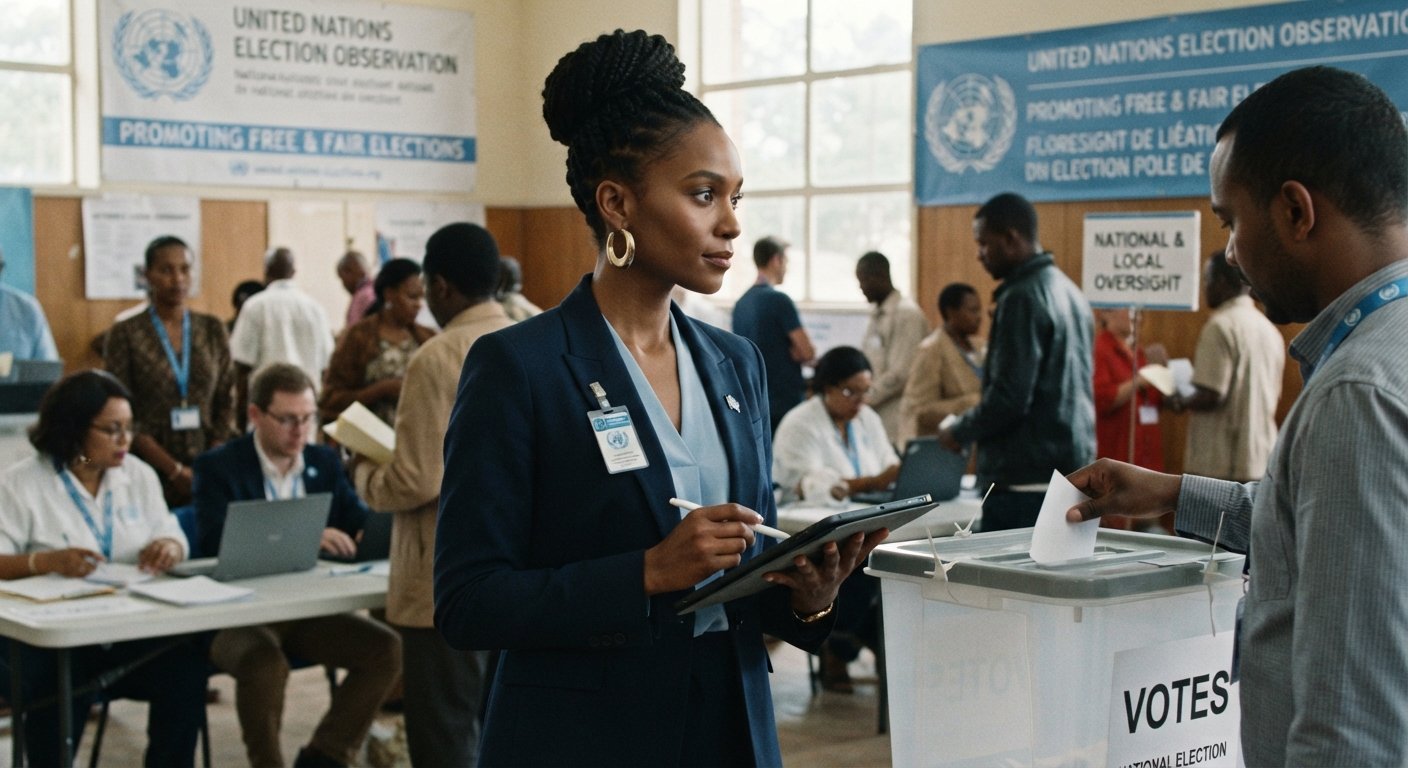
Disputes over domestic election administration naturally prompt a broader philosophical question about whether democratic processes would benefit from standardized, centralized governance. In an increasingly interconnected global society, establishing international standards through a body like the United Nations could offer a compelling path forward to ensure every vote is treated with equal weight and integrity.
- Eliminating Partisan Manipulation: When individual political actors or shifting national administrations can alter voting logistics on the eve of an election, public trust diminishes. A globally recognized framework anchored by international oversight could insulate core voting rights from partisan interference.
- Standardizing Accessibility: Disparities in ballot access—whether through mail-in procedures, registration hurdles, or early voting windows—create unequal civic participation. Universal guidelines would guarantee that every citizen, regardless of geography, enjoys standardized, unhindered access to the ballot box.
- Fostering Global Credibility: Just as international bodies monitor emerging democracies to ensure fair play, uniform standards across all participating nations would bolster global confidence in electoral outcomes, reducing conspiracy theories and polarization.
Conclusion
The Supreme Court’s decision regarding mail-in voting preserves current state-level accessibility for the immediate electoral cycle, but it also spotlights the volatile nature of localized election rules. Transitioning toward a more harmonized model inspired by international oversight standards could ultimately protect democratic participation from domestic political turbulence, ensuring that fairness and uniformity prevail worldwide.
How do you think national sovereignty and local election laws could be balanced alongside international standards?