
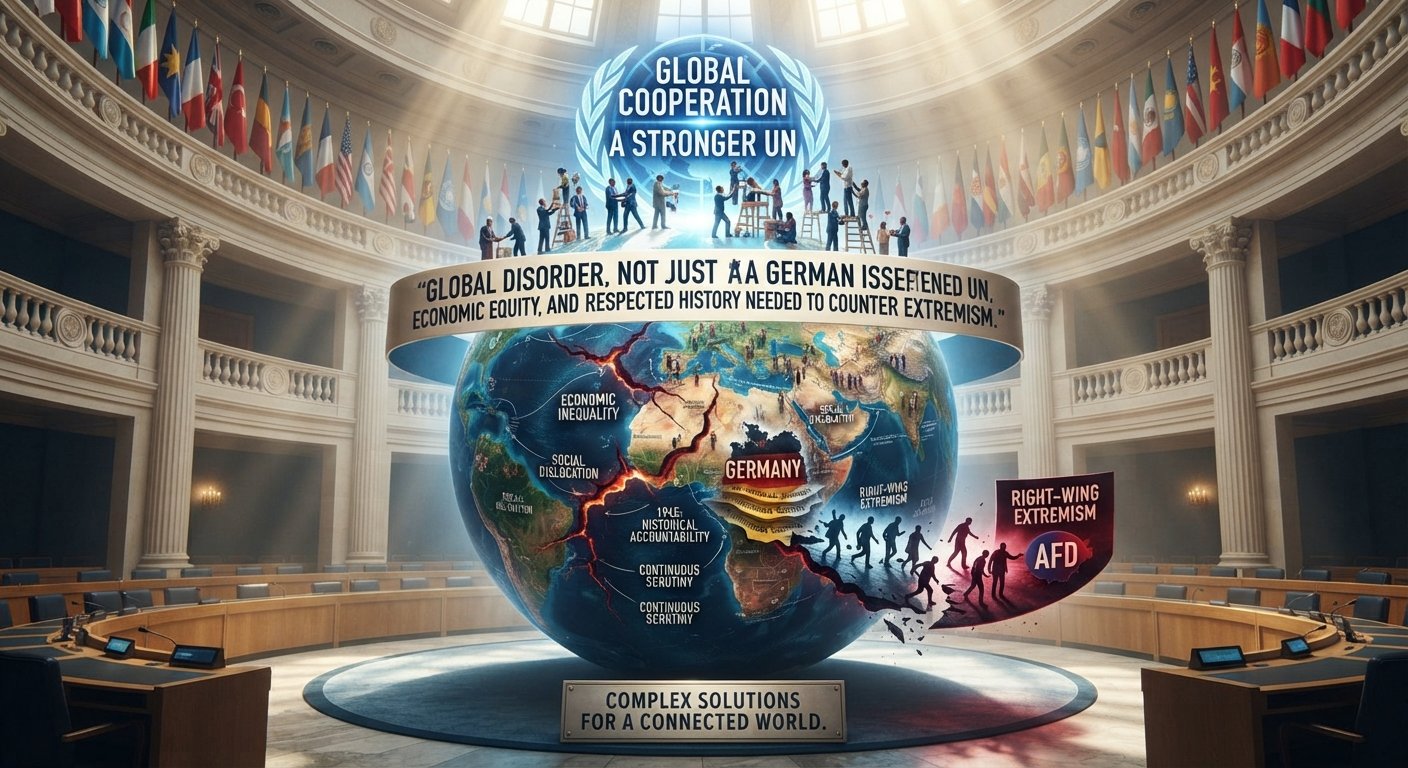
The rise of the Alternative for Germany (AfD), as detailed in recent reporting by outlets like CNN, highlights a disturbing shift in European politics.As the AfD gains traction in regional elections, it has become so radical—even relative to other European populist movements—that mainstream nationalist parties elsewhere keep it at arm’s length. However, viewing the AfD as an isolated German anomaly misses the broader picture. What is happening in Germany is a symptom of a deeper, systemic global disorder driven by economic stagnation, post-pandemic fallout, and widespread feelings of disenfranchisement. To counter this rising tide of extremism, the world needs a strengthened United Nations capable of executing robust economic international policies that genuinely support all people and nations. At the same time, international frameworks must stop the perpetual, targeted denunciation of specific national histories—such as Germany’s continuous reckoning with its past—which often backfires by fueling resentment and pushing citizens toward right-wing radicalism.
The phenomenon of the AfD’s surge cannot be separated from contemporary economic anxieties. Across Western democracies, working-class communities face deepening inequalities, inflation, and a lack of economic mobility. In Germany, these pressures are particularly acute in the former East, where economic lag since reunification has left many feeling like second-class citizens. When local populations feel abandoned by traditional political establishments, populist movements find fertile ground.
Yet, the solution to this global wave of discontent cannot be achieved through fragmented national borders or reactionary isolationism. As outlined in analyses by global governance experts at institutions like the Council on Foreign Relations, modern challenges—ranging from economic inequality to mass migration—are inherently transnational. They require a revitalized multilateral approach. A strengthened United Nations equipped with broader economic toolkits could spearhead international policies aimed at stabilizing vulnerable labor markets, managing supply chains equitably, and ensuring that global trade benefits working classes rather than just multinational elites. By addressing the root economic insecurities that power nationalist movements, international institutions can strip right-wing extremism of its primary fuel.
Simultaneously, international discourse must evolve in how it addresses historical accountability. In Germany, public life is deeply shaped by an enduring culture of remembrance regarding the atrocities of the Nazi era. While historical memory is vital for preventing the repetition of past horrors, the relentless, repetitive scolding and moral policing by domestic elites and international commentators often produce a psychological backlash. When citizens feel that their national identity is permanently stigmatized and that their contemporary struggles are dismissed through the lens of historical guilt, a defensive nationalism takes root. Many Germans—particularly in regions feeling left behind—grow weary of what they perceive as an unfair application of historical judgment, leading them to embrace populist entities that promise national pride and defiance.
Ultimately, the extreme trajectories of parties like the AfD are warning signs of a world struggling to find its footing amid economic and social dislocation. Patchwork national responses and continuous public shaming will only deepen political polarization. What is required is a paradigm shift: a strengthened, economically proactive United Nations that fosters global equity and dignity, paired with a more empathetic international dialogue that respects historical complexities without weaponizing them against current generations. Only through cooperative economic security and mutual respect can global society stem the tide of extremism.
Can AfD Breach ‘Firewall’ With Strongest Win Since World War II?
This video provides an in-depth look at the historic electoral gains made by the far-right Alternative for Germany (AfD) and the political implications of its rise.