
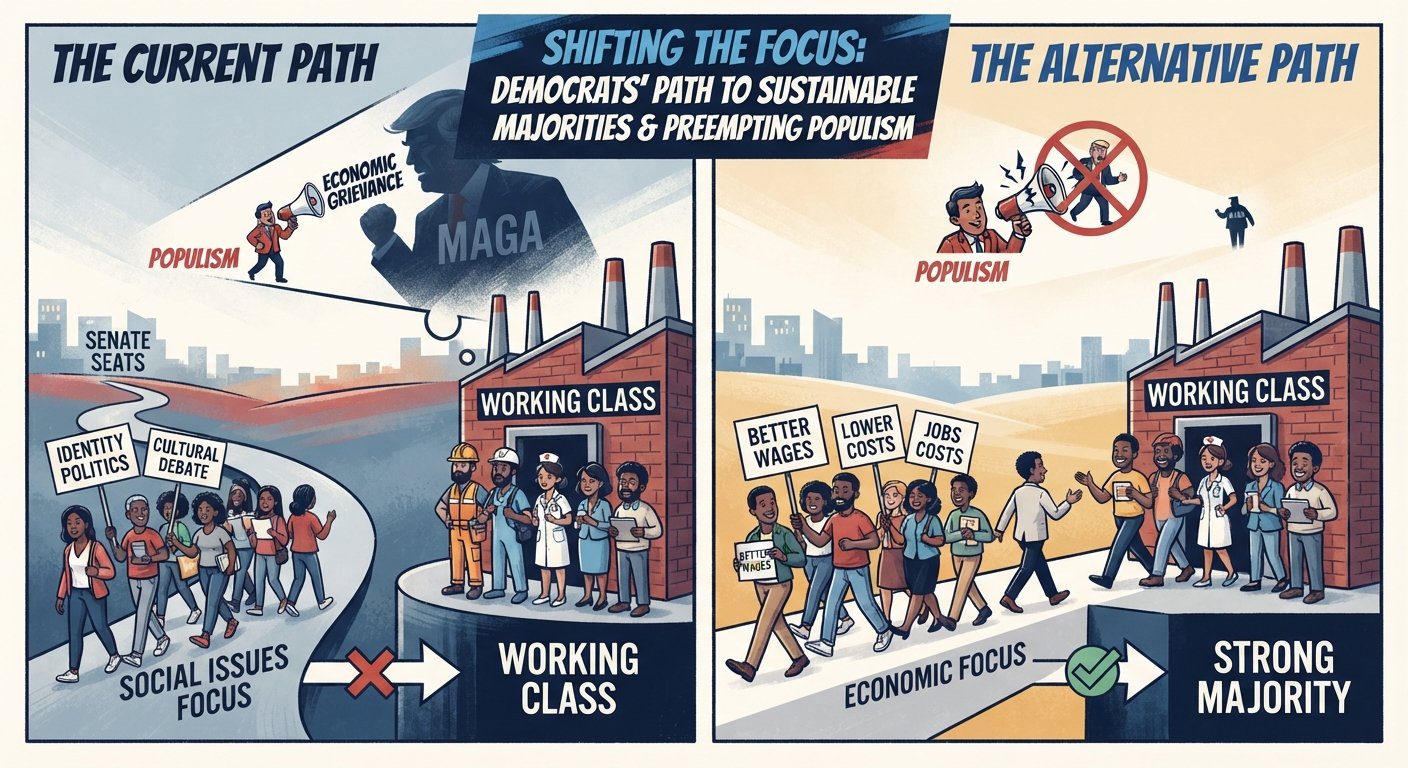
The changing political landscape, highlighted by analyses such as the CNN report on how “Strong candidates and weak GOP rivals reshape the Senate map”, demonstrates that Democrats have crucial opportunities to secure more seats in Congress. Broadening legislative representation is undeniably positive for progressive policy goals, offering a stronger foothold to protect healthcare, labor rights, and environmental protections. However, electoral expansion alone does not address the underlying cultural and economic disconnects that plague modern American politics. To build a lasting, durable majority and preempt the rise of populist movements, the Democratic Party must pivot decisively away from hyper-fixations on niche cultural grievances and refocus its core mission on working-class economics.
For too long, the national brand of the Democratic Party has been tethered to polarizing social debates often characterized as “woke” politics. While human rights, equity, and inclusion are vital moral imperatives, framing political messaging around collegiate academic frameworks frequently alienates mainstream, blue-collar, and rural voters. When campaigns prioritize cultural signaling over material hardship, they leave an opening for populist figures to exploit legitimate economic anxieties.
A profound realignment is necessary. If the Democratic Party had historically centered its platform on robust economic populism—such as strengthening unions, lowering the cost of living, rebuilding American manufacturing, and addressing wealth inequality—the political terrain would look vastly different. Had Democrats firmly established themselves as the undeniable champions of the working class decades ago, Donald Trump and his fellow MAGA Republicans might never have found the cultural and economic vacuum required to win power in the first place. Voters flocked to populist alternatives not always out of ideological alignment, but out of a frustration that traditional institutions had ignored their daily financial struggles.
Winning congressional seats via strong candidates and flailing opponents, as noted in recent CNN coverage, is a welcome tactical victory. Yet, Democrats must view these institutional wins as a second chance rather than total validation. To secure the future of American democracy and build an unstoppable coalition, the party must return to its historic roots: an unwavering focus on jobs, wages, economic security, and the material well-being of every working family.