
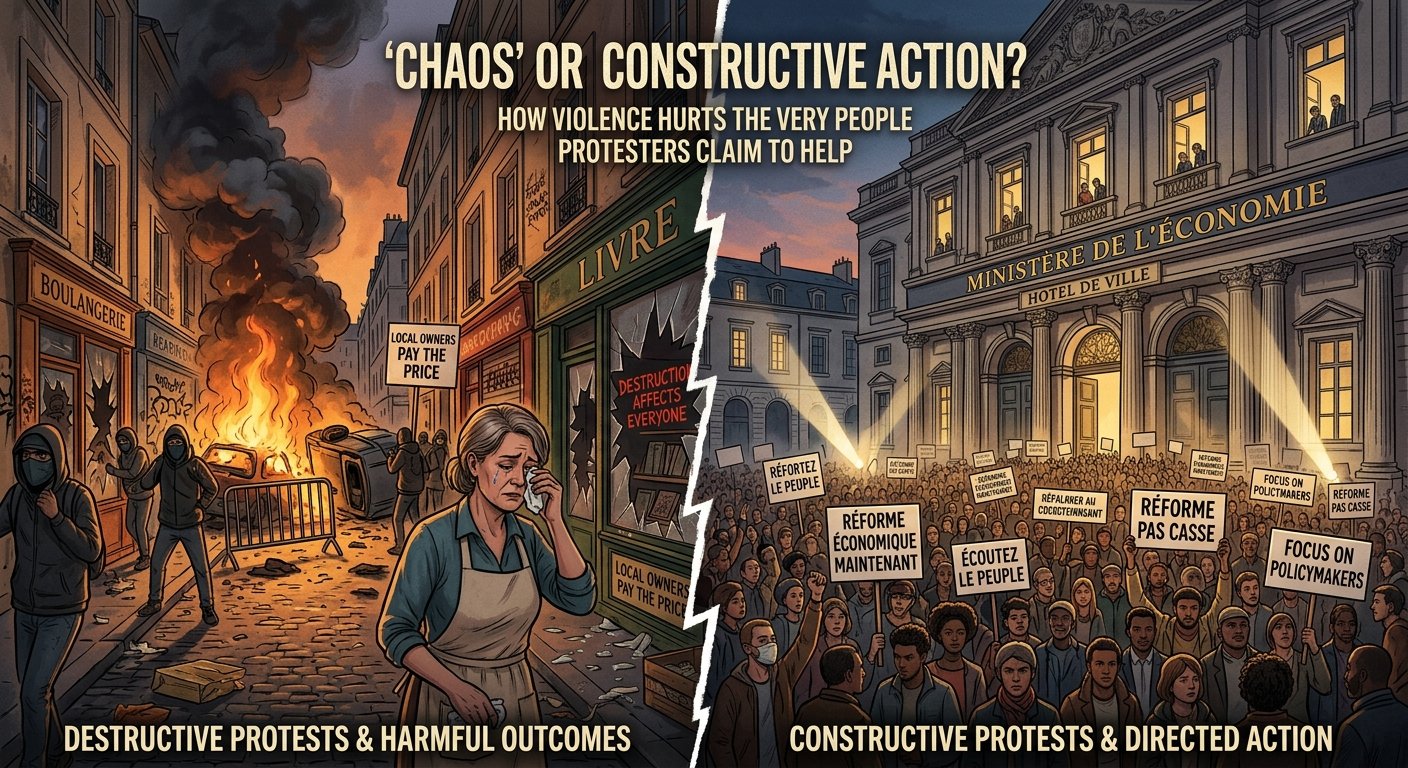
Recent events across France and parts of Europe, highlighted by reports such as CNN’s coverage of the “weekend of chaos and protests,” underscore a deep and escalating societal frustration.What began as localized demonstrations over public services and high schools quickly ballooned into a nationwide movement.Protesters are grappling with severe economic pressures—soaring costs of living, high unemployment, stagnant wages, and a widening wealth gap. These grievances are entirely valid. In a modern economy, the struggle to afford basic necessities, secure stable work, and maintain a decent quality of life leaves countless individuals feeling abandoned by policymakers.
However, while the root causes of these protests are legitimate, the methods deployed by a segment of the demonstrators are deeply counterproductive. Turning to violence, looting, and vandalism is not the answer. Rather than rectifying economic hardships, destructive riots actively exacerbate them, ultimately punishing the very demographic the protesters claim to stand up for: the “little people.”
When blocks are burned, storefronts are smashed, and merchandise is looted, the burden does not fall on the wealthy elite or distant policymakers. Instead, the financial fallout hits small shopkeepers, average taxpayers, and local workers. Small business owners face devastating repair costs, loss of inventory, and uninsurable property damage that can permanently close a lifetime’s work. Furthermore, the massive economic cost of repairing municipal infrastructure and public property drives up insurance premiums and municipal spending. Ultimately, this cycle fuels the exact problem protesters are fighting against: higher inflation and increased costs that trickle down to everyday consumers. Violence against local communities is, in effect, violence against the working class.
If demonstrators want to effect meaningful change and send a powerful message, their targets must be precise. Vandalizing a neighborhood bakery or burning a local car does nothing to alter government policy. To make a strong, unignorable point, crowds should direct their energy toward public government buildings—the legislative halls, ministries, and offices where the people responsible for economic policy actually sit. Peaceful, high-visibility mass demonstrations outside the offices of policymakers ensure that the pressure is felt squarely by those who hold the power to change laws, rather than ordinary citizens just trying to survive the week.
True democratic protest relies on disruption of the status quo, not destruction of one’s own community. By shifting tactics away from vandalism and toward focused political accountability, demonstrators can maintain the moral high ground and protect the livelihoods of their fellow citizens.