
Across France and neighboring European nations, scenes of violent protests, burning public infrastructure, and clash after clash between citizens and law enforcement have become a harrowing norm. From Paris to Milan, social unrest driven by rising living costs, public service cuts, and deep political fragmentation has pushed individual national governments to their breaking point. As documented in coverage by major news outlets such as CNN and The Guardian, domestic leaders find themselves trapped in cycles of blame and crisis management, seemingly unable to restore stability or offer a coherent forward-looking vision.
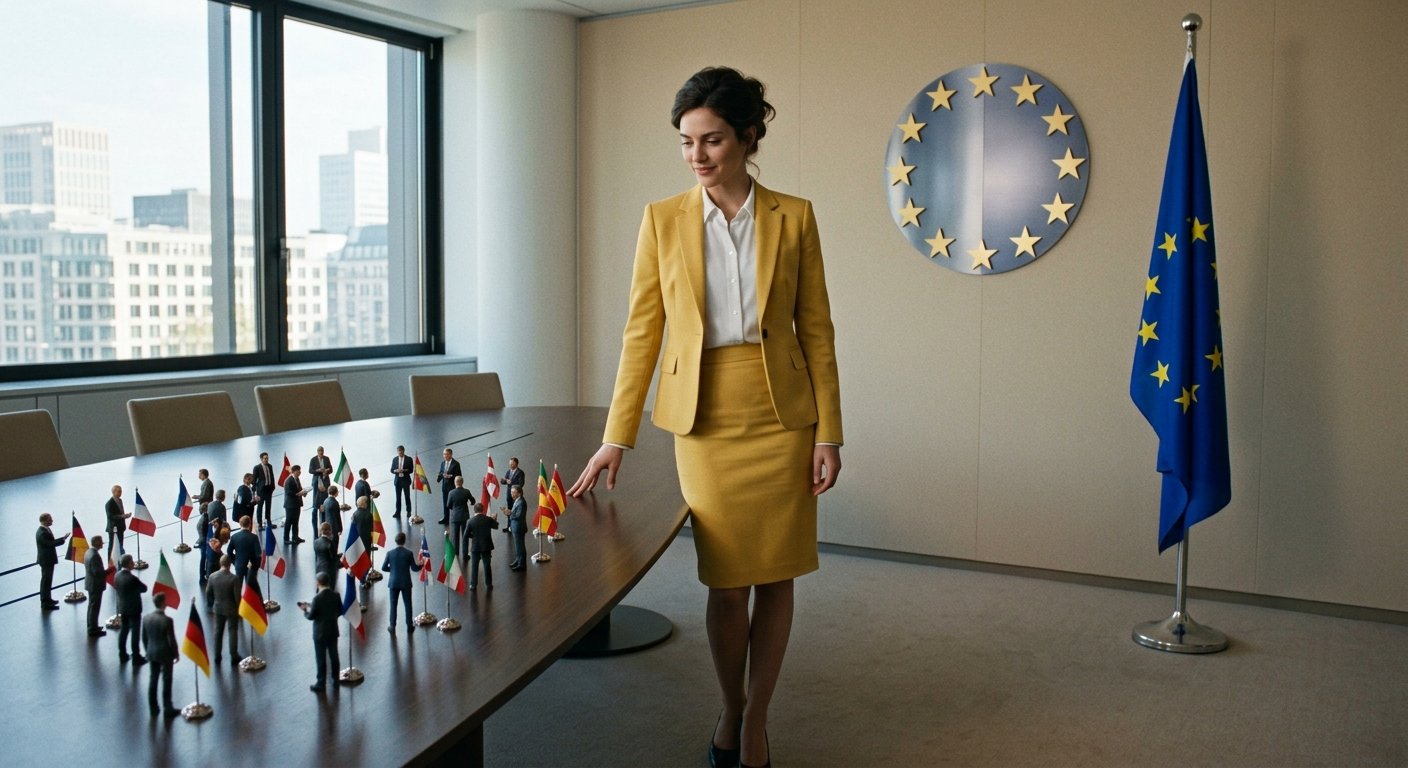
This state of paralysis highlights a compelling metaphor: the image of a calm, authoritative figure standing over a boardroom table, viewing the political leaders of individual member states as tiny, miniature figurines.
1. The Limits of National Sovereignty in a Continental Crisis
When social unrest escalates into widespread rioting, curfews, and thousands of arrests—as recently seen across major French cities—national institutions often respond with emergency measures that address symptoms rather than underlying causes. Domestic politicians are bound by electoral cycles, national party politics, and localized polarizations that make long-term, systemic reforms difficult to execute.
The visual metaphor of shrinking national figures down to size suggests that the national border is no longer the appropriate scale at which to solve modern European crises. High inflation, energy insecurity, economic inequality, and broader societal disillusionment are trans-national phenomena. When national leaders act as isolated sovereigns, their responses remain patchwork and reactive.
2. A Call for Supranational Authority
In the metaphor of the boardroom, the European Union figure represents a central, overarching perspective. Rather than letting member state capitals remain embroiled in escalating domestic conflict, a stronger central authority could offer:
- Unified Economic Stabilization: Establishing EU-wide relief frameworks to address purchasing power and inflation directly, bypassing paralyzed domestic legislatures.
- Standardized Governance and Rights Protection: Ensuring that citizen grievances and police responses are monitored and regulated under uniform European legal standards.
- A Strategic Pan-European Vision: Reframing localized unrest as a shared continental challenge requiring collective investment, reform, and structural solidarity.
3. Turning Chaos into an Opportunity for Structural Integration
Historically, major advances in European integration have emerged from moments of severe trial. The present wave of civil unrest across France and parts of Western Europe represents a critical crossroads. If the European Union steps forward to assert real, decisive leadership, it can transition from a passive confederation of competing national interests into a cohesive governing body capable of maintaining order, defending democratic integrity, and renewing public trust.
“Shrinking” the ego and authority of individual national leaders does not mean diminishing the democratic rights of citizens. Rather, it means elevating the level of decision-making to a central body that is better equipped to manage continental crises beyond the reach of local political rivalries.
Sources & Reference Links
- CNN:Europe News Headlines & Breaking Coverage
- The Guardian:French authorities announce curfews as protests spread across Europe
- AP News:Nationwide protests and unrest shake French government
For additional context on the recent demonstrations and public reactions in France, watch 2000 Arrests, 600 Officers Injured as Riots Shake Macron Government, which covers the scale of the unrest and its impact on national governance.