
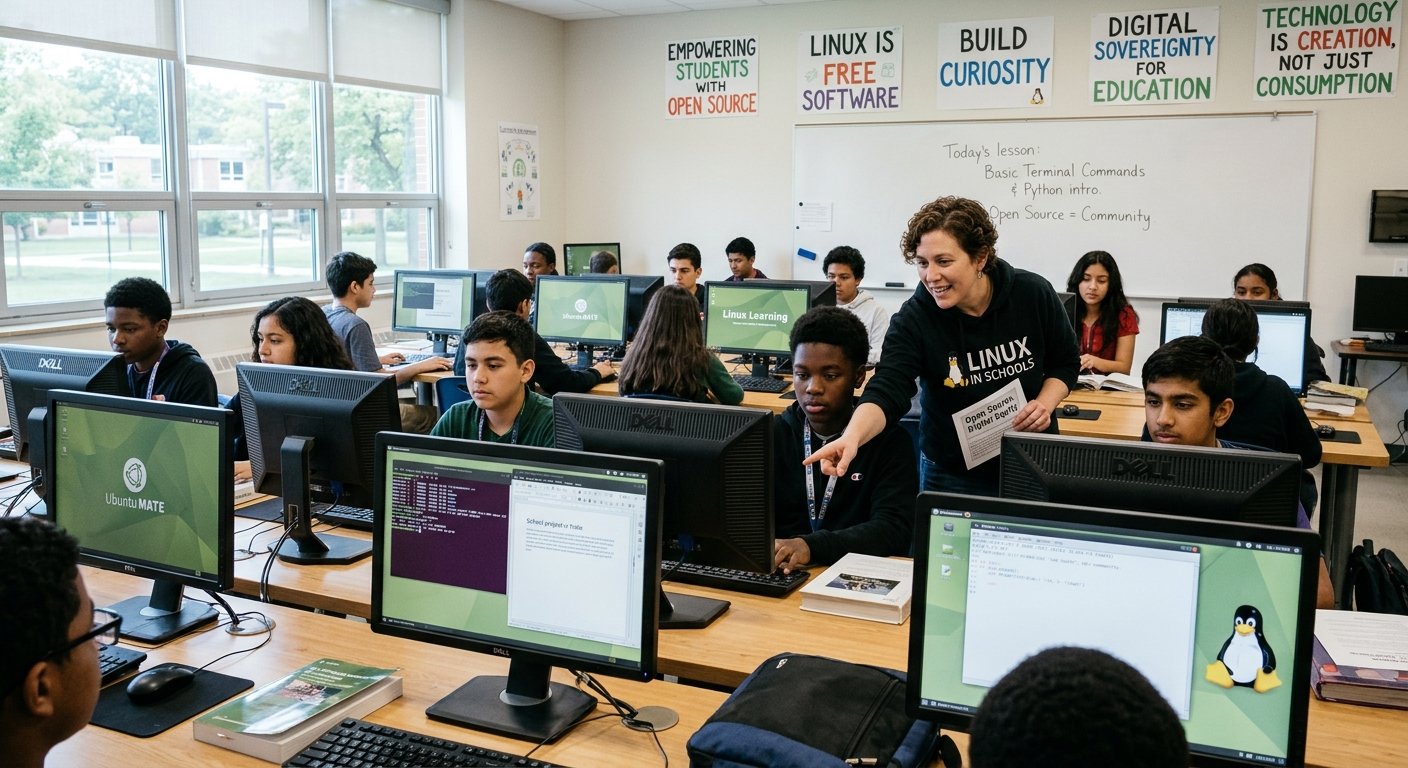
In an era where technology dictates the pace of economic, scientific, and social progress, the tools we choose to place in our classrooms matter deeply. Modern educational systems are tasked with preparing students for a complex, tech-driven world. Yet, many schools remain anchored to proprietary software ecosystems that treat students as passive consumers rather than active creators. To genuinely foster technological literacy, critical thinking, and digital equity, Linux and open-source operating systems should be actively promoted and integrated into schools for educational purposes.
1. Shifting from Product Training to Conceptual Computing
For decades, the standard approach to computer literacy in schools has involved teaching students how to navigate specific proprietary interfaces—how to click through a particular word processor, manipulate data in a commercial spreadsheet, or log into walled-garden cloud ecosystems. While functional, this approach teaches students products rather than computing concepts.
When schools adopt Linux, the paradigm shifts. Open-source operating systems expose the underlying architecture of digital environments. Students are no longer restricted to being end-users of a black-box system; instead, they are given the freedom to inspect how software works, modify code, and understand the core logic of operating systems, networking, and file management. This hands-on transparency nurtures genuine engineering and problem-solving skills that transcend any single software brand.
2. Fiscal Responsibility and Budgetary Liberation
Public education budgets are perpetually stretched thin. School districts face difficult choices regarding where to allocate funds, often spending exorbitant sums on recurring licensing fees, software upgrades, and proprietary device ecosystems.
- Eliminating Licensing Costs: Commercial operating systems and software suites impose heavy financial burdens through per-device licensing fees. Linux distributions are freely available to download, distribute, and modify without licensing restrictions.
- Extending Hardware Lifespan: Proprietary software upgrades frequently render perfectly functional hardware obsolete, forcing schools into premature replacement cycles. Lightweight Linux environments can run efficiently on older machines, dramatically extending the lifespan of school computer labs and reducing electronic waste.
Resources saved on software licensing can be redirected toward upgrading core infrastructure, hiring specialized support staff, or expanding hands-on STEM programs.
3. Fostering Digital Equity and Home-to-School Continuity
Technology access should not depend on a family’s socioeconomic status. When schools mandate expensive, proprietary software platforms, students from low-income households are often disadvantaged if they cannot afford the same licenses or hardware specifications at home.
Because Linux can be installed legally and freely on virtually any personal computer—including older or repurposed family laptops—it bridges the digital divide. A student can use the exact same free and open-source software suite (such as LibreOffice, GIMP, and Python development environments) at school and on a home machine, ensuring continuous and equitable access to learning tools.
4. Cultivating Career-Ready Technical Skills
The professional technology landscape relies overwhelmingly on Linux and open-source infrastructure. From cloud computing and web servers to embedded systems, supercomputing, and cybersecurity, Linux is the bedrock of modern tech industries.
- Proficiency with the Linux command line, shell scripting, and system permissions gives students a head start in higher education and technical careers.
- Engaging with open-source communities teaches collaboration, version control, and peer review—skills that mirror modern software engineering workflows.
By introducing these tools early, schools demystify advanced computing and open lucrative career pathways for students who might otherwise feel intimidated by proprietary gatekeeping.
Overcoming Implementation Challenges
Transitioning a school or district to Linux is not without hurdles. It requires initial investments in educator professional development, careful assessment of existing curriculum dependencies, and adjustments by IT departments accustomed to centralized commercial support. However, pilot programs and phased rollouts—starting with specific computer labs or elective STEM courses—have repeatedly proven successful in smoothing the transition. Collaborative online communities and specialized educational distributions (such as Linux Lite, Ubuntu Education editions, or Sugar) offer robust support frameworks tailored specifically for classroom environments.
Conclusion
Promoting Linux in education is about much more than cutting costs or avoiding vendor lock-in. It is a philosophical commitment to openness, digital sovereignty, and empowering the next generation of thinkers. By embedding open-source principles into the educational experience, schools can transform students from passive digital consumers into active architects of our technological future.
Source List & Further Reading
- Linux Journal: How Linux is Revolutionizing Education with Open Source Learning
- My sCool Server: Benefits of Open Source in Education
- DEV Community: Linux or Windows: The Best Choice for Schools?
- Rocket.Chat: 3 Biggest Benefits of Open Source in Education
- Interoperable Europe (EU Open Source Observatory): British School Switches Students’ Computers to Linux, Reducing Costs
- ResearchGate: Comparative Study of the Better Operating System in School Computer Laboratories Between Linux OS and Windows OS