
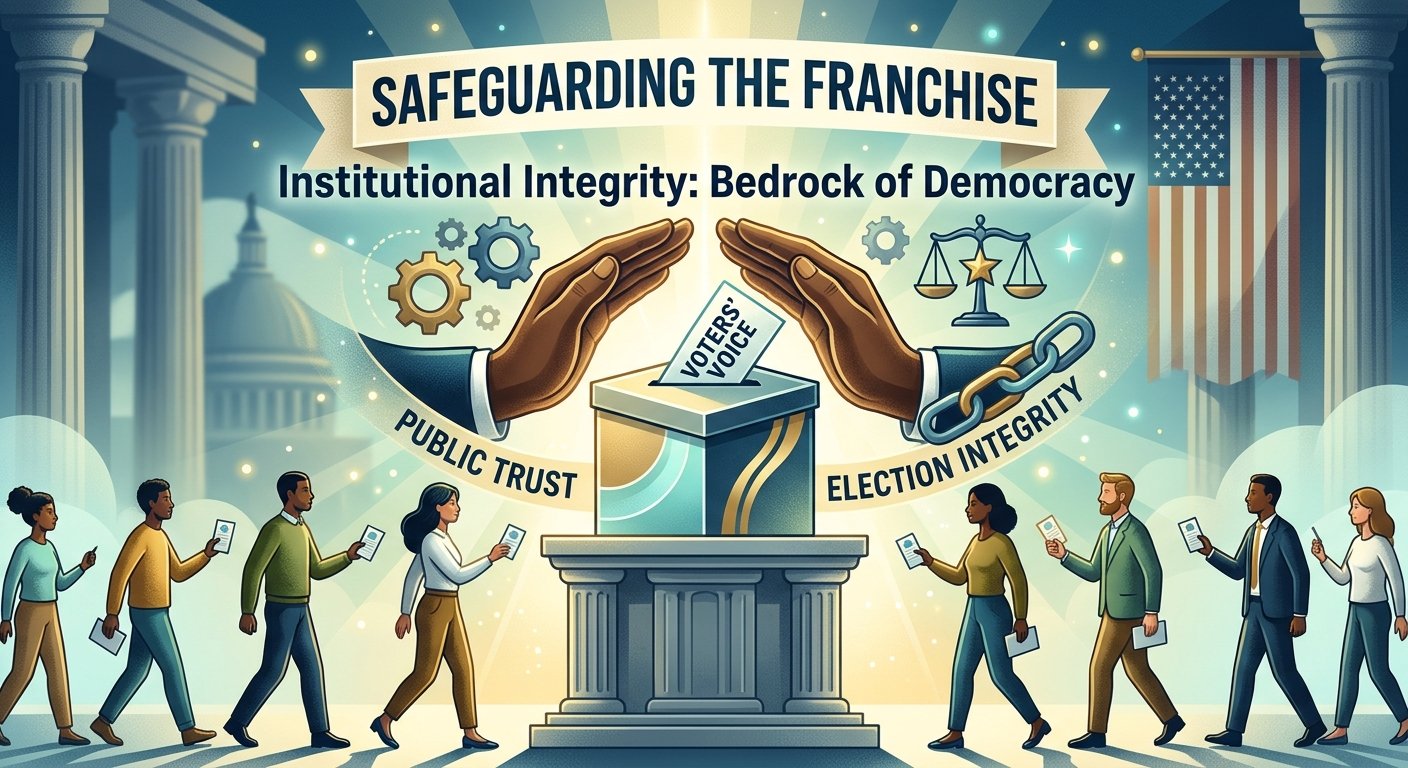
In a constitutional republic, public trust is the invisible scaffolding that supports every law, civic institution, and peaceful transfer of power. When that trust is undermined by executive overreach or unverified claims, the stability of democratic governance is threatened. A clear example of this challenge occurred when U.S. District Judge David O. Carter rejected a federal request to set aside up to 20,000 mail-in ballots in California. The decision highlights a core principle of American law: preserving electoral integrity requires adhering to established, evidence-based procedures rather than disrupting ongoing voting processes based on unproven assertions.
The legal dispute centered on a demand by the Department of Justice to halt the processing of thousands of mail-in ballots while the citizenship status of voters was verified. Denying the request, Judge Carter warned that segregating votes in an ongoing election would “wreak havoc and disrupt the election that is already underway”. In his ruling, Judge Carter underscored the delicate nature of public confidence, writing that “eroded trust in our democracy is irreparable” and noting that if the executive branch can discount votes and threaten an ongoing election based on unproven allegations, “then our democracy is in danger”.
Protecting electoral integrity requires balancing two essential objectives: ensuring that every legal vote counts and ensuring that improper votes are prevented through verified legal mechanisms. However, late-stage efforts to segregate or discount ballots without clear, actionable evidence risk disenfranchising eligible voters and destabilizing administrative operations. State election authorities already maintain rigorous, multi-layered verification systems—including voter registration checks, signature matching, and secure ballot processing—designed to protect the ballot box while maintaining orderly administration.
Democracy depends on public trust in these processes. When electoral procedures are altered mid-stream or subjected to broad challenges without targeted proof, it creates confusion among voters and damages confidence in the results. Safeguarding the franchise means respecting both the rule of law and the constitutional boundaries that separate federal authority from state election management. By insisting on clear evidence and established statutory remedies, the judiciary serves as an essential check against actions that could otherwise disrupt democratic participation.
Ultimately, upholding democratic integrity requires a commitment to predictable, transparent, and fair election administration. Protecting the right to vote while maintaining rigorous statutory safeguards ensures that election outcomes remain legitimate in the eyes of the public. As judicial rulings demonstrate, preserving trust in democratic institutions is not merely a legal duty, but an ongoing requirement for the survival of self-governance.