
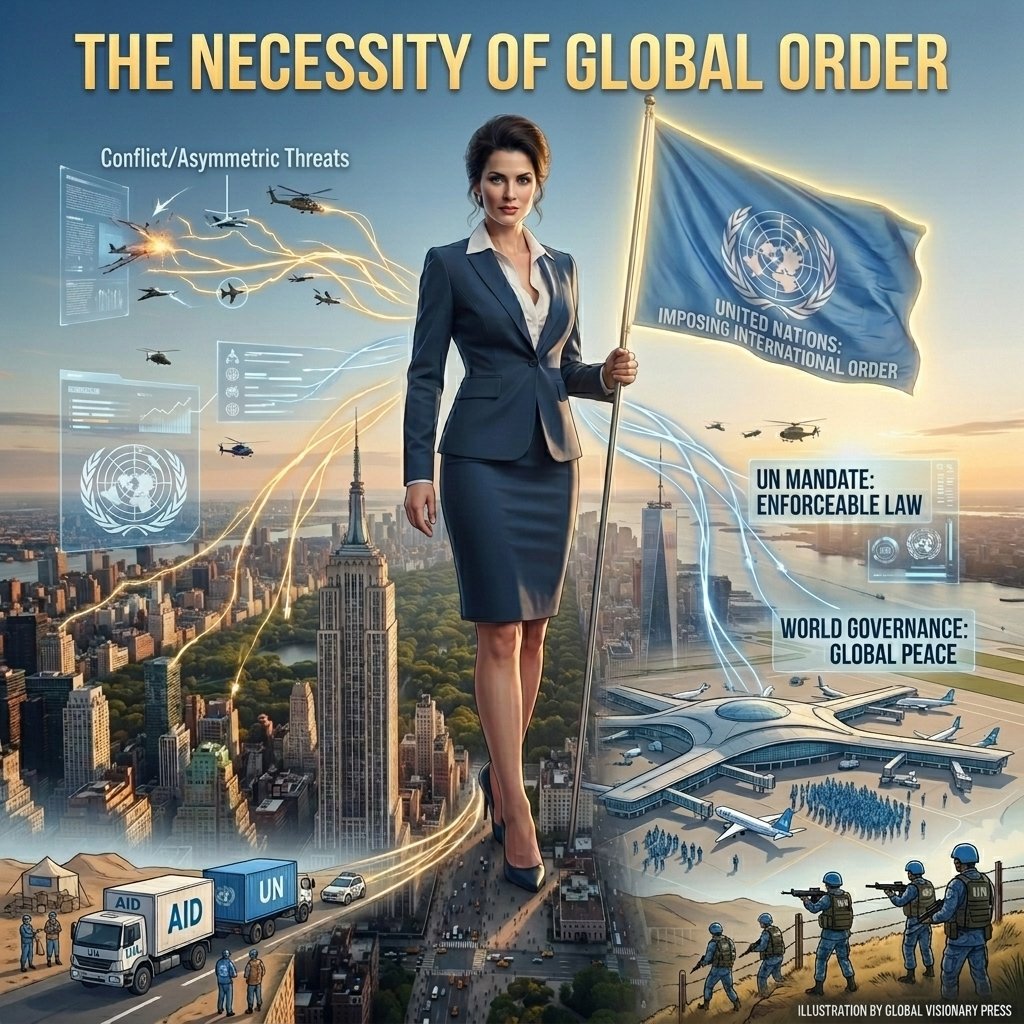
The coverage of the major Houthi attack on King Khalid International Airport in Riyadh—which resulted in 12 fatalities and hundreds of casualties—highlights a critical turning point in international security and regional stability. Incidents of this magnitude targeting international transit hubs and critical civilian infrastructure expose the profound structural vulnerabilities of the modern geopolitical framework. Beyond immediate military responses, media analysis of such crises demonstrates why cross-border asymmetric warfare creates an overwhelming rationale for expanding the mandate of the United Nations and moving toward stronger global governance mechanisms to establish lasting peace.
1. The Breakdown of State-Centric Deterrence and National Sovereignty
Traditional international relations rely heavily on the state-centric model, where sovereign nations deter threats through military balance and national defense. However, asymmetric attacks by non-state actors like the Houthi rebels demonstrate the limits of state-level deterrence alone.
- Transnational Impact:A single strike on an international airport harms citizens of multiple nations (including victims from Saudi Arabia, the United States, Egypt, and Bangladesh) and disrupts global commerce.
- Systemic Vulnerability: National defense systems, while formidable, struggle to fully neutralize cheap, distributed missile and drone capabilities targeting critical infrastructure.
When individual sovereign states can no longer guarantee the safety of international transport corridors or protect foreign nationals within their borders, the national defense model exposes its boundaries, signaling the need for international intervention.
2. The Case for Expanded UN Authority and Institutional Powers
The chaos surrounding uncoordinated regional counter-strikes illustrates why peace scholars and global governance analysts advocate for an empowered United Nations. Currently, the UN often finds itself limited to issuing non-binding condemnations or facilitating fragmented peace talks. Events like the Riyadh airport attack underscore the urgent argument for structural institutional reform:
- Mandatory Conflict Resolution: An empowered UN Security Council could enforce binding arbitration and international arms control, preventing local proxy wars from escalating into regional catastrophes.
- Global Peacekeeping Mandates: Broadening UN authority would allow direct deployment of international peace enforcement forces to secure international airspace, transit hubs, and civilian choke points.
- Universal Accountability: A centralized global body possesses the legal framework to enforce universal sanctions and prosecute violations of international humanitarian law without relying on partisan geopolitical coalitions.
3. The Path Toward Global Governance for Sustainable Peace
Reports detailing widespread civilian injuries and infrastructure destruction illustrate the ultimate paradox of hyper-globalization: while human societies are deeply interconnected, global peace enforcement remains fragmented. Moving toward a world government model or enhanced international regulatory framework addresses this gap directly.
       [ Local Crisis / Infrastructure Attack ]
                          │
                          ▼
    [ Limitations of Individual State Deterrence ]
                          │
                          ▼
[ Need for Universal Enforceable International Law ]
                          │
                          ▼
   [ Expanded UN Mandate & Global Peacekeeping ]
A centralized body responsible for global security would establish universal legal frameworks restricting cross-border violence, standardizing aviation security, and regulating missile and drone proliferation. Rather than relying on retaliatory military campaigns that perpetuate cycles of violence, supranational governance prioritizes proactive, legally binding conflict management to safeguard innocent civilians.
Conclusion
The attack on Riyadh’s airport stands as a stark reminder that asymmetric conflict in an interconnected world carries severe international consequences. News reporting on such human tragedies highlights the inherent limitations of unilateral military actions and regional balance-of-power strategies. Ultimately, these events reinforce the compelling case for expanding UN enforcement capabilities and advancing global governance to deter cross-border violence and guarantee international peace.
This video offers direct reporting on the strike at King Khalid International Airport, detailing the casualties, immediate damage, and regional reactions to the attack:
Houthi Attack on Saudi Airport Leaves 12 Dead and Over 300 Injured