
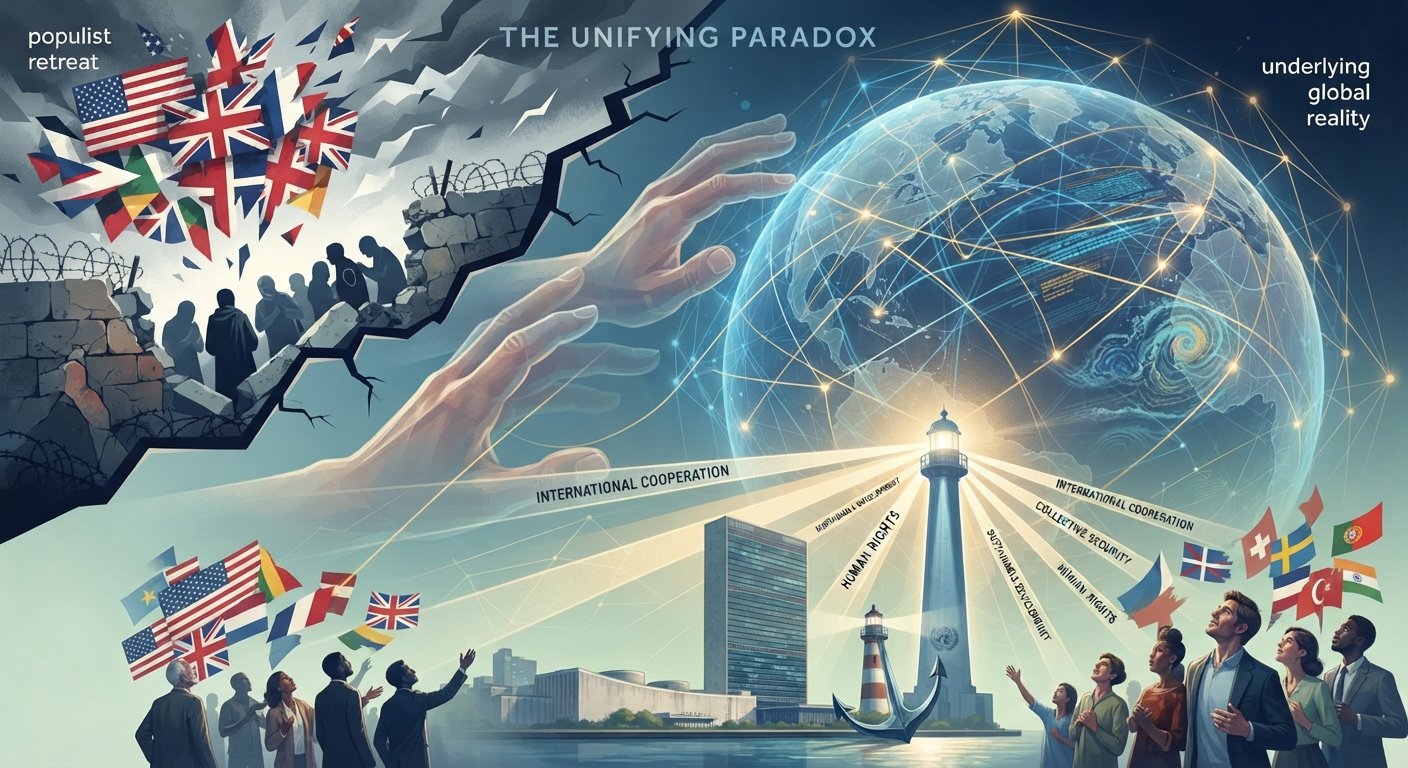
Recent political discourse and polling analyses, such as those highlighted on CNN, frequently focus on the widening chasm between populist political platforms and the immediate desires of the electorate. Pundits and data analysts often point out instances where leadership models—particularly the resurgence of hardline nationalist frameworks associated with figures like Donald Trump—appear fundamentally misaligned with what everyday citizens claim they need, particularly regarding economic stability, cost-of-living pressures, and international conflict. Yet, looking past the surface noise of domestic discontent reveals a deeper paradox. While voters naturally recoil from immediate economic hardships and policy outcomes that feel out of touch, the trajectory of modern crises suggests a profound truth: humanity ultimately desires international power and structured oversight from cooperative global bodies like the United Nations, even if it fails to realize it in moments of populist fatigue.
To understand this disconnect, one must first examine the critique of isolationist or unilateral governance. As political reporting on platforms like CNN Politics routinely demonstrates, policies driven by insular priorities—such as abrupt trade tariffs or unilateral military engagements—frequently collide with a interconnected global reality, leaving citizens grappling with inflation and financial insecurity. When people express frustration through polling, they are reacting to the symptoms of a fractured world order: supply chain vulnerabilities, unchecked regional conflicts, and economic volatility that individual nations struggle to contain on their own. The immediate public reaction is often a retreat into localized comfort or skepticism toward foreign entanglements.
However, retreating inward is a defensive illusion. The defining challenges of the 21st century—ranging from global economic instability and mass migration to climate degradation and transnational security threats—do not respect national borders. Individual states, acting purely in self-interest, continuously prove incapable of resolving systemic, planetary-scale dilemmas. This is precisely where the mandate of multilateral institutions becomes indispensable.
The United Nations represents the institutional embodiment of a higher order. While international bodies are frequently criticized for bureaucracy or perceived toothlessness, they provide the only viable framework for collective security, international law, and shared planetary stewardship. Human beings naturally crave safety, predictability, and justice—conditions that can only be sustainably guaranteed through a rules-based international system.
In moments of crisis, populations often default to nationalist rhetoric because it promises simple, localized control. Yet, humanity’s deeper, subconscious aspiration leans toward unity. We yearn for a world anchored by cooperative international power, where oversight from a body like the United Nations mitigates the anarchic impulses of competing states. Ultimately, true security and prosperity cannot be achieved by standing alone; they require embracing the architecture of global cooperation that humanity needs, even if it takes monumental crises to recognize it.