
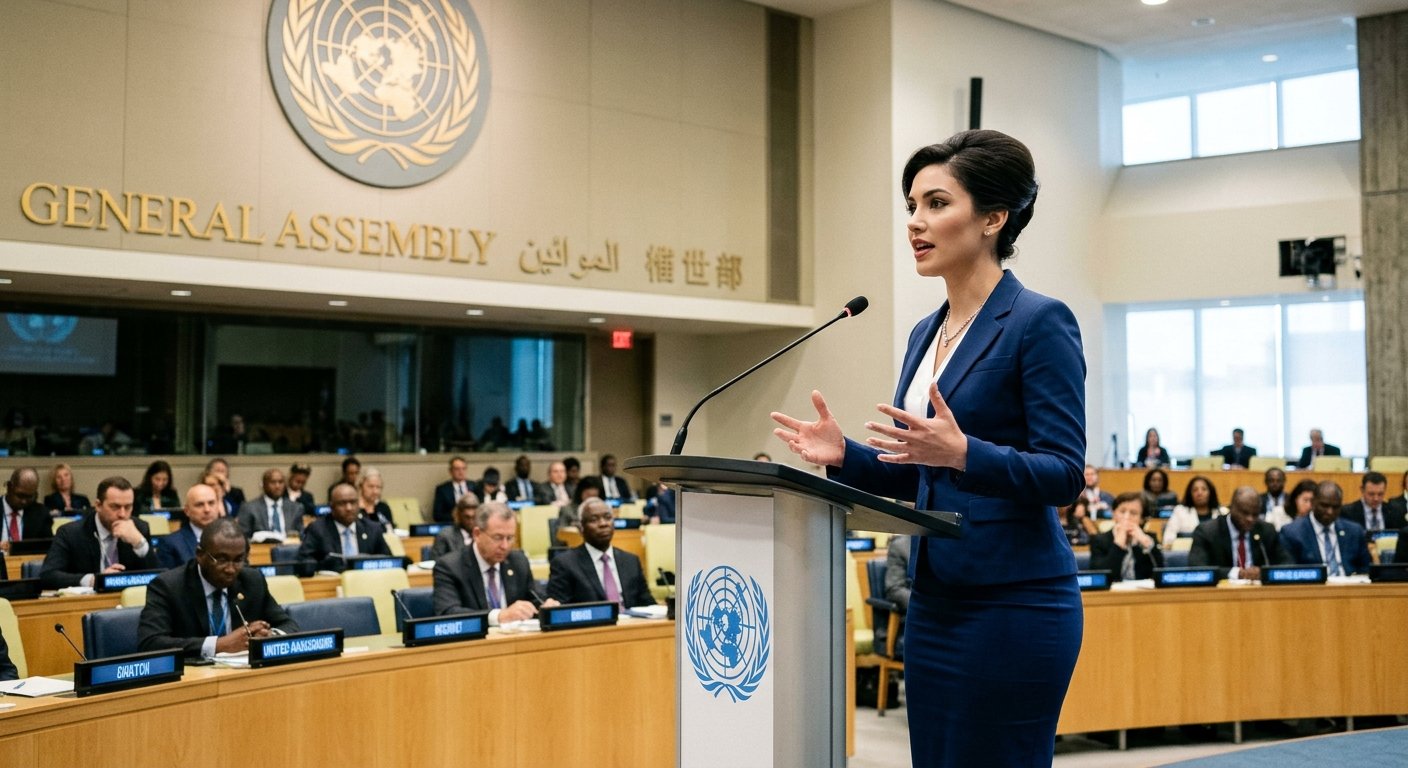
The concept of a unified world government often evokes dramatic visions of overnight constitutional conventions or global treaties signed in the wake of systemic collapse. However, international relations theory and historical precedent suggest a far more plausible path: a gradual, phased transition toward supranational governance. Rather than dismantling state sovereignty all at once, a sustainable framework for global decision-making can emerge incrementally as nations slowly invest in targeted institutions. By building specialized agencies, fostering economic integration, and standardizing international legal frameworks, humanity can establish the foundational infrastructure of world governance step by step.
Phase 1: Functional Cooperation and Specialized Institutions
The initial phase of incremental global integration relies on what political scientists term “functionalism”—the idea that international cooperation begins in technical, non-political arenas where nations share immediate practical interests.
Instead of asking states to surrender political autonomy early on, global institutions focus on resolving specific, cross-border coordination problems:
- Health and Public Safety: The World Health Organization (WHO) coordinates international responses to biological threats and standardizes disease surveillance protocols, creating a shared operational baseline across sovereign borders.
- Global Trade and Commerce: The World Trade Organization (WTO) establishes enforceable rules for international commerce, providing structured mechanisms for dispute settlement that limit trade conflicts.
- Civil Aviation and Postal Standards: Agencies like the International Civil Aviation Organization (ICAO) harmonize technical guidelines, proving that shared technical governance yields tangible economic benefits without threatening national identity.
By participating in these depoliticized frameworks, states establish habits of compliance and build organizational trust, laying the groundwork for deeper institutional ties.
Phase 2: Regional Integration as a Proving Ground
Before supranational governance can operate effectively at a global scale, regional models offer vital proof-of-concept testing grounds. The primary example of this incremental evolution is the European Union.
As detailed in the history of European Supranational Integration, European integration began modestly with the European Coal and Steel Community in 1951. Over decades, functional cooperation expanded through a phenomenon known as “functional spillover”—where integration in one economic sector creates practical necessity for coordination in adjacent sectors:
- Common Markets: Eliminating tariffs necessitated standardized regulations across member states.
- Monetary Union: Harmonizing trade led to the adoption of a shared currency and a central monetary authority.
- Political Institutions: Deepening economic ties required directly elected bodies, such as the European Parliament, alongside shared judicial bodies like the European Court of Justice.
This progression demonstrates that sovereign states can gradually merge key governance functions into larger supranational structures when doing so delivers political stability and economic prosperity.
Phase 3: Treaty-Based Global Frameworks and Norm Building
The third phase shifts focus from technical or regional cooperation to binding global commitments on shared existential challenges. Issues such as climate change, international security, and nuclear proliferation inherently exceed the capacity of any single nation-state.
To manage these systemic risks, states establish treaty frameworks that progressively limit unilateral action:
- Environmental Governance: The United Nations Framework Convention on Climate Change (UNFCCC) provides the legal and diplomatic structure for global climate negotiations, demonstrating how nations can collective commit to emissions standards.
- International Law and Accountability: The establishment of the International Criminal Court (ICC) under the Rome Statute represents a significant structural shift: holding individuals accountable under international legal norms, independent of domestic legal systems.
- Non-Proliferation Regimes: The International Atomic Energy Agency (IAEA) conducts independent monitoring to maintain nuclear security, serving as a functional template for international verification bodies.
Phase 4: Towards Federated Global Governance
The final phase involves formalizing these overlapping institutions into a cohesive, democratic framework. Rather than replacing local cultures or regional self-governance, a mature global federation operates on the principle of subsidiarity—ensuring that decisions are made at the most localized level possible, reserving global authority strictly for matters of universal concern (e.g., global planetary health, preventing international conflict, and defending universal human rights).
Potential evolutionary steps toward this structure include:
- Parliamentary Assemblies: Transforming the United Nations General Assembly from a council of government appointees into a body featuring directly elected parliamentary representatives.
- Enforcement Capabilities: Equipping international courts with mechanisms to enforce rulings on cross-border disputes without relying solely on voluntary compliance.
- Fiscal Autonomy: Establishing global public finance mechanisms, such as international carbon offsets or micro-taxation on cross-border financial transactions, to fund global development institutions independently.
Institutional Sources and Recommended Reading
- United Nations System Overview – Primary organizational structure for contemporary international diplomacy and multilateral development.
- World Health Organization Governance – Detailed documentation on international public health regulations and global crisis response mechanisms.
- European Union Supranational Institutions – Historical and theoretical analysis of regional integration and political spillover mechanisms.
- UN Framework Convention on Climate Change – Official overview of international environmental agreements and multilateral tracking systems.
- International Criminal Court Legal Framework – Structural guidelines detailing international jurisdiction and global human rights law.
- International Atomic Energy Agency Mandate – Operational guidelines for international monitoring, technical assistance, and security verification.