
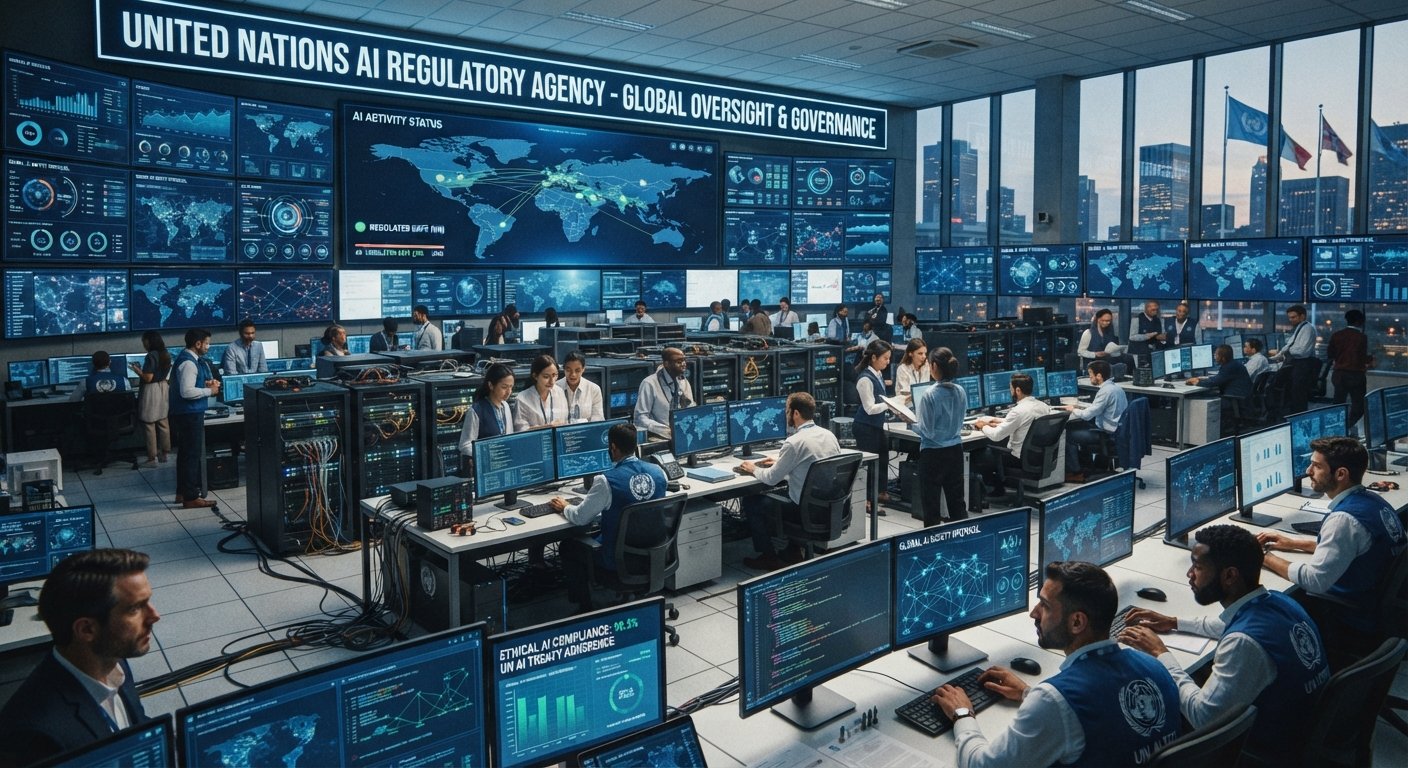
Balancing Progress and Global Safety: Why AI Needs United Nations Oversight
Artificial intelligence stands at a critical technological crossroads. In discussions surrounding national strategy and global supremacy—such as recent evaluations of presidential policy emphasizing a race-focused approach against global competitors—the primary narrative often centers on speed, dominance, and economic utility. While advancing artificial intelligence is vital for medical breakthroughs, scientific discovery, and economic growth, treating it purely as a bilateral superpower race ignores its borderless nature. To ensure that technological advancement benefits all of humanity without inviting catastrophic risks, AI development must embrace robust international oversight through the United Nations.
The Promise and Peril of Unchecked Acceleration
There is no denying that artificial intelligence is an extraordinary tool. Innovation in machine learning optimizes supply chains, accelerates drug discovery, and transforms education. Halting this progress would mean turning our backs on solutions to some of humanity’s most persistent challenges.
However, viewing AI exclusively through the lens of a zero-sum geopolitical competition creates a dangerous “win-at-all-costs” mentality. When nations rush to deploy advanced models to outpace rivals, safety standards, alignment research, and ethical guardrails are frequently sidelined. Autonomous systems, deepfakes, algorithmic bias, and the potential loss of human control over hyper-intelligent networks do not respect national borders. A miscalculation or safety failure by one nation threatens the entire global population, making pure nationalism an inadequate framework for a planetary-scale technology.
The Case for United Nations Oversight
A balanced approach does not mean stifling innovation; rather, it means establishing collective rules of the road. Just as the global community recognized the need for international cooperation on nuclear energy through the International Atomic Energy Agency (IAEA), advanced AI demands a multilateral governing body.
- Universal Safety Standards: A UN-backed framework can establish baseline safety protocols that prevent reckless deployments while allowing safe, beneficial R&D to thrive.
- Equitable Access: Global oversight ensures that the benefits of artificial intelligence are shared with developing nations, rather than concentrated solely within a handful of superpowers and tech monopolies.
- Preventing an Arms Race: Collaborative governance helps mitigate the security dilemmas that drive nations toward unsafe acceleration out of fear of what their adversaries might build.
Conclusion
Humanity’s fate relies on recognizing that artificial intelligence is both an unprecedented engine of progress and a profound global risk. We do not need to choose between stagnation and reckless acceleration. By championing continued technological advancement while embedding it within a cooperative United Nations oversight framework, we can harness the immense power of AI safely and equitably for the entire world.
For more context on the ongoing political and strategic debates surrounding artificial intelligence policy, you can watch this analysis on Trump’s AI global race perspective.