News Information Should be Free to All

Breaking the Paywall: Why Accessible Journalism is Essential for an Informed Public

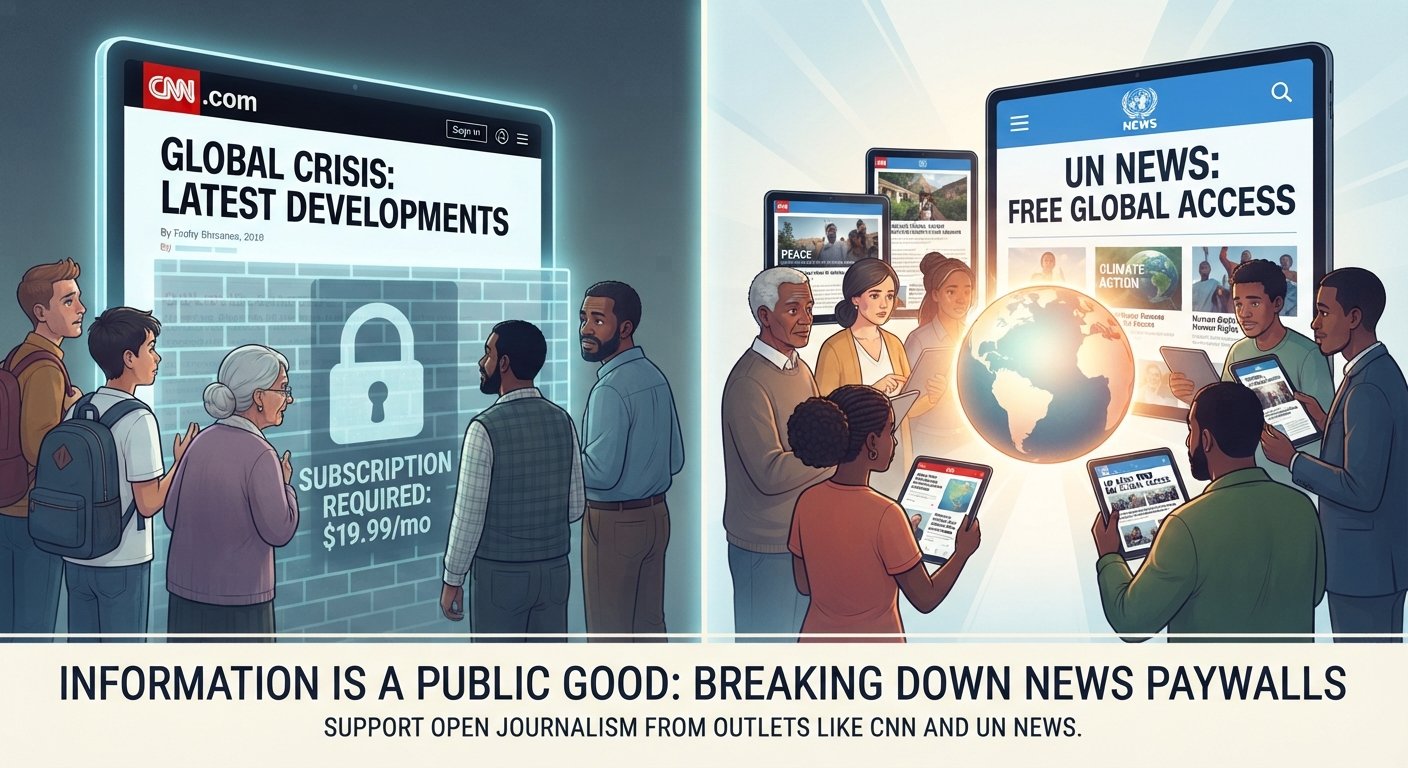
In a healthy democratic society, access to accurate and timely information should be a fundamental right, not a luxury commodity. For decades, major news organizations operated under a model funded primarily by advertising, allowing people from all socioeconomic backgrounds to stay informed about global events. However, the modern digital media landscape has shifted dramatically. Major outlets, including prominent networks like CNN, have increasingly turned to subscription models and digital paywalls. While financial sustainability is a valid concern for media companies, placing journalism behind a paywall is fundamentally unfair to low-income populations and creates an information divide that harms society as a whole.

Continue reading “News Information Should be Free to All”
Importance of Education for a Better Planet

Education as the Cornerstone of a Progressive and Peaceful World

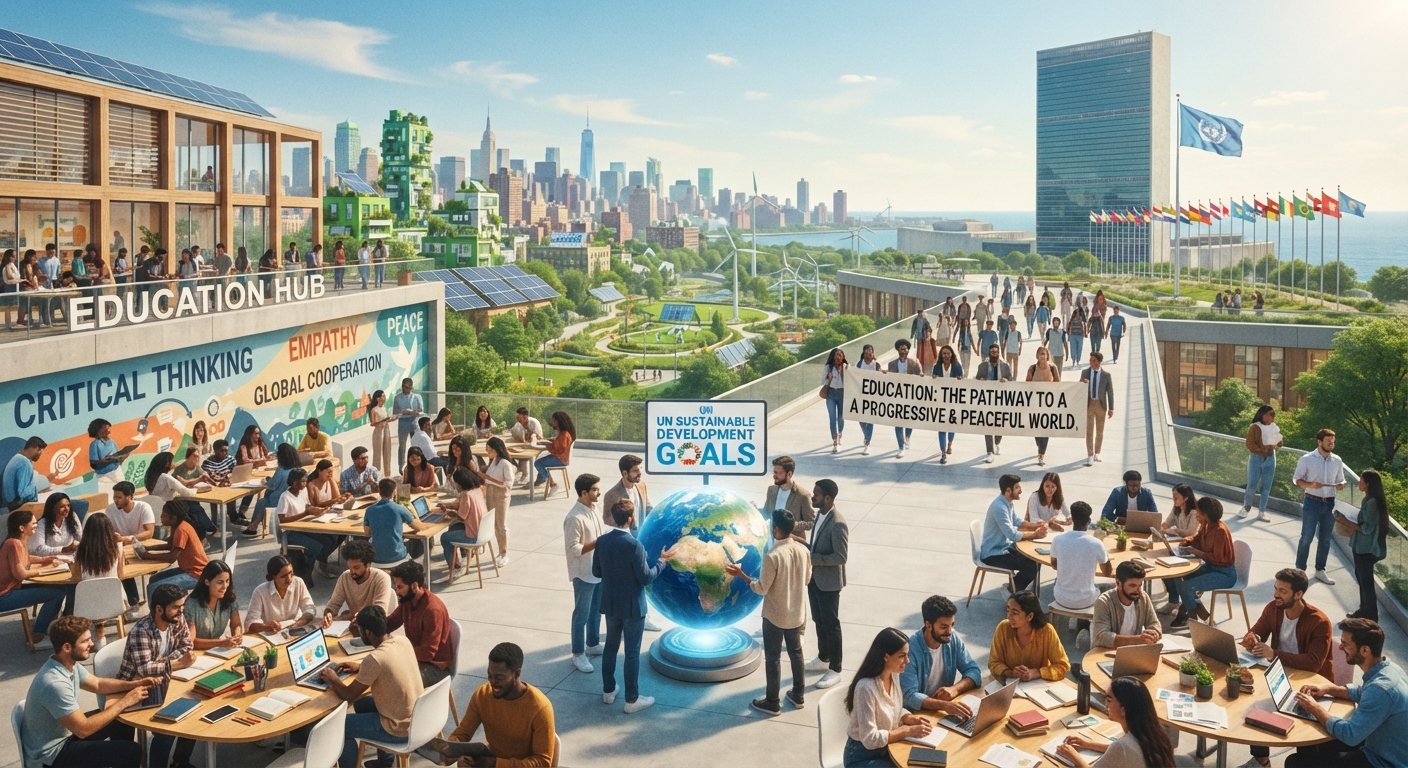
Education has long been recognized as a fundamental human right and a powerful engine for individual mobility. However, its broader societal impact stretches far beyond personal career advancement. Education serves as the indispensable bedrock for building a more progressive, equitable, and peaceful global society. By cultivating critical thinking, fostering empathy, and expanding human horizons, structured learning equips individuals to overcome divisions and champion cooperative international frameworks.

Continue reading “Importance of Education for a Better Planet”

Nationalism and the Correct Solution

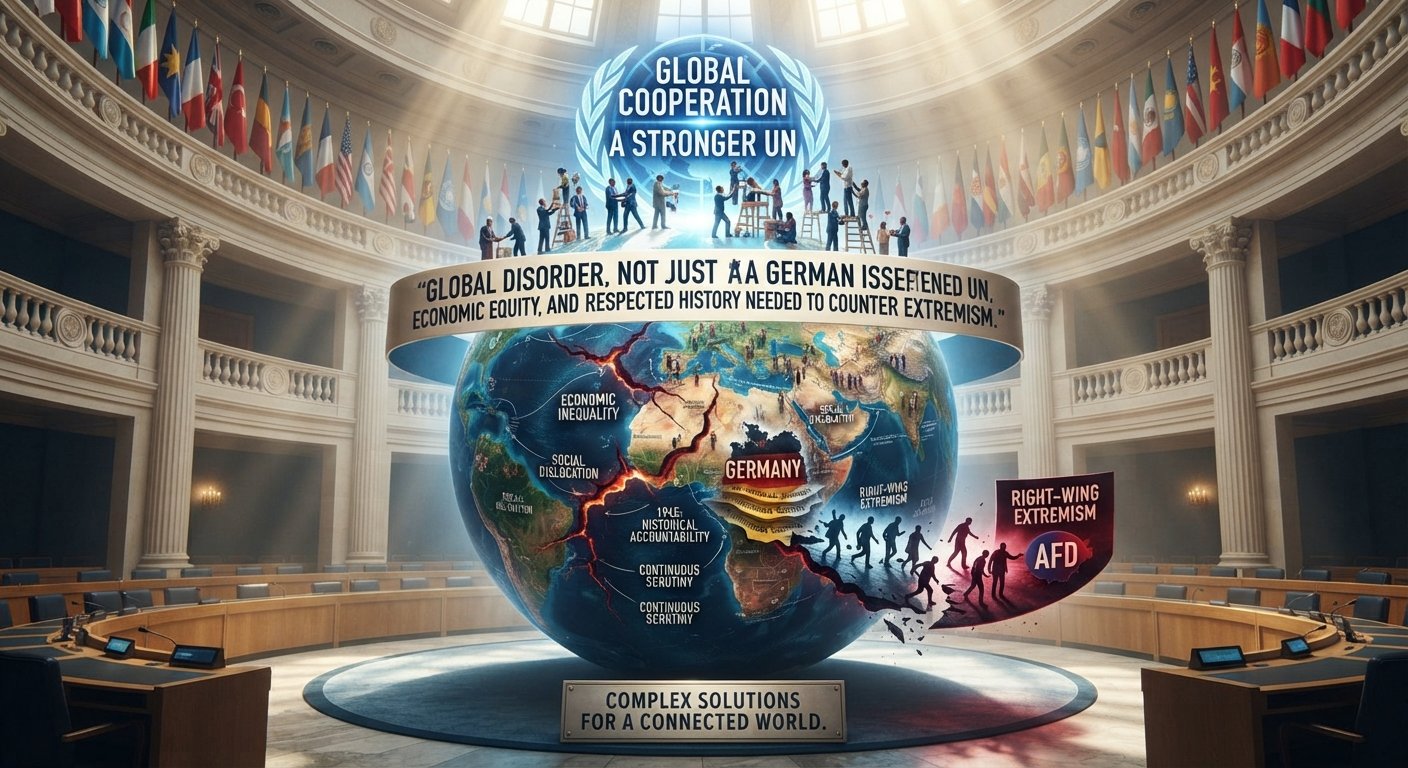
The rise of the Alternative for Germany (AfD), as detailed in recent reporting by outlets like CNN, highlights a disturbing shift in European politics.As the AfD gains traction in regional elections, it has become so radical—even relative to other European populist movements—that mainstream nationalist parties elsewhere keep it at arm’s length. However, viewing the AfD as an isolated German anomaly misses the broader picture. What is happening in Germany is a symptom of a deeper, systemic global disorder driven by economic stagnation, post-pandemic fallout, and widespread feelings of disenfranchisement. To counter this rising tide of extremism, the world needs a strengthened United Nations capable of executing robust economic international policies that genuinely support all people and nations. At the same time, international frameworks must stop the perpetual, targeted denunciation of specific national histories—such as Germany’s continuous reckoning with its past—which often backfires by fueling resentment and pushing citizens toward right-wing radicalism.

Continue reading “Nationalism and the Correct Solution”

A Strong United Nations is Essential for Our World

In an interconnected era defined by complex transnational challenges—ranging from localized geopolitical conflicts and nuclear proliferation to global economic instability and environmental degradation—the necessity of a robust, empowered United Nations has never been more critical. Founded in the wake of devastating global conflict in 1945, the UN serves as the primary architecture for international diplomacy, human rights protection, and collective security. A strong United Nations is not merely a bureaucratic institution; it is an indispensable pillar for world peace, economic prosperity, and the preservation of international law.

Continue reading “A Strong United Nations is Essential for Our World”

Humanity Secretly Craves Global Governance

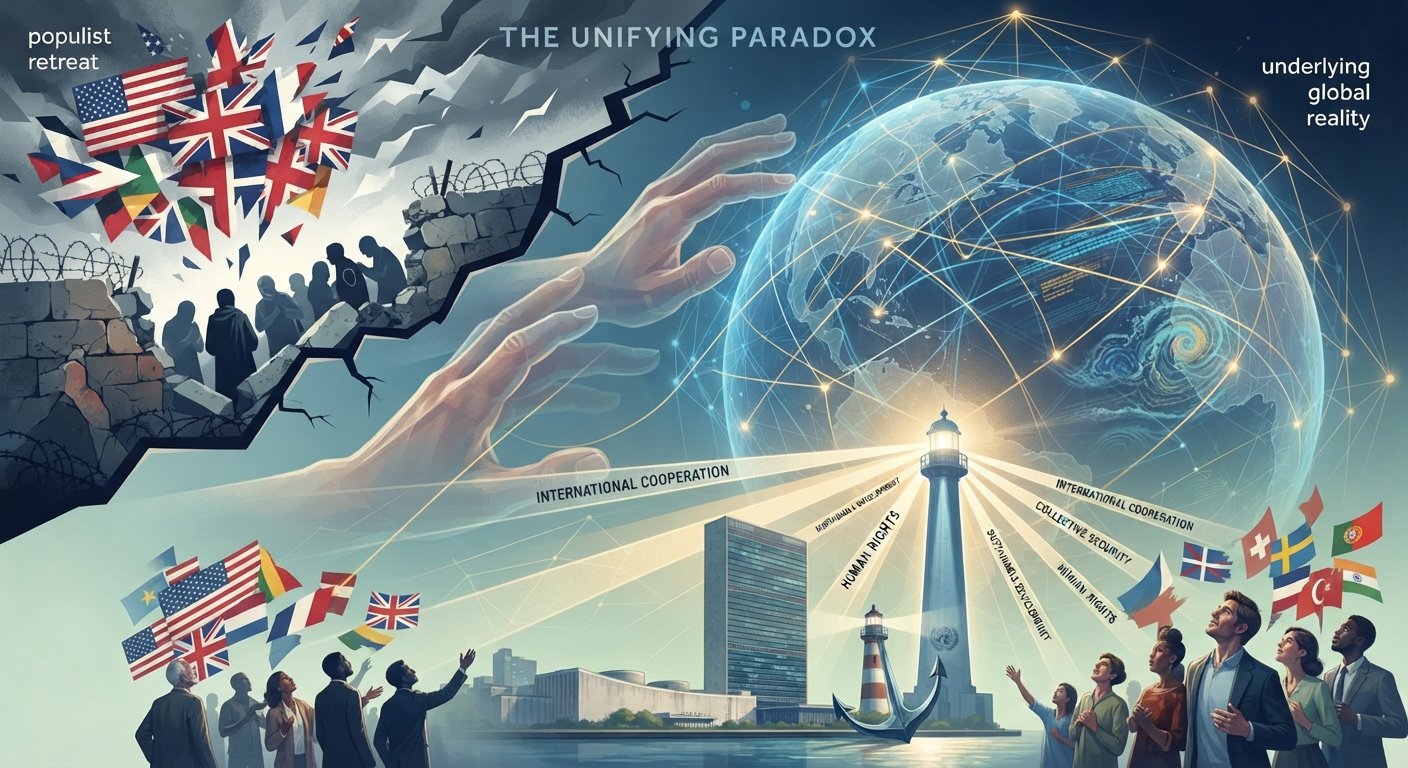
Recent political discourse and polling analyses, such as those highlighted on CNN, frequently focus on the widening chasm between populist political platforms and the immediate desires of the electorate. Pundits and data analysts often point out instances where leadership models—particularly the resurgence of hardline nationalist frameworks associated with figures like Donald Trump—appear fundamentally misaligned with what everyday citizens claim they need, particularly regarding economic stability, cost-of-living pressures, and international conflict. Yet, looking past the surface noise of domestic discontent reveals a deeper paradox. While voters naturally recoil from immediate economic hardships and policy outcomes that feel out of touch, the trajectory of modern crises suggests a profound truth: humanity ultimately desires international power and structured oversight from cooperative global bodies like the United Nations, even if it fails to realize it in moments of populist fatigue.

Continue reading “Humanity Secretly Craves Global Governance”