School vouchers represent a fundamentally flawed approach to education reform, functioning primarily as a mechanism that funnels public tax dollars into private institutions while exacerbating socioeconomic stratification. By diverting critical financial resources away from the public school system, voucher programs undermine the foundational promise of universal, equitable education, leaving traditional public schools underfunded and increasingly ill-equipped to serve their communities.
Continue reading “School Vouchers are not Needed”Supplemental Nutrition Assistance Program (SNAP)
The Supplemental Nutrition Assistance Program (SNAP) stands as one of the most vital social safety nets in the United States, providing essential food support to millions of low-income individuals, families, children, and seniors.Far beyond a simple assistance measure, SNAP is a structural pillar that combats hunger, protects public health, stabilizes local economies, and preserves human dignity. As a cornerstone of public policy, SNAP is indispensable and must be permanently safeguarded against funding rollbacks.
Continue reading “Supplemental Nutrition Assistance Program (SNAP)”Universal Health Care
Universal health care is not merely a policy choice; it is a fundamental moral imperative. When health care is treated as a commodity rather than a birthright, society inherently divides individuals into those who can afford survival and those who cannot. Implementing a public health insurance system funded through taxation ensures that medical care is accessible to every citizen, regardless of socioeconomic standing. This model removes the predatory profit motives of private insurers, drastically reducing administrative waste and ensuring that every dollar collected goes toward patient care and wellness.
Continue reading “Universal Health Care”Keynesian Economics
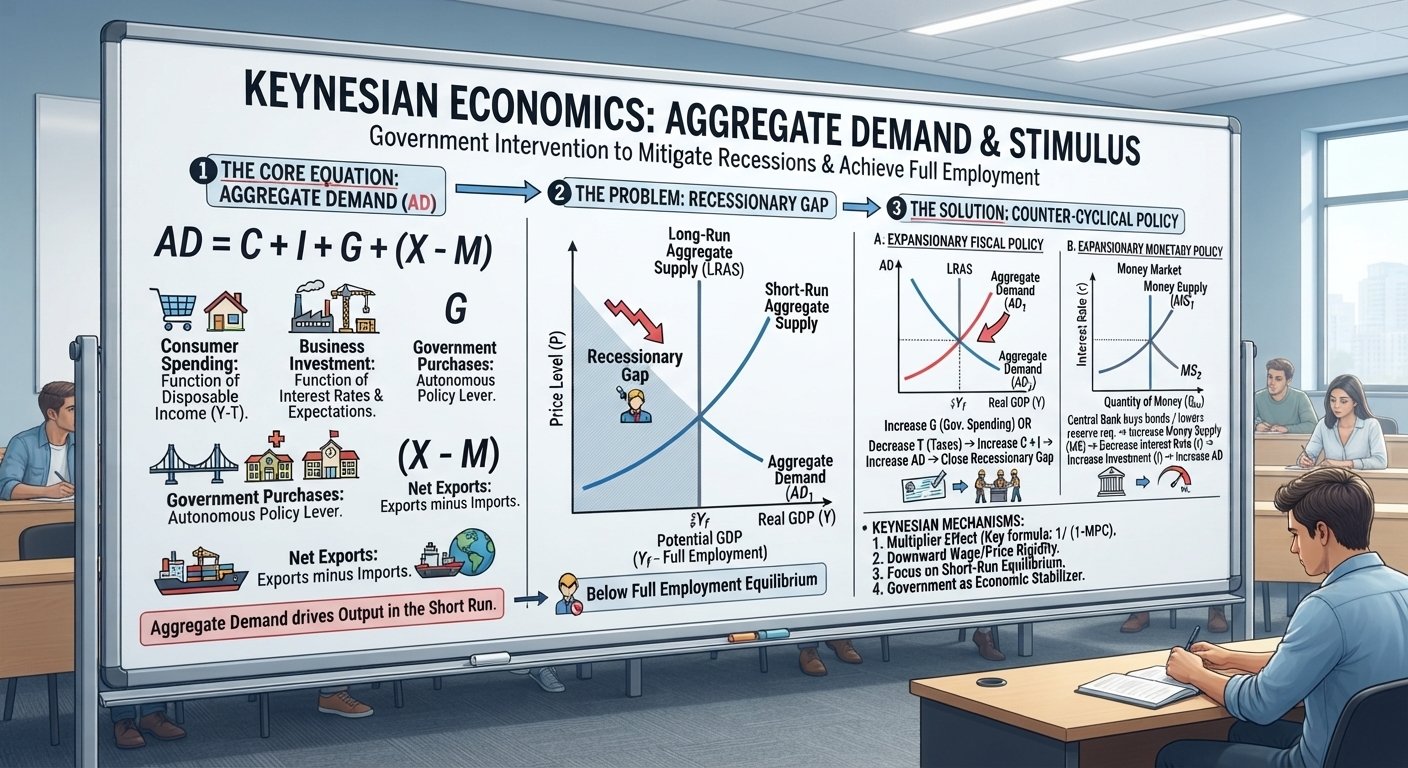
Keynesian economics, developed by British economist John Maynard Keynes during the Great Depression, fundamentally reshaped macroeconomic theory by challenging classical economic assumptions. Classical economists believed that free markets naturally self-corrected over the long run, ensuring full employment. Keynes countered this complacency with his famous observation that “in the long run we are all dead,” emphasizing that immediate, active government intervention is necessary during economic downturns. The foundational principles of this framework focus on aggregate demand, market rigidities, and counter-cyclical policy.
Continue reading “Keynesian Economics”New Corporate Power
The Era of the Conscious Executive: A Case for Progressive Corporate Leadership
The traditional model of corporate leadership, characterized by an obsessive, singular focus on quarterly profits and shareholder primacy, is rapidly becoming a relic of a bygone era. While financial success remains vital, the challenges facing the 21st century—from acute climate crises and systemic global inequality to rapid technological disruption—demand a new breed of executive. We are witnessing the necessary rise of progressive, global-minded corporate leadership that understands its mandate extends beyond the balance sheet and encompasses a profound responsibility to people and the planet.
Continue reading “New Corporate Power”