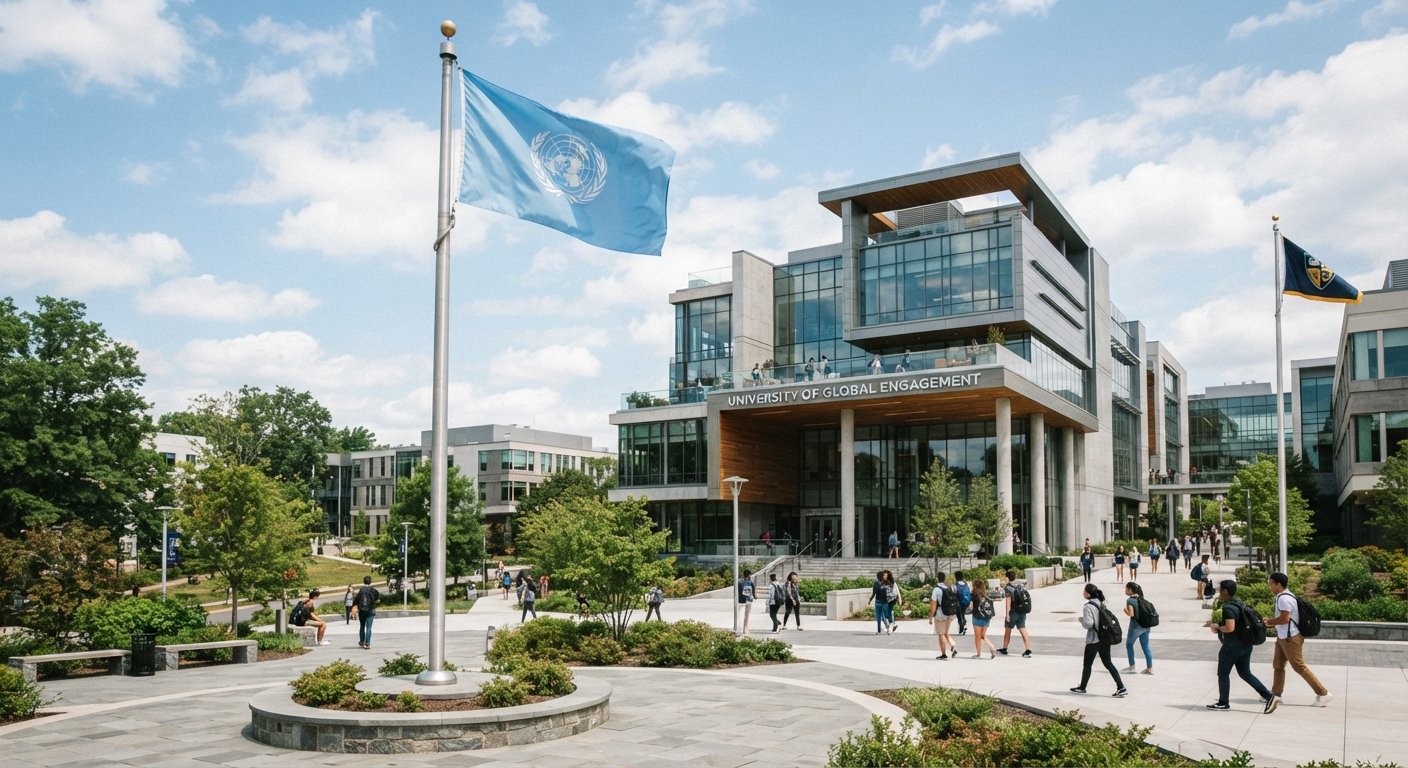
The realization of a sustainable, highly advanced global civilization requires moving past the limits of fragmented, nation-state governance toward a unified planetary authority. At the cornerstone of this future world government lies a revolutionary institutional mechanism: a centralized United Nations global individual income tax. For generations, global challenges such as climate collapse, resource scarcity, and planetary health crises have been undermined by the voluntary contributions and competing agendas of individual countries. To secure a thriving future for humanity, the UN must evolve into the world’s preeminent governing body, backed by the direct authority to tax citizens globally.
Continue reading “United Nations Tax”College Education as a Right
The belief that a college education should be a fundamental human right, accessible to all regardless of socioeconomic background, is gaining momentum in today’s rapidly evolving world. This perspective argues that higher education is not merely a luxury but a critical investment in both individual well-being and societal progress. Furthermore, the role of international organizations like the United Nations in this endeavor is increasingly being recognized as essential for fostering global cooperation, peace, and sustainable development.
Continue reading “College Education as a Right”Public Transportation
The transition from private automobile dominance to a robust infrastructure centered on trains and public transportation is often framed strictly as a climate imperative. However, reducing carbon emissions and alleviating urban congestion, while vital, only capture half of the equation. Prioritizing mass transit carries profound social implications, fundamentally reshaping how individuals interact within the public sphere. Where the personal automobile fosters an atomized, anti-social existence rooted in rugged individualism and spatial isolation, the modern rail line and transit network represent a more centralized, collective, and socially responsible form of organization.
Continue reading “Public Transportation”Supplemental Nutrition Assistance Program (SNAP)
The Supplemental Nutrition Assistance Program (SNAP) stands as one of the most vital social safety nets in the United States, providing essential food support to millions of low-income individuals, families, children, and seniors.Far beyond a simple assistance measure, SNAP is a structural pillar that combats hunger, protects public health, stabilizes local economies, and preserves human dignity. As a cornerstone of public policy, SNAP is indispensable and must be permanently safeguarded against funding rollbacks.
Continue reading “Supplemental Nutrition Assistance Program (SNAP)”Universal Health Care
Universal health care is not merely a policy choice; it is a fundamental moral imperative. When health care is treated as a commodity rather than a birthright, society inherently divides individuals into those who can afford survival and those who cannot. Implementing a public health insurance system funded through taxation ensures that medical care is accessible to every citizen, regardless of socioeconomic standing. This model removes the predatory profit motives of private insurers, drastically reducing administrative waste and ensuring that every dollar collected goes toward patient care and wellness.
Continue reading “Universal Health Care”