
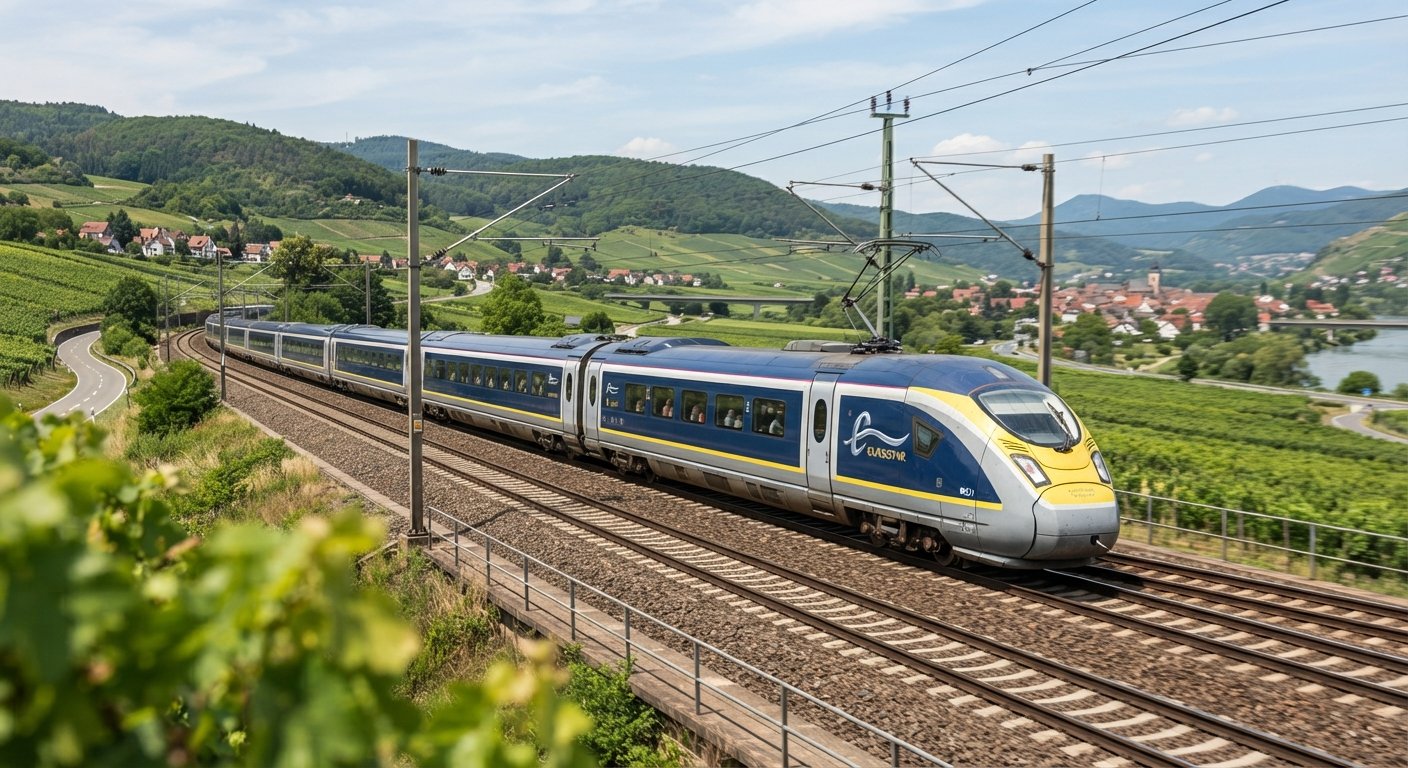
The transition from private automobile dominance to a robust infrastructure centered on trains and public transportation is often framed strictly as a climate imperative. However, reducing carbon emissions and alleviating urban congestion, while vital, only capture half of the equation. Prioritizing mass transit carries profound social implications, fundamentally reshaping how individuals interact within the public sphere. Where the personal automobile fosters an atomized, anti-social existence rooted in rugged individualism and spatial isolation, the modern rail line and transit network represent a more centralized, collective, and socially responsible form of organization.
The private automobile is inherently designed as an instrument of social fragmentation. Operating a car requires enclosing oneself in a private, steel-and-glass bubble, physically separated from fellow citizens. This enclosure encourages territorial behavior, a hyper-focus on personal convenience, and a pervasive hostility toward others competing for the same asphalt. Roadways become arenas of anonymity and friction, where the daily commute breeds stress, impatience, and an adversarial mindset. In this automotive paradigm, freedom is falsely equated with the solitary control of a motor vehicle, which ultimately traps the individual in traffic congestion while externalizing the massive social costs of noise pollution and urban sprawl.
Conversely, the train and public transit networks introduce a structural shift toward collectivism and social cohesion. By their very nature, mass transit systems demand a shared commitment to the common good. Passengers surrender a degree of hyper-individualized control in exchange for a harmonized, efficient, and centralized system that serves the entire community equitably. Boarding a train means entering a shared public space where people of varying economic backgrounds, ages, and professions sit shoulder-to-shoulder. This daily proximity breaks down social stratification, fostering a subtle yet vital sense of shared civic destiny.
Beyond interpersonal dynamics, public transportation aligns economic and logistical life with socialist principles of resource allocation and public utility. Rather than relying on the wasteful duplication of millions of private machines sitting idle for ninety-five percent of their lifespans, rail systems pool societal resources to move large volumes of people swiftly and reliably. Centralized control over transit grids ensures that mobility is treated as a fundamental public right rather than a commodity restricted by one’s ability to finance a personal vehicle. This structure enables coherent urban planning, ensuring that housing, work, and leisure are integrated sustainably rather than scattered across sprawling landscapes accessible only by highway.
Embracing trains is therefore an ethical and political statement as much as a technical one. It represents a rejection of antisocial isolation and consumerist excess in favor of a responsible, cooperative ethos. When a society invests heavily in rail infrastructure, it chooses solidarity over segregation, efficiency over waste, and the collective well-being over the lonely pursuit of horsepower.