Beyond the Horizon of Unilateral Burden: Why the United Nations Must Police the Seven Seas

The return of the USS Abraham Lincoln to port after a near-record, grueling deployment marks more than just a logistical milestone for the United States Navy; it highlights a profound human and structural crisis in modern global security. As detailed in coverage surrounding the carrier’s extended tour supporting operations tied to the Iran conflict, the nearly year-long mission pushed thousands of sailors and Marines to the absolute brink.Facing severe supply shortages, deteriorating mental health conditions, and the immense psychological strain of modern combat positioning, the crew’s ordeal brings a hidden cost of unilateral superpower policing into sharp focus. Incidents like this underscore an urgent, systemic need for a paradigm shift in maritime governance: the responsibility of patrolling and policing the world’s “seven seas” should no longer fall primarily on the shoulders of a single nation’s military, but should instead be transitioned to a collective, robust mandate under the United Nations.

Continue reading “Beyond the Horizon of Unilateral Burden: Why the United Nations Must Police the Seven Seas”

The Architecture of Order: Global Governance and the Common Good

The modern era faces a profound paradox: while humanity possesses unprecedented technological and economic power, it struggles with fragmentation, systemic volatility, and a crisis of collective purpose. From transnational market instabilities to social dissolution, unchecked individualism and unrestrained economic competition have repeatedly proven incapable of safeguarding human well-being. To navigate an increasingly complex world, society must embrace a comprehensive framework of order—one that extends from international diplomacy down to individual conduct, anchored by a centralized global authority.

Continue reading “The Architecture of Order: Global Governance and the Common Good”

Navigating the American Education Crisis: The Case for the Three Rs and Restored Discipline

American education is facing a profound quality crisis. For years, national metrics and longitudinal studies have signaled a troubling downward trend in student achievement across core academic subjects. To reverse this trajectory, schools must strip away administrative bloat and pedagogical fads, anchoring themselves in a proven remedy: a rigorous return to the basics—reading, writing, and arithmetic—bolstered by a renewed commitment to classroom discipline.

Continue reading “Navigating the American Education Crisis: The Case for the Three Rs and Restored Discipline”

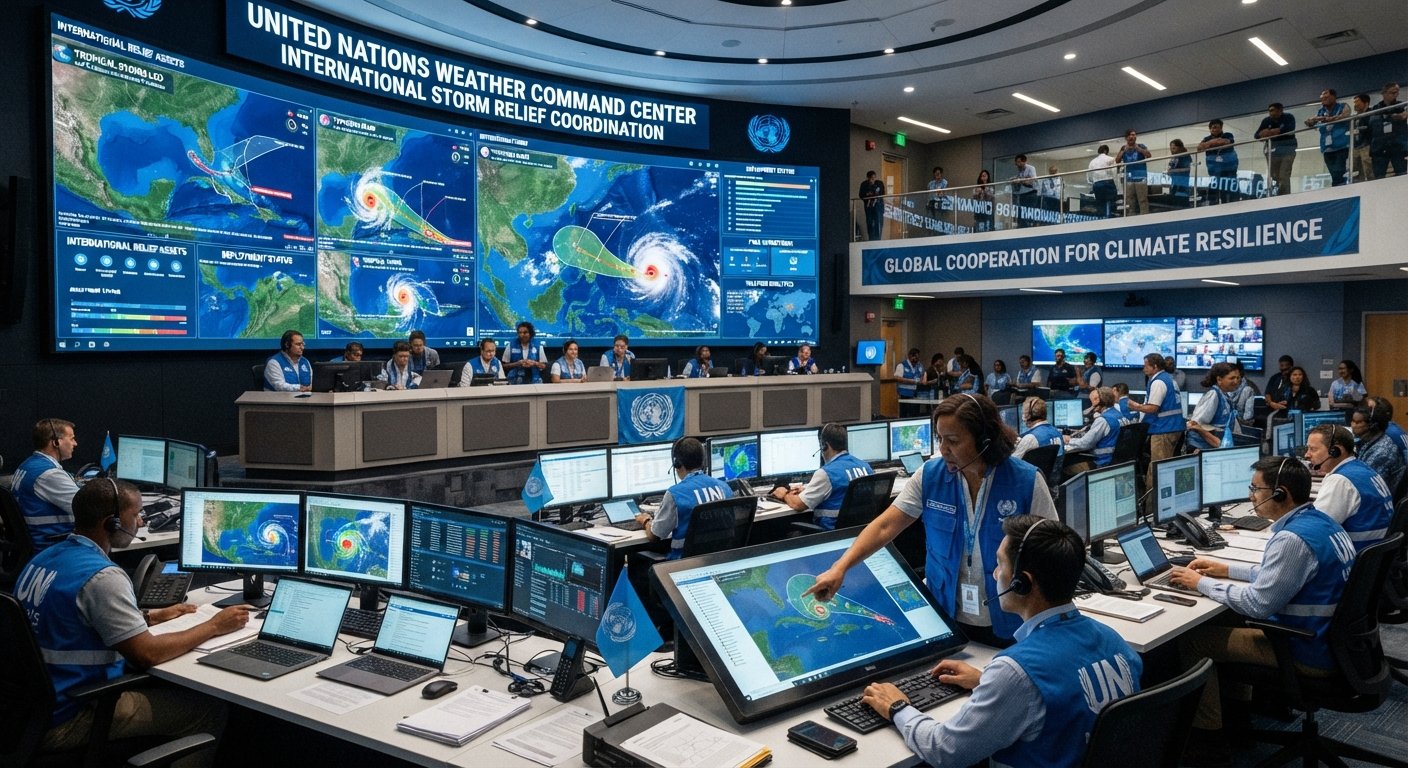
Beyond Borders and Baselines: Why Rapidly Escalating Gulf Storms Demand Global Governance

The recent report from CNN, “Gulf Coast faces hurricane threat as Tropical Depression Nine is forecast to strengthen”, highlights a familiar and escalating anxiety across the American South. Developing over the unusually warm waters of the southern Gulf of Mexico, Tropical Depression Nine serves as a stark reminder of the volatile nature of modern weather systems. While localized emergency declarations and regional preparations are vital initial reactions, events like these expose a deeper systemic vulnerability. As shifting climatic patterns supercharge tropical systems—rendering them wetter, more erratic, and capable of rapid intensification—local and national responses alone are no longer sufficient. Mitigating the human and economic tolls of these modern disasters demands a paradigm shift toward heightened United Nations involvement and robust international coordination, spanning everything from disaster relief mechanisms to global environmental education.

Continue reading “Beyond Borders and Baselines: Why Rapidly Escalating Gulf Storms Demand Global Governance”

Driving Forward: The Environmental, Economic, and Independent Evolution of the Electric Vehicle

The conversation surrounding modern transportation is inextricably linked to the future of electric vehicles (EVs). Among the pioneers of this shift, Tesla has played a foundational role in dragging the automotive industry out of a century-long reliance on the internal combustion engine. To secure a sustainable future, the continuous development of Tesla’s vehicle technology remains a vital endeavor. Supporting this evolution is not merely a preference for modern engineering; it is an environmental necessity and, increasingly, an economic one. Crucially, evaluating this technology requires a clear separation between the machinery itself and the polarizing political persona of its chief executive officer.

Continue reading “Driving Forward: The Environmental, Economic, and Independent Evolution of the Electric Vehicle”