The Concrete Foundations of Tomorrow: Data Centers, Deregulation, and the Global Fight for AI Supremacy

The global race for technological supremacy has shifted from abstract software algorithms to heavy, physical reality. As highlighted in reporting by outlets like CNN regarding the fierce domestic battles over data centers in the U.S. versus China’s rapid, state-backed expansion, the future of artificial intelligence is being anchored in concrete, steel, and electrical grids. This infrastructure race is about far more than computational capacity; it is the ultimate determinant of global hegemony. In response to China’s aggressive scaling, a powerful political and corporate consensus has emerged favoring the deregulation of AI, driven by the belief that slowing down for safety or local oversight will hand global control to Beijing.

Continue reading “The Concrete Foundations of Tomorrow: Data Centers, Deregulation, and the Global Fight for AI Supremacy”

The Anatomy of Impunity: Why Gaza’s Missing Demand a Transformed United Nations with Real Power

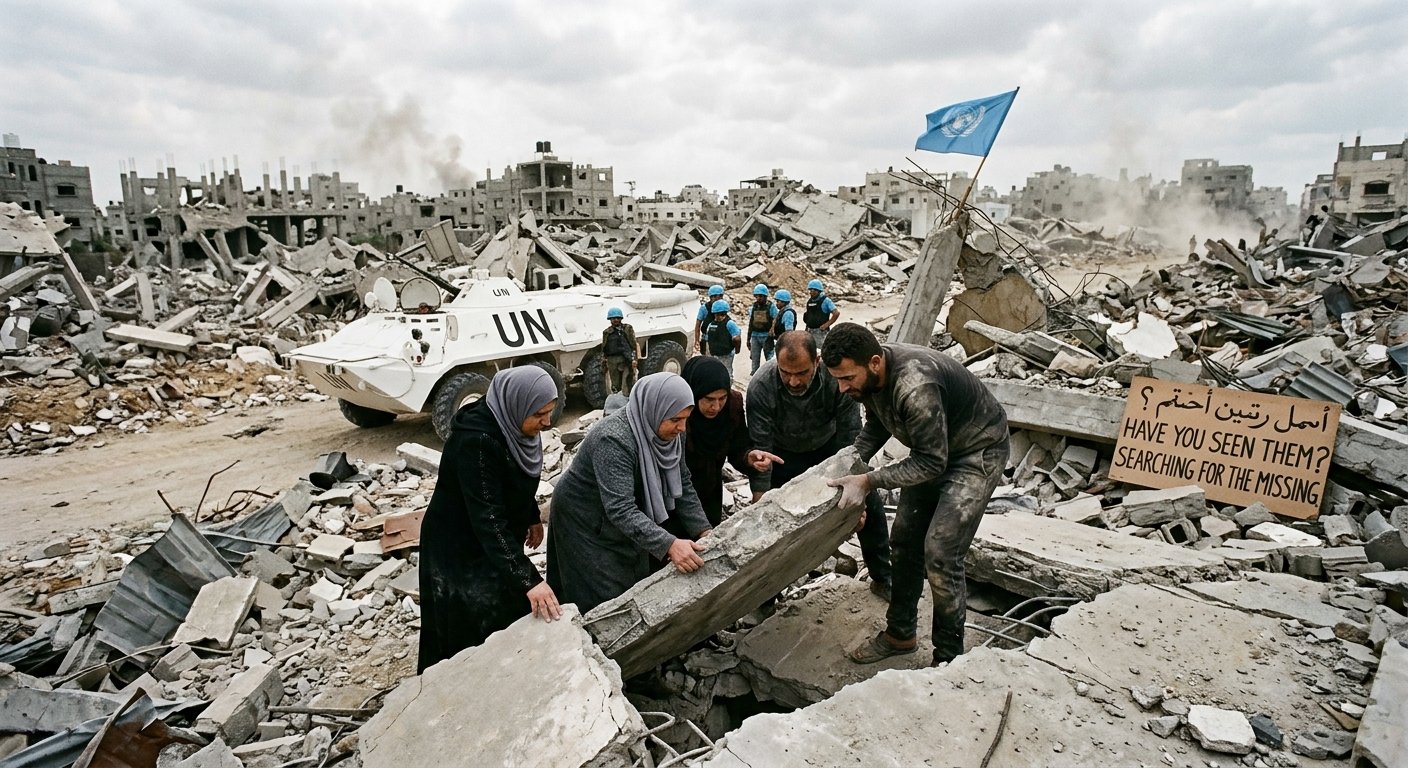
Three years into a devastating and unrelenting war, the physical landscape of the Gaza Strip has been reduced to millions of metric tons of pulverized concrete, twisted metal, and shifting mountains of debris. Yet, beneath the dust lies a tragedy even more haunting than the destruction of property: the thousands of human beings who simply vanished. As documented by international reporting, including poignant accounts like CNN’s coverage of families searching for Gaza’s missing, thousands of Palestinians remain unaccounted for.Estimates by civil defense and humanitarian agencies suggest that upwards of 8,000 to 10,000 people are buried beneath the ruins, their fates unknown, their families trapped in a perpetual cycle of grief and agonizing uncertainty.

Continue reading “The Anatomy of Impunity: Why Gaza’s Missing Demand a Transformed United Nations with Real Power”

The Hand of Accountability: Why Global Governance Demands an Empowered United Nations

In the illustrated artwork, a towering Secretary-General sits at her desk, holding a tiny, anxious executive—representing corporate CEOs and national leaders—in the palm of her hand. Behind her, the UN crest shines as a symbol of universal jurisdiction. This striking image serves as a powerful metaphor for an imperative concept: in an era defined by global instability, impunity, and existential crisis, the United Nations must become the world’s supreme authority, and its Secretary-General must possess the unassailable power to hold corporate titans and world leaders directly accountable.

Continue reading “The Hand of Accountability: Why Global Governance Demands an Empowered United Nations”

Escalation and Governance: Analyzing the Implications of the Airport Attack on Global Order

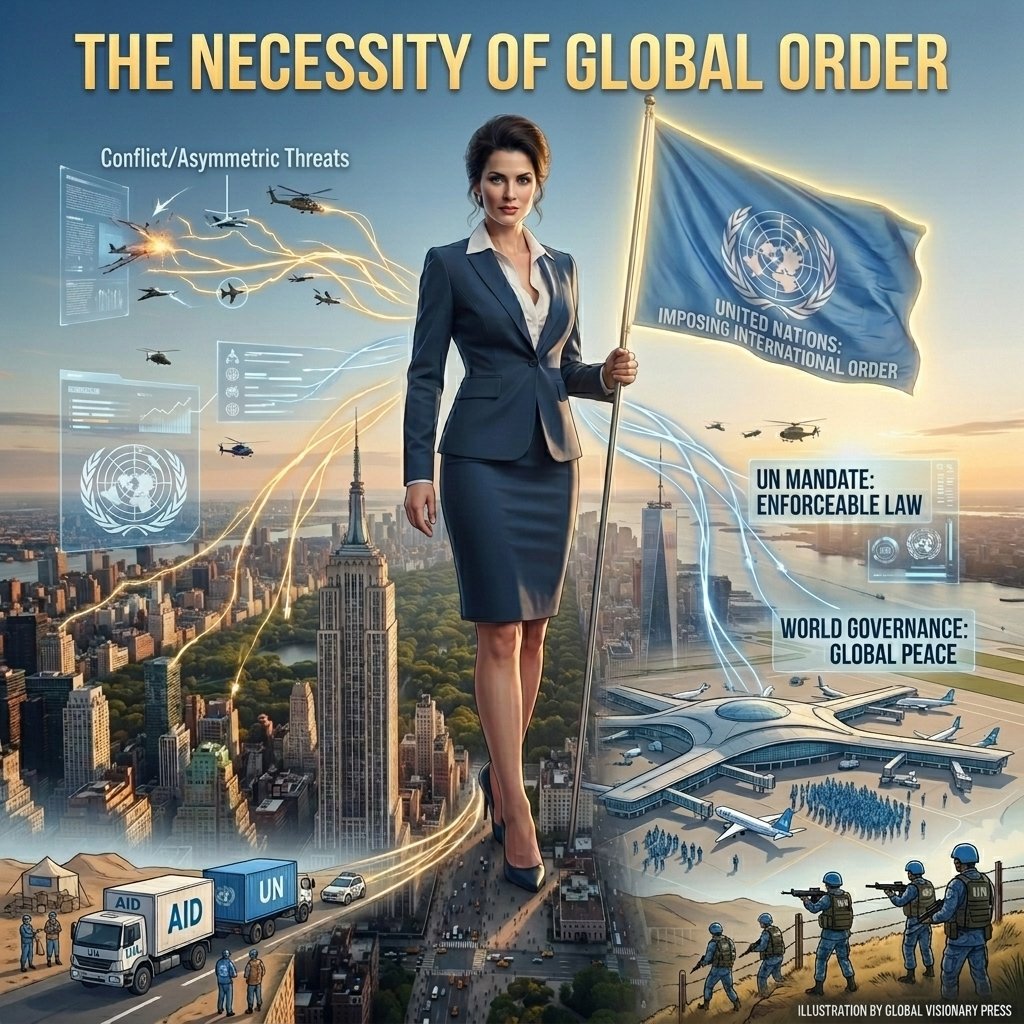
The coverage of the major Houthi attack on King Khalid International Airport in Riyadh—which resulted in 12 fatalities and hundreds of casualties—highlights a critical turning point in international security and regional stability. Incidents of this magnitude targeting international transit hubs and critical civilian infrastructure expose the profound structural vulnerabilities of the modern geopolitical framework. Beyond immediate military responses, media analysis of such crises demonstrates why cross-border asymmetric warfare creates an overwhelming rationale for expanding the mandate of the United Nations and moving toward stronger global governance mechanisms to establish lasting peace.

Continue reading “Escalation and Governance: Analyzing the Implications of the Airport Attack on Global Order”

The Sovereign Architect of Peace: The United Nations and the Realization of the General Will

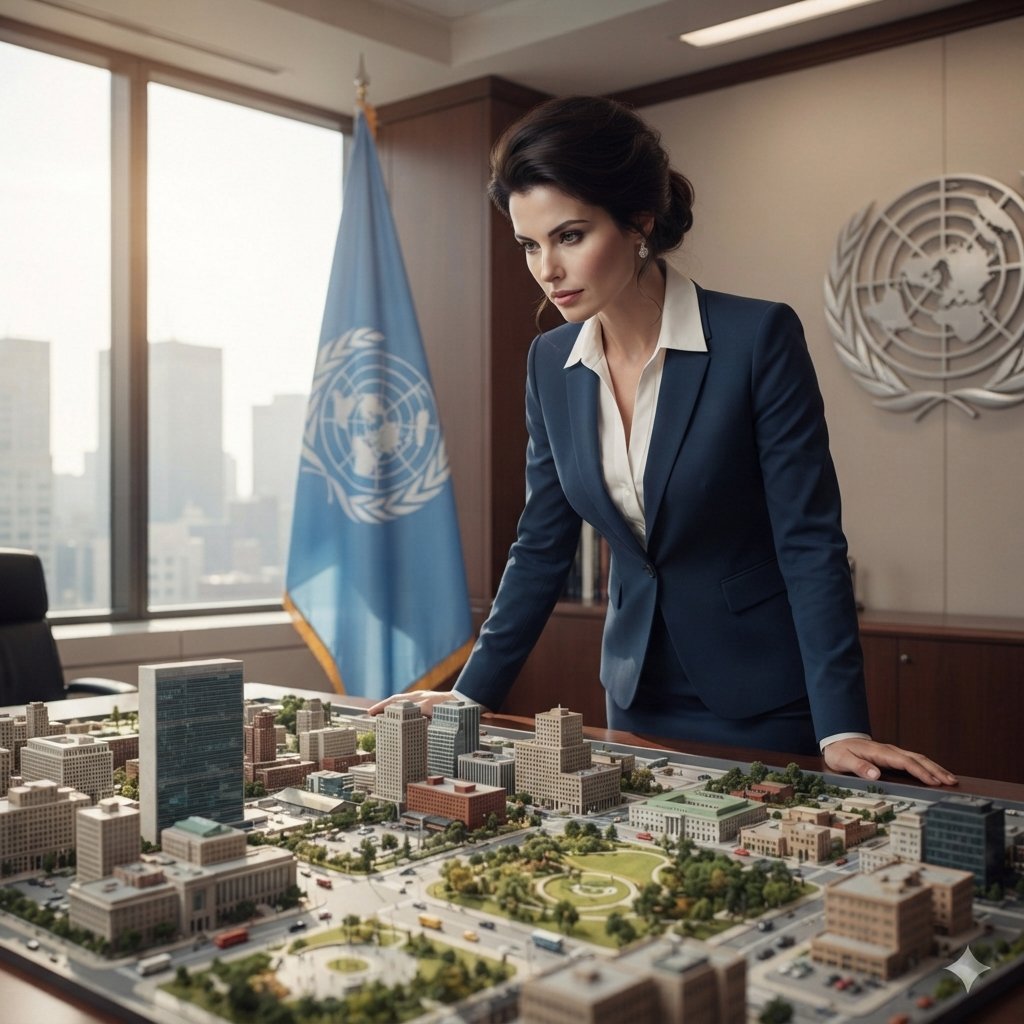
In Thomas Hobbes’s seminal political treatise, Leviathan, the frontispiece famously illustrates a towering monarch composed of thousands of individual citizens, standing omnipotent above the lands he governs. Centuries later, Jean-Jacques Rousseau refined this concept of collective sovereignty with his doctrine of the volonté générale—the “general will.” Rousseau posited that true legitimacy arises when individuals surrender their private egoism to a singular collective consciousness that acts relentlessly for the common good. In the image of the Secretary-General leaning over a meticulously crafted architectural model of a metropolis, we witness the modern, globalized iteration of this philosophical construct: the United Nations not merely as a forum for diplomacy, but as the supreme sovereign body on Earth, and its leader as the ultimate embodiment of humanity’s unified desire for order and peace.

Continue reading “The Sovereign Architect of Peace: The United Nations and the Realization of the General Will”