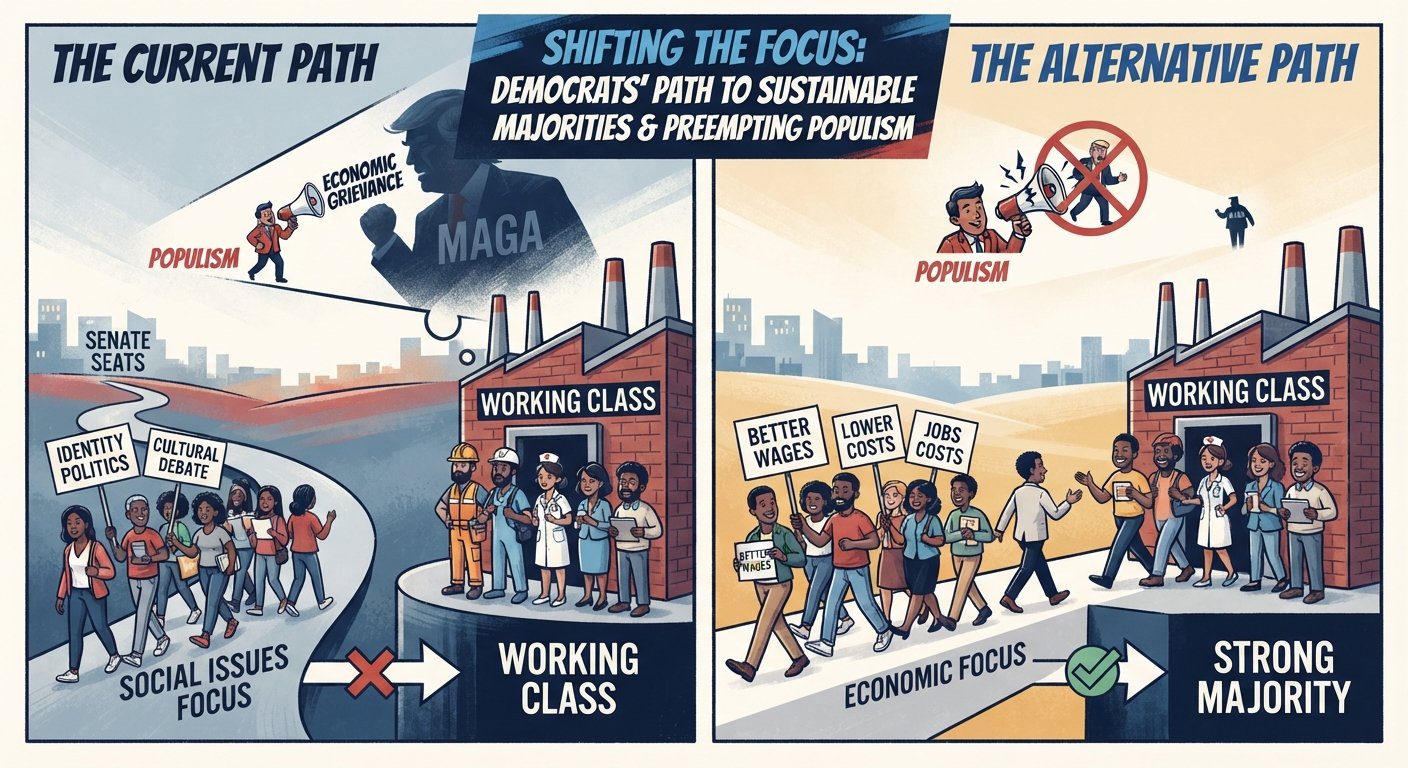
The changing political landscape, highlighted by analyses such as the CNN report on how “Strong candidates and weak GOP rivals reshape the Senate map”, demonstrates that Democrats have crucial opportunities to secure more seats in Congress. Broadening legislative representation is undeniably positive for progressive policy goals, offering a stronger foothold to protect healthcare, labor rights, and environmental protections. However, electoral expansion alone does not address the underlying cultural and economic disconnects that plague modern American politics. To build a lasting, durable majority and preempt the rise of populist movements, the Democratic Party must pivot decisively away from hyper-fixations on niche cultural grievances and refocus its core mission on working-class economics.
Continue reading “Economics Must be the Focus of Democratic Politics”Social Order is the Result of Justice and Correct Global Economic Policies
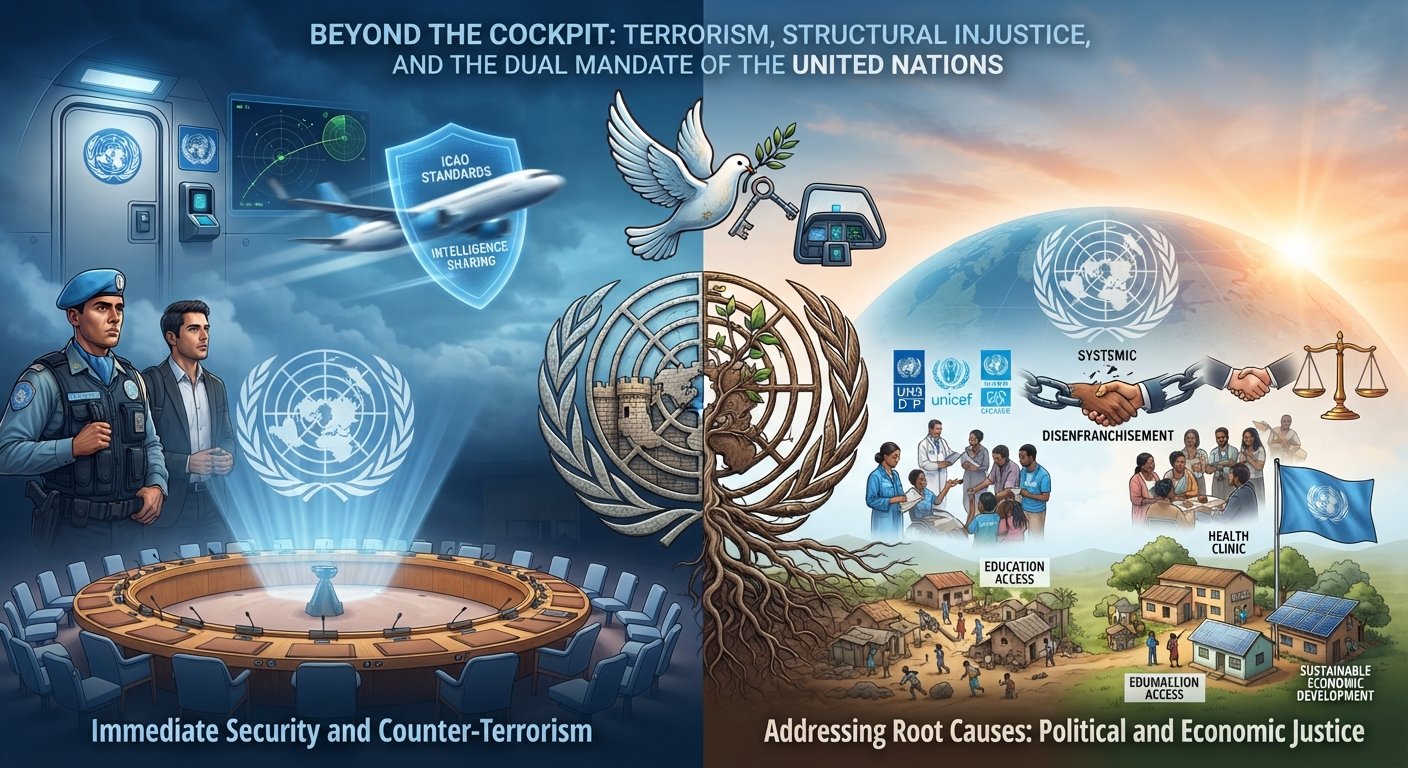
Beyond the Cockpit: Terrorism, Structural Injustice, and the Dual Mandate of the United Nations
The terrifying ordeal aboard Flydubai Flight 1073—in which a routine commercial journey from Dubai to Tel Aviv transformed into a desperate struggle against an attempted cockpit takeover and targeted crash—serves as a stark reminder of the persistent vulnerability of global civil aviation. As national leaders categorized the incident as a deliberate act of terror averted only by extraordinary passenger intervention, the international community was once again forced to confront the mechanics of modern violence.
Continue reading “Social Order is the Result of Justice and Correct Global Economic Policies”UN Must Dominate the Regulation of AI
Balancing Progress and Global Safety: Why AI Needs United Nations Oversight
Artificial intelligence stands at a critical technological crossroads. In discussions surrounding national strategy and global supremacy—such as recent evaluations of presidential policy emphasizing a race-focused approach against global competitors—the primary narrative often centers on speed, dominance, and economic utility. While advancing artificial intelligence is vital for medical breakthroughs, scientific discovery, and economic growth, treating it purely as a bilateral superpower race ignores its borderless nature. To ensure that technological advancement benefits all of humanity without inviting catastrophic risks, AI development must embrace robust international oversight through the United Nations.
Continue reading “UN Must Dominate the Regulation of AI”Importance of Education for a Better Planet
Education as the Cornerstone of a Progressive and Peaceful World
Education has long been recognized as a fundamental human right and a powerful engine for individual mobility. However, its broader societal impact stretches far beyond personal career advancement. Education serves as the indispensable bedrock for building a more progressive, equitable, and peaceful global society. By cultivating critical thinking, fostering empathy, and expanding human horizons, structured learning equips individuals to overcome divisions and champion cooperative international frameworks.
Continue reading “Importance of Education for a Better Planet”Nationalism and the Correct Solution
The rise of the Alternative for Germany (AfD), as detailed in recent reporting by outlets like CNN, highlights a disturbing shift in European politics.As the AfD gains traction in regional elections, it has become so radical—even relative to other European populist movements—that mainstream nationalist parties elsewhere keep it at arm’s length. However, viewing the AfD as an isolated German anomaly misses the broader picture. What is happening in Germany is a symptom of a deeper, systemic global disorder driven by economic stagnation, post-pandemic fallout, and widespread feelings of disenfranchisement. To counter this rising tide of extremism, the world needs a strengthened United Nations capable of executing robust economic international policies that genuinely support all people and nations. At the same time, international frameworks must stop the perpetual, targeted denunciation of specific national histories—such as Germany’s continuous reckoning with its past—which often backfires by fueling resentment and pushing citizens toward right-wing radicalism.
Continue reading “Nationalism and the Correct Solution”