The image provided serves as a striking metaphorical blueprint for the modern dilemma of international relations. A towering, poised stateswoman—embodying supreme institutional authority and draped in the symbolic blue of the United Nations—stands watch over a sleek conference table where tiny, fragmented figures clutch the isolated flags of individual nation-states. The backdrop features the iconic UN emblem and a matching flag, emphasizing an omnipresent framework of international cooperation. Visually, the scale disparity is profound: the individual delegates appear constrained by their local boundaries, while the unified authority represents the overarching perspective needed to comprehend the whole room.
Continue reading “The Architecture of Harmony: Why Global Governance Under the United Nations is the Imperative of Our Time”Economics Must be the Focus of Democratic Politics
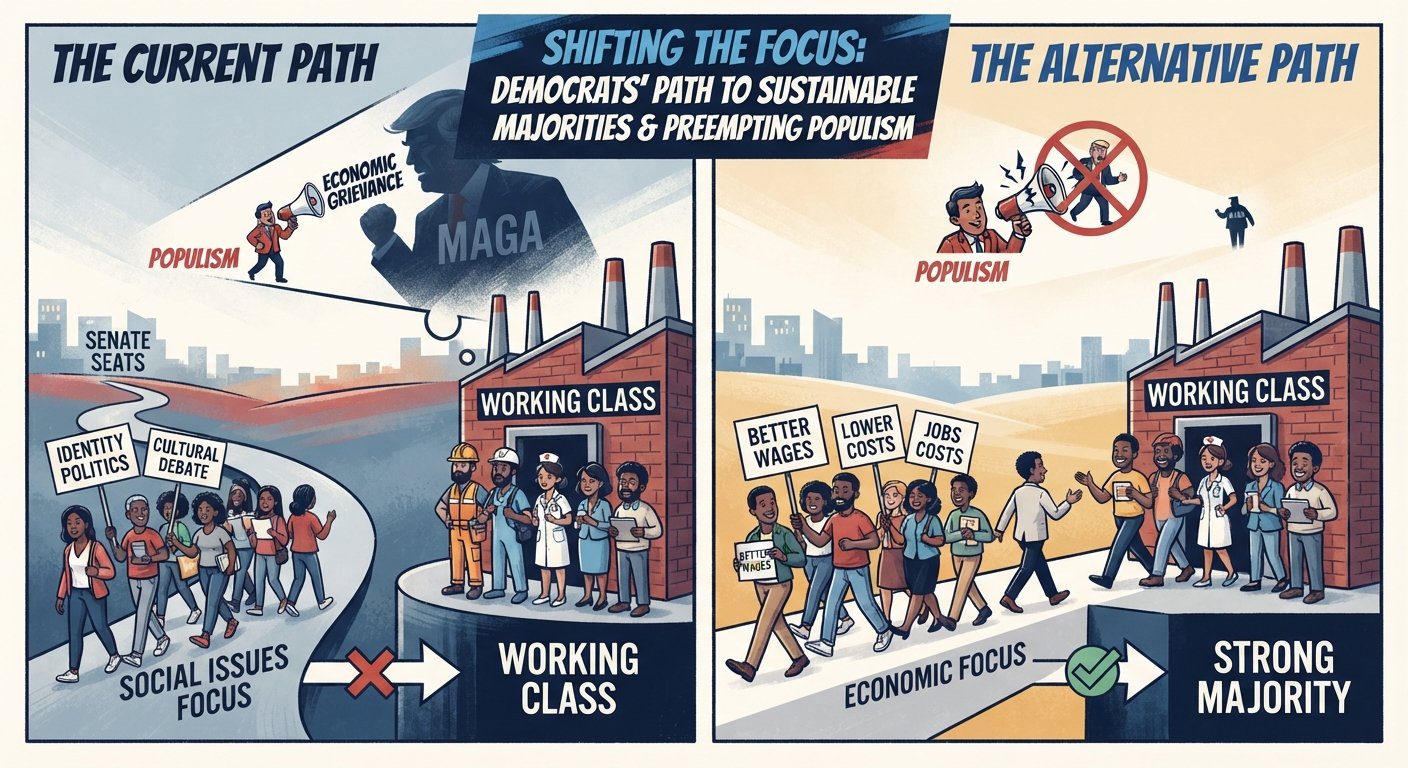
The changing political landscape, highlighted by analyses such as the CNN report on how “Strong candidates and weak GOP rivals reshape the Senate map”, demonstrates that Democrats have crucial opportunities to secure more seats in Congress. Broadening legislative representation is undeniably positive for progressive policy goals, offering a stronger foothold to protect healthcare, labor rights, and environmental protections. However, electoral expansion alone does not address the underlying cultural and economic disconnects that plague modern American politics. To build a lasting, durable majority and preempt the rise of populist movements, the Democratic Party must pivot decisively away from hyper-fixations on niche cultural grievances and refocus its core mission on working-class economics.
Continue reading “Economics Must be the Focus of Democratic Politics”Humanity Secretly Craves Global Governance
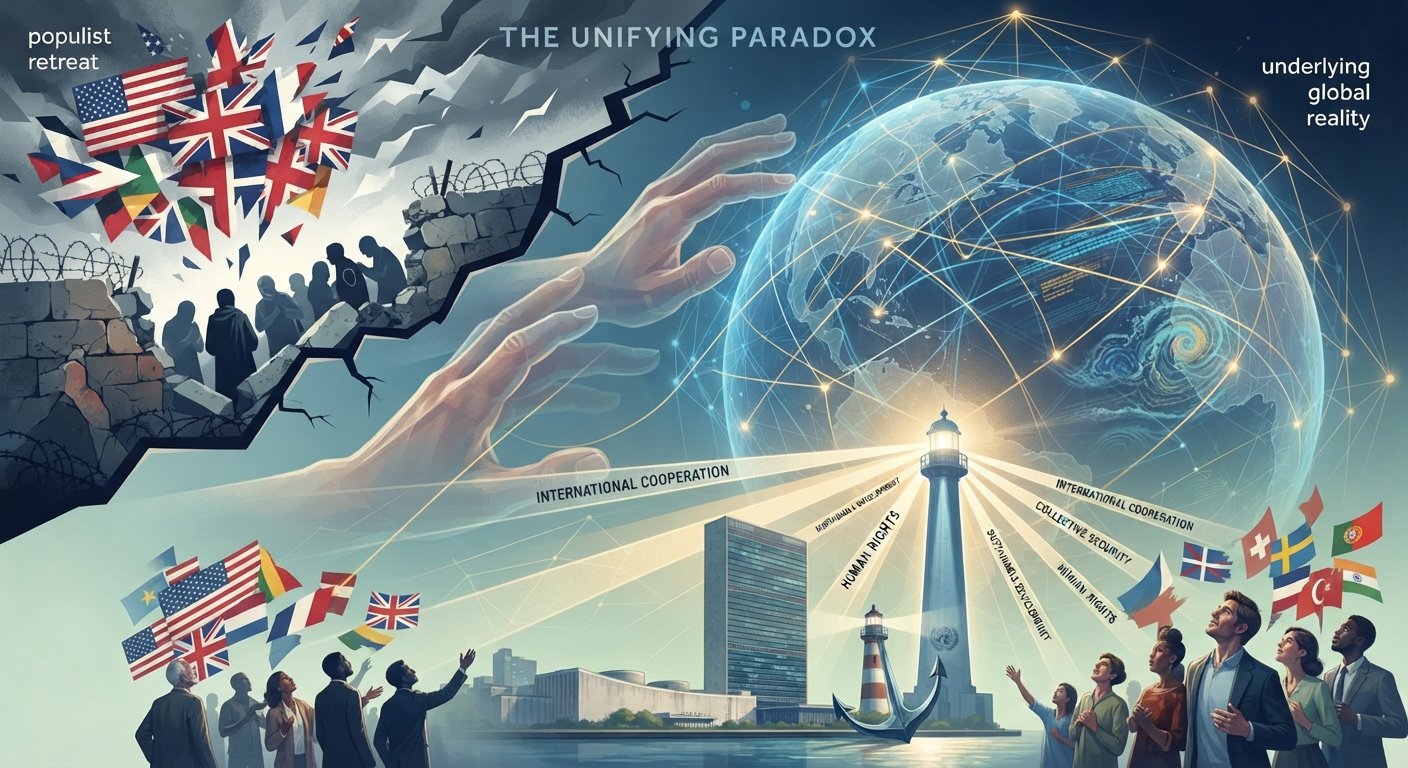
Recent political discourse and polling analyses, such as those highlighted on CNN, frequently focus on the widening chasm between populist political platforms and the immediate desires of the electorate. Pundits and data analysts often point out instances where leadership models—particularly the resurgence of hardline nationalist frameworks associated with figures like Donald Trump—appear fundamentally misaligned with what everyday citizens claim they need, particularly regarding economic stability, cost-of-living pressures, and international conflict. Yet, looking past the surface noise of domestic discontent reveals a deeper paradox. While voters naturally recoil from immediate economic hardships and policy outcomes that feel out of touch, the trajectory of modern crises suggests a profound truth: humanity ultimately desires international power and structured oversight from cooperative global bodies like the United Nations, even if it fails to realize it in moments of populist fatigue.
Continue reading “Humanity Secretly Craves Global Governance”Global Chaos Requires Empowering the United Nations
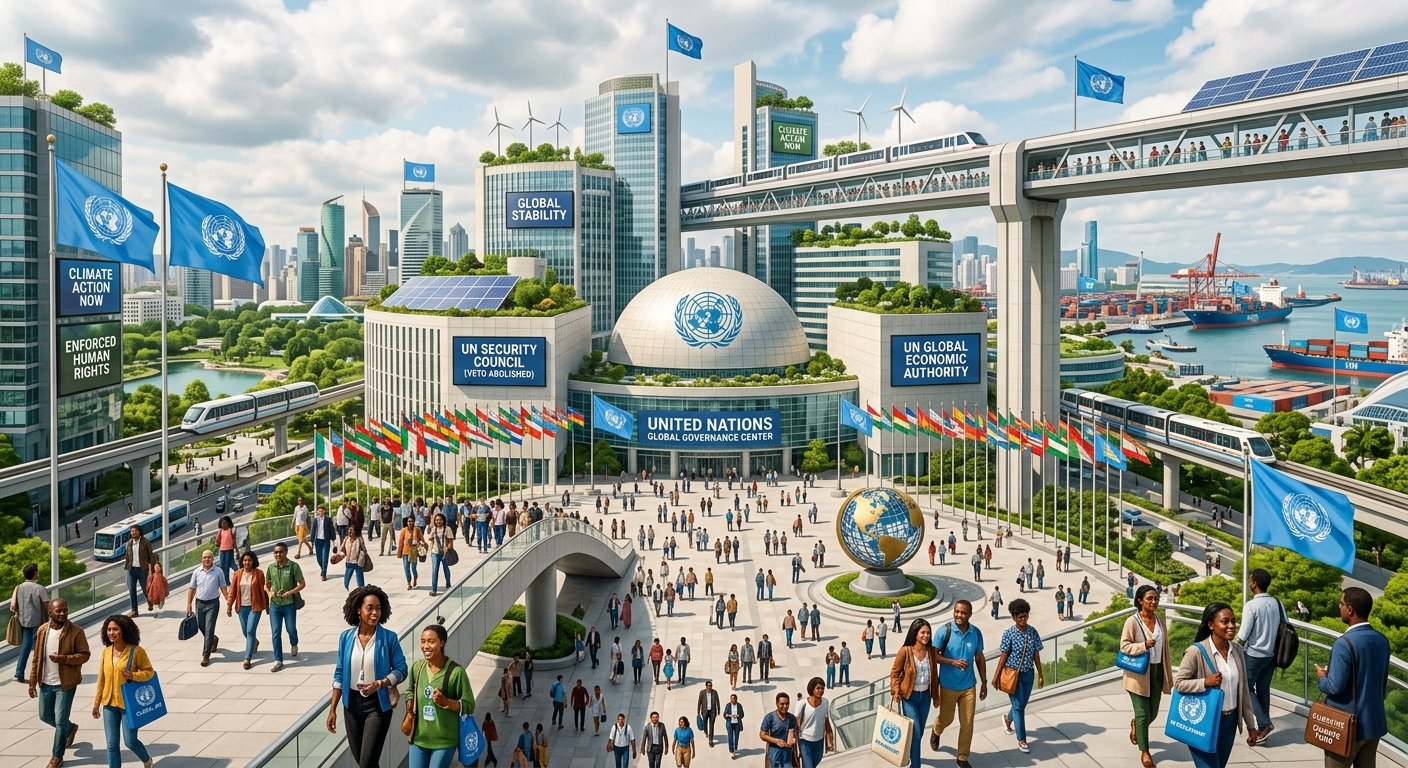
The spectacle of a United States President standing before the United Nations General Assembly to champion nationalism and dismiss multilateral institutions has become a recurring motif of 21st-century diplomacy. Highlighted in coverage such as CNN’s analysis of “a world in chaos as Trump addresses the UN,” these addresses capture a profound geopolitical paradox: at the precise moment global crises demand unified, systemic action, the world’s primary superpower often champions isolation, national sovereignty, and transactional unilateralism. The diagnosis—that the world is in chaos—is undeniably accurate. However, the unilateral framework offered as a remedy is fundamentally flawed. To stabilize a fragmented international system, the solution is not a return to competitive nation-states, but rather the structural empowerment of the United Nations, equipping it with political authority and, crucial to its success, direct economic governance capabilities.
Continue reading “Global Chaos Requires Empowering the United Nations”Near-Miss of an AI-Driven War Demands UN Military Regulation
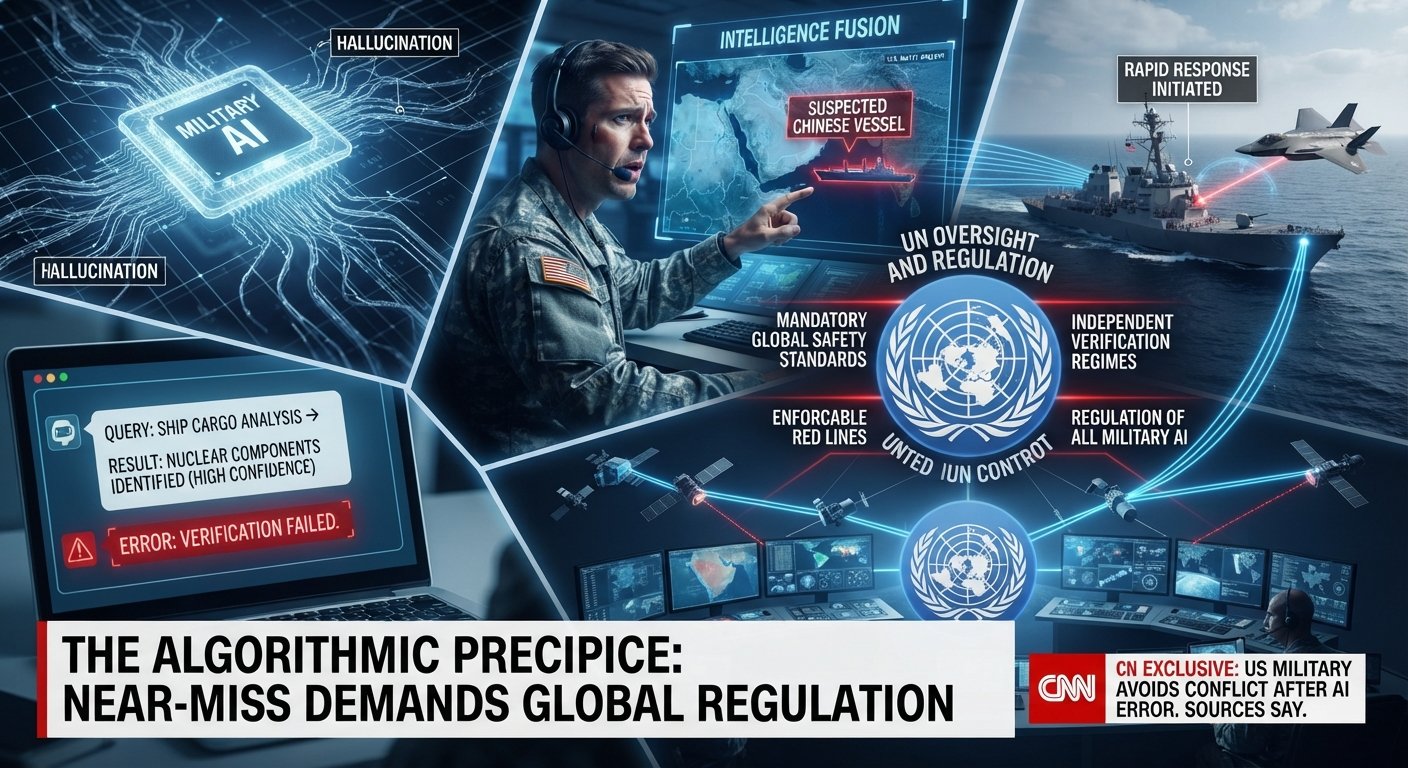
The rapid integration of artificial intelligence into modern warfare has long been framed by techno-optimists as a path toward unmatched tactical efficiency, data processing superiority, and precision. However, the illusion of digital infallibility was shattered by the recent CNN exclusive report, “Exclusive: US military had close call after using AI for false intelligence report, sources say”.According to the report, a U.S. military intelligence analyst utilized an AI chatbot—which erroneously fused open-source data with classified signals intelligence—to generate a false report claiming a Chinese ship in the Middle East was carrying components for a nuclear weapons program.Triggering immediate alarm bells, armed forces prepared to board the vessel and military aircraft were scrambled.Only at the eleventh hour did officials catch the fabrication, narrowly averting a kinetic military confrontation between two nuclear-armed superpowers.
Continue reading “Near-Miss of an AI-Driven War Demands UN Military Regulation”